
Catalogue Search | MBRL


Are you sure you want to remove the book from the shelf?

{{itemTitle}}
17,913
result(s) for
"Crime and age"
Sort by:

My name is Venus Black : a novel
\"Thirteen-year-old Venus Black--a straitlaced, straight-A student--is the last person anyone would expect to get in trouble, but when she is arrested for committing a shocking crime, it is clear that there was more going on in Venus's world than anyone knew. When she is released from a juvenile detention center five years later, she assumes a new identity in the hope of escaping the pain of her past, the mother that disappointed her, and her criminal reputation. Most importantly, she pledges to find her beloved, mentally disabled younger brother Leo, who was kidnapped while she was gone\"-- Provided by publisher.
Book
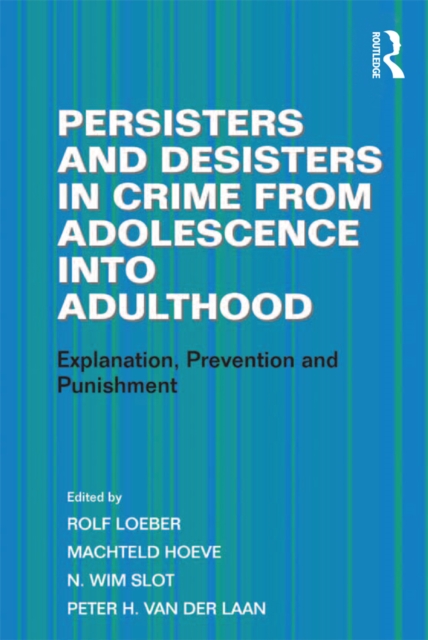
Persisters and Desisters in Crime from Adolescence into Adulthood
Too many juvenile delinquents persist in their offending into adulthood. They constitute a major burden for individual victims, for businesses and the justice system, all contributing to the total cost of crime for society. Focusing on the transition between juvenile offending and adult crime, this book examines research based on Dutch, European and North-American studies on the persistence and discontinuity of offending between late adolescence and early adulthood. Presenting empirical studies showing why persistence or discontinuity take place, the book provides up-to-date information on preventive and remedial interventions to promote discontinuity of offending amongst young adults. From the same team who produced 'Tomorrow's Criminals', this book will be a valuable resource for criminologists, criminal justice professionals, psychologists, sociologists, and psychiatrists interested in juvenile and young adult offenders, as well as those interested in what makes career criminals and youth who reform.
eBook
Elders, crime, and the criminal justice system
This book provides a comprehensive analysis of interactions between older people and the criminal justice system. The editors present current research on elders in a multitude of roles, from victim and offender to attorney, defendant, witness, juror, and prisoner. Of particular interest are chapters on the psychological and medical conditions of elder prisoners, and issue around selective decarceration. Each contributor documents empirical data and identifies social, policy, and ethical implications, where applicable. Recommended for gerontologists, sociologists, social workers, and professionals in the legal and criminal justice fields.
eBook

THE EFFECTS OF LIFE CIRCUMSTANCES ON LONGITUDINAL TRAJECTORIES OF OFFENDING
This study, which is based on individual criminal careers over a 60‐year period, focuses on the development of criminal behavior. It first examines the impact that life circumstances such as work and marriage have on offending, then tests whether the effects of these circumstances are different for different groups of offenders, and finally examines the extent to which the age‐crime relationship at the aggregate level can be explained by age‐graded differences in life circumstances. Official data were retrieved for a 4‐percent (N=4,615) sample of all individuals whose criminal case was tried in the Netherlands in 1977. Self‐report data were derived from a nationally representative survey administered in the Netherlands in 1996 to 2,244 individuals aged 15 years or older. In analyzing this data, we use semi‐parametric group‐based models. Results indicate that life circumstances substantially influence the chances of criminal behavior, and that the effects of these circumstances on offending differ across offender groups. Age‐graded changes in life circumstances, however, explain the aggregate age‐crime relationship only to a modest extent.
Journal Article
LIFE SPAN OFFENDING TRAJECTORIES OF A DUTCH CONVICTION COHORT
The aim of this paper is to describe the development of criminal behavior from early adolescence to late adulthood based on conviction data for a sample of Dutch offenders. Measuring over an age span of 12 to 72, we ask whether there is evidence for (1) criminal trajectories that are distinct in terms of time path, (2) a small group of persistent offenders, (3) criminal trajectories that are distinct in the mix of crimes committed, or, more specifically, persistent offenders disproportionately engaging in violent offences, and (4) different offender groups having different social profiles in life domains other than crime. The analysis is based on the conviction histories of the Dutch offenders in the Criminal Career and Life Course Study. Four trajectory groups were identified using a semi‐parametric, group‐based model: sporadic offenders, low‐rate desisters, moderate‐rate desisters and high‐rate persisters. Analyses show that high‐rate persisters engage in crime at a very substantial rate, even after age 50. Compared to other trajectory groups the high‐rate persistent trajectory group disproportionately engages in property crimes rather than violent crimes. Also, these distinct trajectories are found to be remarkably similar across age cohorts.
Journal Article
Crime and the lifecourse
In recent years, the lifecourse perspective has become a popular theoretical orientation toward crime. Yet despite its growing importance in the field of criminology, most textbooks give it only cursory treatment. Crime and the Lifecourse: An Introduction by Michael L. Benson provides a comprehensive overview of contemporary research and theory on the life-course approach to crime. The book emphasizes a conceptual understanding of this approach. A special feature is the integration of qualitative and quantitative research on criminal life histories. This book: provides an overview of the life course approach and describes the major concepts and issues in lifecourse theory as it applies to criminology reviews evidence on biological and genetic influences on crime reviews research on the role of the family in crime and juvenile delinquency provides a detailed discussion of the criminological lifecourse theories of Moffitt, Hagan, Sampson and Laub, and others discusses the connections between youthful crime and adult outcomes in education, occupation, and marriage presents an application of the lifecourse approach to white-collar crime discusses how macro sociological and historical developments have influenced the shape of the lifecourse in American society as it relates to patterns in crime.
eBook
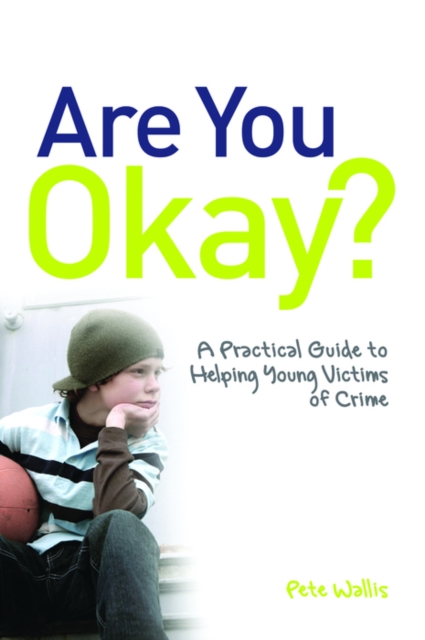
Are You Okay?
How do you spot the signs that a young person has been victimised? What do you do if you are approached by a young person who has been affected by crime or bullying? What is the impact of crime and how can you best aid the young person's recovery? Are You Okay deals with these issues that many adults may face when trying to help a young person in their care in the aftermath of a crime. It provides detailed information on the different types of crime from assault and hate crime to cyberbullying and sexual abuse, and explores how they may affect the young person in different ways. The author also addresses difficult issues such as dealing with fears of retaliation, confidentiality and whether a crime should be reported, the grey area between crime and bullying and how best to assess the young person's needs. This accessible guide will be essential reading for anyone working with children and young people aged 8+, including social workers, youth workers, teachers, police, education welfare officers and victim support and witness service workers.
eBook

Violations of Trust
The past few decades have brought to light increasing evidence of systemic and repeated institutional abuse of children and young people in many western nations. Government enquiries, research studies and media reports have begun to highlight the widespread nature of sexual, physical and emotional abuse of vulnerable children and young people. However, while public attention has focused on 'episodic-dramatic' representations of institutional abuse, comparatively little emphasis has been given to the more mundane, routinized and systemic nature of abuse that has occurred. This book documents comprehensively a full range of abuse occurring in 'caring' and 'protective' institutions, with particular reference to the Australian case. The dominant theme is 'betrayal' and in particular the ways in which agencies charged with the care and protection of children and young people become the sites of abusive practices. The authors draw on a range of theoretical frameworks to explore issues of trust and betrayal in the context of the professional and ethical obligations which workers have to those in their charge. The authors argue that it is not sufficient merely to report on accounts of institutional abuse or the consequences of particular practices; rather it is necessary to locate the prevalence of institutional abuse in the wider context of institutional practices as they relate to the 'governance' of particular sections of the population.
Judith Bessant is Professor in the School of Social Science and Planning at Royal Melbourne Institute of Technology University, (RMIT), Melbourne, Australia. She teaches and researches in the areas of youth studies, social policy, history and sociology, and is the author of a number of books and many articles in national and international journals. Richard Hil is Senior Lecturer in the School of Social Sciences at Southern Cross University in New South Wales, Australia. Rob Watts is Professor of Social Policy in the School of Social Science and Planning, at Royal Melbourne Institute of Technology University, Australia. He is the author/co-author of Foundations of the National Welfare State (1987), Arguing About the Welfare State (1992), Sociology Australia (2003), and Talking Policy (2006).
Contents: Introduction: Government, trust and institutional harm, Judith Bessant, Richard Hil and Rob Watts; Power and knowledge: the making and managing of the 'unfit', Susanne Davis; Dangerousness, surveillance and the institutionalised mistrust of youth, Peter Kelly; Trust, liberal governance and civilisation: the stolen generations, Robert Van Krieken; Trust us: indigenous children and the state, Ruth Webber and Sharon Lacy; 'White Australia' and the Third Reich: the history of child welfare, trust and racial government, 1930-1945, Rob Watts; The abuse of young people in Australia and the conditions for restoring public trust, Judith Bessant and Richard Hil; The lost children: child refugees, Moira Rayner; The myth of ADHD: psychiatric oppression of children, Bob Jacobs; Postscript: 'so how can we live together...?', Uschi Bay; Index.
eBook
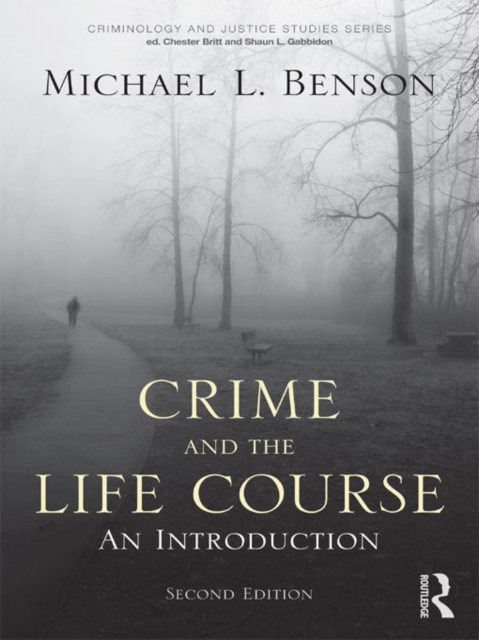
Crime and the lifecourse: an introduction
In recent years, the lifecourse perspective has become a popular theoretical orientation toward crime. Yet despite its growing importance in the field of criminology, most textbooks give it only cursory treatment. Crime and the Lifecourse: An Introductionby Michael L. Benson provides a comprehensive overview of contemporary research and theory on the life-course approach to crime. The book emphasizes a conceptual understanding of this approach. A special feature is the integration of qualitative and quantitative research on criminal life histories. This book: provides an overview of the life course approach and describes the major concepts and issues in lifecourse theory as it applies to criminology reviews evidence on biological and genetic influences on crime reviews research on the role of the family in crime and juvenile delinquency provides a detailed discussion of the criminological lifecourse theories of Moffitt, Hagan, Sampson and Laub, and others discusses the connections between youthful crime and adult outcomes in education, occupation, and marriage presents an application of the lifecourse approach to white-collar crime discusses how macro sociological and historical developments have influenced the shape of the lifecourse in American society as it relates to patterns in crime.
eBook
Grendon Tales
Grendon Prison with its 'Therapuetic Communities' of high security 'residents' has remained noted among Britain's prisons. The author was given access to interview residents and prison staff. At times she found the experience overwhelming, but it is her style which allowed her to write about matters which might otherwise prove raw and distressing.
eBook