
Catalogue Search | MBRL


Are you sure you want to remove the book from the shelf?

{{itemTitle}}
952,878
result(s) for
"Crime and criminals"
Sort by:

Strengths-based approaches to crime and substance use : from drugs and crime to desistance and recovery
Although there is a strong and growing literature in the two areas of desistance and addiction recovery, they have developed along parallel pathways with little systematic assessment of the empirical evidence about the co-occurrence of the relationship or how one area can learn from the other. This book aims to fill that gap by bringing together emerging literature on the relationship between offending and substance use. Instead of focusing on the active period of its onset and persistence, this book examines the mechanisms that support desistance, addiction recovery, and the common themes of reintegration and rehabilitation. With contributions from a wide range of international experts in the fields of desistance and addiction recovery, the book focuses on a strengths-based, relational and community-focused approach to long-term change in offending and drug-using populations, as well as the shared barriers to effective reintegration for both. This book will be highly informative for a wide audience, from academics and students interested in studying desistance and recovery to those working in addiction services and the criminal justice system as well as policy makers and the people undertaking their own journeys to desistance and recovery.
Book

The entangled city
Based on 15 years of ethnographic fieldwork, the book understands the increasing violence seen in cities as a product of the emergence of transnational illegal markets since the 1970's, followed by the suppression of unskilled workers, in many places racialised young men from poor neighbourhoods. The book gives flesh and blood to these transformations through a careful study of Sao Paulo's case in Brazil. The first part of the book is based on the trajectories of three families, featuring young men affiliated with illegal markets such as drug dealing and car theft, although in very different situations. The clash between the everyday life patterns of these black families, compared to Sao Paulo’s white middle classes, gives plausibility to the city’s social conflict, most violent after the 80’s, when transnational markets arrive and incarceration grows. Sao Paulo’s case offers more: this conflict is 70% less lethal in 2017 than it was in the 2000, mostly due to the actions of the PCC (the main criminal group in Brazil, a transnational one) discussed in the second part of the book. The “world of crime” is stronger , yet at the same time homicide rates are falling. The final argument demonstrates that informality, illegality and criminal violence are produced entangling legal and illegal markets and formal/informal institutions, not only in Sao Paulo.
eBook

Deception and financial mayhem : the promise of blockchain technology
Exploring whether the corporate psychopath accountant can be identified, modelled, and ultimately constrained, this book extensively discusses accounting fraud, including recent accounting scandals, and its relationship with Corporate Governance. Major accounting fraud models, including The Fraud Triangle, are examined and the lens of The Dark Triad (Machiavellianism, Narcissism, Psychopathy) is also presented to better understand the perpetrators of accounting fraud. Utilizing the Levenson's Self-Report Psychopathy Scale, a multiple regression model known as the 'Corporate Psychopath Equation' is proposed to potentially identify psychopathic tendencies in accountants and auditors. The foundational aspects of blockchain technology are covered along with its potential to prevent accounting fraud.
BOOK
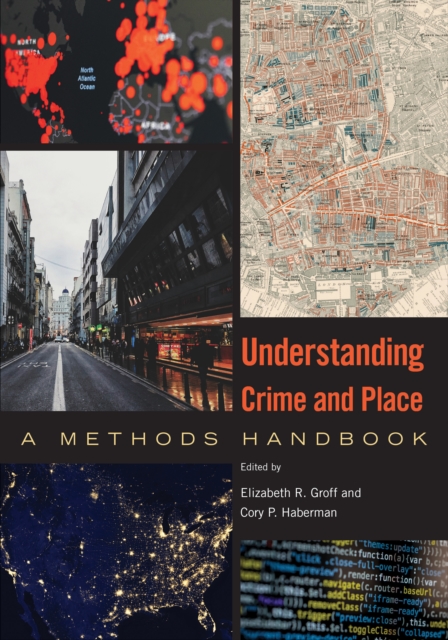
Understanding Crime and Place
Place has become both a major field of criminological study as well as an important area for policy development. Capturing state of the art crime and place research methods and analysis, Understanding Crime and Place is a comprehensive Handbook focused on the specific skills researchers need.
The editors and contributors are scholars who have been fundamental in introducing or developing a particular method for crime and place research. Understanding Crime and Place is organized around the scientific process, introducing major crime and place theories and concepts, discussions of data and data collection, core spatial data concepts, as well as statistical and computational techniques for analyzing spatial data and place-based evaluation. The lessons in the book are supplemented by additional instructions, examples, problems, and datasets available for download.
Conducting place-based research is an emerging field that requires a wide range of cutting-edge methods and analysis techniques that are only beginning to be widely taught in criminology. Understanding Crime and Place bridges that gap, formalizes the discipline, and promotes an even greater use of place-based research.
Contributors: Martin A. Andresen, Matthew P J Ashby, Eric Beauregard, Wim Bernasco, Daniel Birks, Hervé Borrion, Kate Bowers, Anthony A. Braga, Tom Brenneman, David Buil-Gil, Meagan Cahill, Stefano Caneppele, Julien Chopin, Jeffrey E. Clutter, Toby Davies, Hashem Dehghanniri, Jillian Shafer Desmond, Beidi Dong, John E. Eck, Miriam Esteve, Timothy C. Hart, Georgia Hassall, David N. Hatten, Julie Hibdon, James Hunter, Shane D. Johnson, Samuel Langton, YongJei Lee, Ned Levine, Brian Lockwood, Dominique Lord, Nick Malleson, Dennis Mares, David Mazeika, Lorraine Mazerolle, Asier Moneva, Andrew Newton, Bradley J. O'Guinn, Ajima Olaghere, Graham C. Ousey, Ken Pease, Eric L. Piza, Jerry Ratcliffe, Caterina G. Roman, Stijn Ruiter, Reka Solymosi, Evan T. Sorg, Wouter Steenbeek, Hannah Steinman, Ralph B. Taylor, Marie Skubak Tillyer, Lisa Tompson, Brandon Turchan, David Weisburd, Brandon C. Welsh, Clair White, Douglas J. Wiebe, Pamela Wilcox, David B. Wilson, Alese Wooditch, Kathryn Wuschke, Sue-Ming Yang, and the editors.
eBook

Key concepts in crime fiction
\"An insight into a popular yet complex genre that has developed over the nineteenth and twentieth centuries. The volume explores the contemporary anxieties to which crime fiction responds, along with society's changing conceptions of crime and criminality. The book covers texts, contexts and criticism in an accessible and user-friendly format\"-- Provided by publisher.
Book

The hidden history of crime, corruption, and states
Renowned historical sociologist Charles Tilly wrote many years ago that \"banditry, piracy, gangland rivalry, policing, and war-making all belong on the same continuum.\" This volume pursues the idea by revealing how lawbreakers and lawmakers have related to one another on the shadowy terrains of power over wide stretches of time and space. Illicit activities and forces have been more important in state building and state maintenance than conventional histories have acknowledged. Covering vast chronological and global terrain, this book traces the contested and often overlapping boundaries between these practices in such very different polities as the pre-modern city-states of Europe, the modern nation-states of France and Japan, the imperial power of Britain in India and North America, Africa's and Southeast Asia's postcolonial states, and the emerging postmodern regional entity of the Mediterranean Sea. Indeed, the contemporary explosion of transnational crime raises the question of whether or not the relationship of illicit to licit practices may be mutating once more, leading to new political forms beyond the nation-state.
eBook

On the run
Twelve-year-old Ben, who aspires to be a police officer, struggles to do the right thing when his parents suddenly take him and his little sister \"on vacation,\" and he learns they took a large amount of money that was mistakenly deposited in their bank account.
Book

Space-Time Dynamics of Crime in Transport Nodes
This article assesses space-time variations of crime rates in underground stations. Drawing on assumptions from time geography, routine activity principles, and defensible space theory, the study investigates daily, weekly, and seasonal variations of crime at underground stations in the Swedish capital, Stockholm. Data from extensive field work at the stations was combined with crime records and passenger flow to test whether stations' environmental attributes affect crime at different times. Geographical information systems, spatial statistic techniques, and modeling underpin the methodology used in the study. Findings show that crimes tend to happen more often in the evening, at night, on holidays, and on weekends. There is also evidence of seasonal variations of crime. In the winter, stations with social disturbance and signs of deterioration show high levels of crime, whereas in the summer, offenses are concentrated in stations nearby alcohol selling outlets. Stations with hiding spots are often targeted for crime during daily peak hours, whereas during holidays, crowded stations and those with alcohol selling outlets attract more criminal activities. Results suggest that the role of the stations' environment on crime causation varies over time-an important fact for safety interventions.
Journal Article

The criminalization of migration : context and consequences
With over 240 million migrants in the world, including over 65 million forced migrants and refuggees, states have turned to draconian measures to stem the flow of irregular migration, including the criminalization of migration itself. Canada, perceived as a nation of immigrants and touted as one of the most generous countries in the world today for its reception of refugees, has not been immune from these practices. This book examines the \"crimmigration\" -- the criminalization of migration -- from national and comparative perspectives, drawing attention to the increasing use of criminal law measures, public policies, and practices that stigmatize or diminish the rights of forced migrants and regugees within a dominant public discourse that not only steoreotypes and criminalizes but marginalized forced migrants. -- Provided by publisher.
Book

Teaching Fear
Where do lessons of \"stranger danger\" and safety come from—and do they apply differently for women? A gender-fear paradox shows that although women are less likely to be victims of most crimes (sexual assault aside), their fear of crime is greater. Moreover, girls and women—especially White women—are taught to fear the wrong things and given impossible tools to prevent victimization. In Teaching Fear, Nicole Rader zooms in on the social learning process, tracing the ways that families, schools, and the media have become obsessed with crime myths, especially regarding girls and women.
Based on in-depth research and family studies, Rader reveals the dubious and dangerous origins of many of the most prominent safety guidelines that teach young girls to be more afraid of crime. These guidelines carry over to adulthood, influencing women's behaviors and the way they order their worlds, with dangerous consequences. As women teach their learned behavior and conditioned fear to others, gendered crime myths are recirculated from generation to generation, making them a staple in our society.
Teaching Fear includes suggestions for taking precautionary measures and crime prevention strategies. Rader also provides guidance for instilling safety values and demonstrating how we can \"teach fear better\" to break this cycle and truly create greater security.
eBook