
Catalogue Search | MBRL


Are you sure you want to remove the book from the shelf?

{{itemTitle}}
18,529
result(s) for
"Criminal Law - history"
Sort by:


Reassessing the nuremberg military tribunals
For decades the history of the US Military Tribunals at Nuremberg (NMT) has been eclipsed by the first Nuremberg trial-the International Military Tribunal or IMT. The dominant interpretation-neatly summarized in the ubiquitous formula of \"Subsequent Trials\"-ignores the unique historical and legal character of the NMT trials, which differed significantly from that of their predecessor. The NMT trials marked a decisive shift both in terms of analysis of the Third Reich and conceptualization of international criminal law. This volume is the first comprehensive examination of the NMT and brings together diverse perspectives from the fields of law, history, and political science, exploring the genesis, impact, and legacy of the twelve Military Tribunals held at Nuremberg between 1946 and 1949.
eBook

The new histories of international criminal law : retrials
The language of international criminal law has considerable traction in global politics, and much of its legitimacy is embedded in apparently 'axiomatic' historical truths. This innovative edited collection brings together some of the world's leading international lawyers with a very clear mandate in mind: to re-evaluate ('retry') the dominant historiographical tradition in the field of international criminal law.0Carefully curated, and with contributions by leading scholars, The New Histories of International Criminal Law pursues three research objectives: to bring to the fore the structure and function of contemporary histories of international criminal law, to take issue with the consequences of these histories, and to call for their demystification. The essays discern several registers on which the received historiographical tradition must be retried: tropology; inclusions/exclusions;gender; race; representations of the victim and the perpetrator; history and memory; ideology and master narratives; international criminal law and hegemonic theories; and more.0This book intervenes critically in the fields of international criminal law and international legal history by bringing in new voices and fresh approaches. Taken as a whole, it provides a rich account of the dilemmas, conundrums, and possibilities entailed in writing histories of international criminal law beyond, against, or in the shadow of the master narrative.
Book

The Nuremberg Military Tribunals and the Origins of International Criminal Law
This book provides a comprehensive legal analysis of the twelve war crimes trials held in the American zone of occupation between 1946 and 1949, collectively known as the Nuremberg Military Tribunals (NMTs). The judgments the NMTs produced have played a critical role in the development of international criminal law, particularly in terms of how courts currently understand war crimes, crimes against humanity, and the crime of aggression. The trials are also of tremendous historical importance, because they provide a far more comprehensive picture of Nazi atrocities than their more famous predecessor, the International Military Tribunal at Nuremberg (IMT). The IMT focused exclusively on the ‘major war criminals’ — the Goerings, the Hesses, the Speers. The NMTs, by contrast, prosecuted doctors, lawyers, judges, industrialists, bankers — the private citizens and lower-level functionaries whose willingness to take part in the destruction of millions of innocents manifested what Hannah Arendt famously called ‘the banality of evil’. The book is divided into five sections. The first section traces the evolution of the twelve NMT trials. The second section discusses the law, procedure, and rules of evidence applied by the tribunals, with a focus on the important differences between Law No. 10 and the Nuremberg Charter. The third section, the heart of the book, provides a systematic analysis of the tribunals' jurisprudence. It covers Law No. 10's core crimes — crimes against peace, war crimes, and crimes against humanity — as well as the crimes of conspiracy and membership in a criminal organization. The fourth section then examines the modes of participation and defences that the tribunals recognized. The final section deals with sentencing, the aftermath of the trials, and their historical legacy.
eBook

The insanity defense : multidisciplinary views on its history, trends, and controversies
\"Please do not supply a summary with this CIP\"-- Provided by publisher.
Book

The Roman Inquisition
While the Spanish Inquisition has laid the greatest claim to both scholarly attention and the popular imagination, the Roman Inquisition, established in 1542 and a key instrument of papal authority, was more powerful, important, and long-lived. Founded by Paul III and originally aimed to eradicate Protestant heresy, it followed medieval antecedents but went beyond them by becoming a highly articulated centralized organ directly dependent on the pope. By the late sixteenth century the Roman Inquisition had developed its own distinctive procedures, legal process, and personnel, the congregation of cardinals and a professional staff. Its legal process grew out of the technique of inquisitio formulated by Innocent III in the early thirteenth century, it became the most precocious papal bureaucracy on the road to the first \"absolutist\" state.As Thomas F. Mayer demonstrates, the Inquisition underwent constant modification as it expanded. The new institution modeled its case management and other procedures on those of another medieval ancestor, the Roman supreme court, the Rota. With unparalleled attention to archival sources and detail, Mayer portrays a highly articulated corporate bureaucracy with the pope at its head. He profiles the Cardinal Inquisitors, including those who would play a major role in Galileo's trials, and details their social and geographical origins, their education, economic status, earlier careers in the Church, and networks of patronage. At the point this study ends, circa 1640, Pope Urban VIII had made the Roman Inquisition his personal instrument and dominated it to a degree none of his predecessors had approached.
eBook


The Roman Inquisition on the Stage of Italy, c. 1590-1640
From the moment of its founding in 1542, the Roman Inquisition acted as a political machine. Although inquisitors in earlier centuries had operated somewhat independently of papal authority, the gradual bureaucratization of the Roman Inquisition permitted the popes increasing license to establish and exercise direct control over local tribunals, though with varying degrees of success. In particular, Pope Urban VIII's aggressive drive to establish papal control through the agency of the Inquisition played out differently among the Italian states, whose local inquisitions varied in number and secular power. Rome's efforts to bring the Venetians to heel largely failed in spite of the interdict of 1606, and Venice maintained lay control of most religious matters. Although Florence and Naples resisted papal intrusions into their jurisdictions, on the other hand, they were eventually brought to answer directly to Rome-due in no small part to Urban VIII's subversions of the law.
Thomas F. Mayer provides a richly detailed account of the ways the Roman Inquisition operated to serve the papacy's long-standing political aims in Naples, Venice, and Florence. Drawing on the Inquisition's own records, diplomatic correspondence, local documents, newsletters, and other sources, Mayer sheds new light on papal interdicts and high-profile court cases that signaled significant shifts in inquisitorial authority for each Italian state. Alongside his earlier volume,The Roman Inquisition: A Papal Bureaucracy and Its Laws in the Age of Galileo, this masterful study extends and develops our understanding of the Inquisition as a political and legal institution.
eBook

Policing the factory : theft, private policing and the law in modern England
David J. Cox and Barry Godfrey desribe the origins of employers' police agencies that operated in 19th and 20th century England and how they interacted with other police agencies.
Book
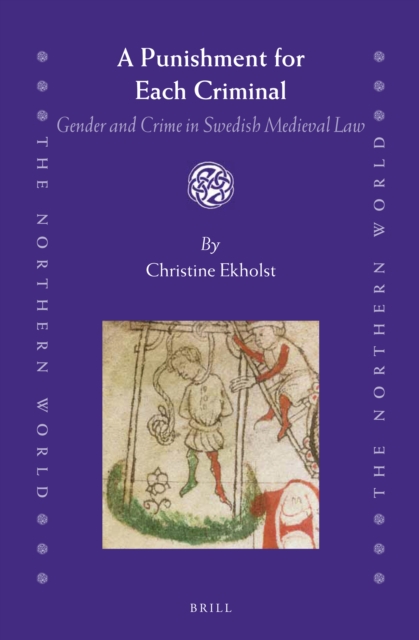
A punishment for each criminal: gender and crime in Swedish medieval law
A Punishment for Each Criminal is the first in-depth analysis of how gender influenced Swedish medieval law. Christine Ekholst demonstrates how the law codes gradually and unevenly introduced women as possible perpetrators for all serious crimes. The laws reveal that legislators not only expected men and women to commit different types of crimes; they also punished men and women in different ways if they were convicted. The laws consistently stipulated different methods of executions for men and women; while men were hanged or broken on the wheel, women were buried alive, stoned, or burned at the stake. A Punishment for Each Criminal explores the background to the important legislative changes that took place when women were made personally responsible for their own crimes.
eBook