
Catalogue Search | MBRL


Are you sure you want to remove the book from the shelf?

{{itemTitle}}
23,870
result(s) for
"Criminal justice system"
Sort by:

Black lives, white law : locked up and locked out in Australia
Indigenous Australians are the most incarcerated people on the planet. Indigenous men are fifteen times more likely to be locked up than their non-Indigenous counterparts; Indigenous women are twenty-one times more likely. Featuring vivid case studies and drawing on a deep sense of history, Black Lives, White Law explores Australia's deplorable record of locking up First Nations people. It examines Australia's system of criminal justice - the web of laws and courts and police and prisons - and how that system interacts with First Nations peoples and communities. How is it that so many are locked up? Why have imprisonment rates increased in recent years? Is this situation fair? Almost everyone agrees that it's not. And yet it keeps getting worse.
BOOK

Indigenous People, Crime and Punishment
Indigenous People, Crime and Punishment examines criminal sentencing courts' changing characterisations of Indigenous peoples' identity, culture and postcolonial status. Focusing largely on Australian Indigenous peoples, but drawing also on the Canadian experiences, Thalia Anthony critically analyses how the judiciary have interpreted Indigenous difference. Through an analysis of Indigenous sentencing remarks over a fifty year period in a number of jurisdictions, the book demonstrates how judicial discretion is moulded to dominant white assumptions about Indigeneity. More specifically, Indigenous People, Crime and Punishment shows how the increasing demonisation of Indigenous criminality and culture in sentencing has turned earlier 'gains' in the legal recognition of Indigenous peoples on their head. The recognition of Indigenous difference is thereby revealed as a pliable concept that is just as likely to remove concessions as it is to grant them. Indigenous People, Crime and Punishment suggests that Indigenous justice requires a two-way recognition process where Indigenous people and legal systems are afforded greater control in sentencing, dispute resolution and Indigenous healing.
eBook


RESTORATIVE JUSTICE AND SEXUAL ASSAULT: An Archival Study of Court and Conference Cases
As restorative justice has grown in popularity worldwide, mainly in response to youth crime, controversy surrounds its use for sexual, partner and family violence cases. With some exceptions, all jurisdictions have put these offences beyond the reach of restorative justice for both youth and adult offenders and, thus, empirical evidence is lacking. This paper presents findings from an archival study of nearly 400 cases of youth sexual assault, which were finalized in court and by conference or formal caution over a six-and-a-half-year period in South Australia, to address these questions: (1) What differentiates a court from a conference case? (2) What happens once a case goes to court, e.g. what share of cases is dismissed and how do penalties vary for court and conference cases? (3) From a victim's point of view, what appears to be the better option—having one's case go to court or conference? Contrary to the concerns raised by critics of conferencing, from a victim's advocacy perspective, the conference process may be less victimizing than the court process and its penalty regime may produce more effective outcomes.
Journal Article

RESTORATIVE JUSTICE AND CHILD SEX OFFENCES: The Theory and the Practice
Restorative justice advocates have made a number of claims about the effectiveness of restorative justice in relation to sexual assault crimes, such as its ability to defuse power relations between the parties and heal the harm. This article examines whether or not restorative justice is one of the ways forward in the difficult area of prosecuting child sex offences by re-analysing some of the data reported in Daly (2006) and comparing restorative justice with other reforms to the sexual assault trial. It concludes that there is insufficient evidence to support the view that there are inherent benefits in the restorative justice process that provide victims of sexual assault with a superior form of justice.
Journal Article
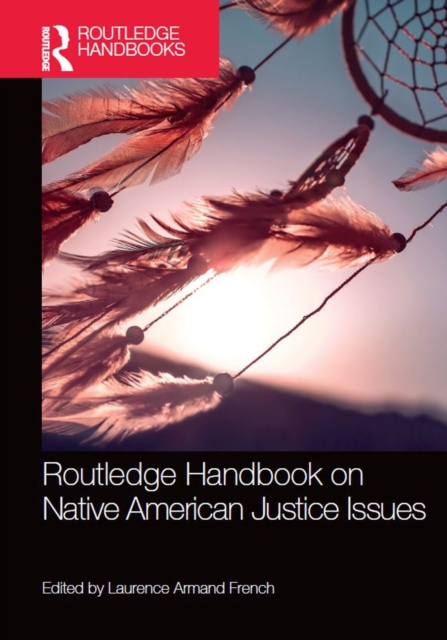
Routledge Handbook on Native American Justice Issues
Native Americans are disproportionately represented as offenders in the U.S. criminal justice system. Routledge Handbook on Native American Justice Issues is an authoritative volume that provides an overview of the state of American Indigenous populations and their contact with justice concerns and the criminal justice system. The volume covers the history and origins of Indian Country in America; continuing controversies regarding treaties; unique issues surrounding tribal law enforcement; the operation of tribal courts and corrections, including the influence of Indigenous restorative justice practices; the impact of native religions and customs; youth justice issues, including educational practices and gaps; women's justice issues; and special circumstances surrounding healthcare for Indians, including the role substance abuse plays in contributing to criminal justice problems.
Bringing together contributions from leading scholars - many of them Native Americans - that explore key issues fundamental to understanding the relationships between Native peoples and contemporary criminal justice, editor Laurence Armand French draws on more than 40 years of experience with Native American individuals and groups to provide contextual material that incorporates criminology, sociology, anthropology, cultural psychology, and history to give readers a true picture of the wrongs perpetrated against Native Americans and their effects on the current operation of Native American justice. This compilation analyzes the nature of justice for Native Americans, including unique and emerging problems, theoretical issues, and policy implications. It is a valuable resource for all scholars with an interest in Native American culture and in the analysis and rectification of the criminal justice system's disparate impact on people of color.
eBook

Colonialism Is Crime
There is powerful evidence that the colonization of Indigenous people was and is a crime, and that that crime is on-going. Achieving historical colonial goals often meant committing acts that were criminal even at the time. The consequences of this oppression and criminal victimization is perhaps the critical factor explaining why Indigenous people today are overrepresented as victims and offenders in the settler colonist criminal justice systems. This book presents an analysis of the relationship between these colonial crimes and their continuing criminal and social consequences that exist today. The authors focus primarily on countries colonized by Britain, especially the United States. Social harm theory, human rights covenants, and law are used to explain the criminal aspects of the historical laws and their continued effects. The final chapter looks at the responsibilities of settler-colonists in ameliorating these harms and the actions currently being taken by Indigenous people themselves.
eBook

Self-control in first grade predicts success in the transition to adulthood
Childhood self-control has been linked with better health, criminal justice, and economic outcomes in adulthood in predominately white cohorts outside of the United States. We investigated whether self-control in first grade predicted success in the transition to adulthood in a longitudinal cohort of first graders who participated in a universal intervention trial to prevent poor achievement and reduce aggression in Baltimore schools. We also explored whether the intervention moderated the relationship between self-control and young adult outcomes. Teachers rated self-control using the Teacher Observation of Classroom Adaptation-Revised. Study outcomes were on-time high school graduation, college participation, teen pregnancy, substance use disorder, criminal justice system involvement, and incarceration (ages 19–26). Latent profile analysis was used to identify classes of childhood self-control. A high self-control class ( n = 279, 48.1%), inattentive class ( n = 201, 35.3%), and inattentive/hyperactive class ( n = 90, 16.6%) were identified. Children with better self-control were more likely to graduate on time and attend college; no significant class differences were found for teen pregnancy, substance use disorder, criminal justice system involvement, or incarceration. A classroom-based intervention reduced criminal justice system involvement and substance use disorder among children with high self-control. Early interventions to promote child self-control may have long-term individual and social benefits.
Journal Article

How the Criminal Justice System Educates Citizens
There are at least two central pathways through which the modern democratic state interacts with citizens: public school systems and criminal justice systems. Rarely are criminal justice systems thought to serve the educational function that public school systems are specifically designed to provide. Yet for an increasing number of Americans, the criminal justice system plays a powerful and pervasive role in providing a civic education, in anticitizenry, that is the reverse of the education that public schools are supposed to offer. We deploy curriculum theory to analyze three primary processes of the criminal justice system—jury service, incarceration, and policing—and demonstrate the operation of two parallel curricula within them: a symbolic, overt curriculum rooted in positive civic conceptions of fairness and democracy; and a hidden curriculum, rooted in empty or negative conceptions of certain citizens and their relationship to the state.
Journal Article