
Catalogue Search | MBRL


Are you sure you want to remove the book from the shelf?

{{itemTitle}}
9,714
result(s) for
"Crises Europe."
Sort by:


Messy Europe
Using the economic crisis as a starting point, Messy Europe offers a critical new look at the issues of race, gender, and national understandings of self and other in contemporary Europe. It highlights and challenges historical associations of Europe with whiteness and modern civilization, and asks how these associations are re-envisioned, re-inscribed, or contested in an era characterized by crises of different kinds. This important collection provides a nuanced exploration of how racialized identities in various European regions are played out in the crisis context, and asks what work “crisis talk” does, considering how it motivates public feelings and shapes bodies, boundaries and communities.
eBook


Constitutions in the Global Financial Crisis
This book is the first to address the multi-faceted influence of the global financial crisis on the national constitutions of the countries most affected. By tracing the impact of the crisis on formal and informal constitutional change, sovereignty issues, fundamental rights protection, regulatory reforms, jurisprudence, the augmentation of executive power, and changes in the party system it addresses all areas of the current constitutional law dialogue and aims to become a reference book with regard to the interaction between financial crises and constitutions.
The book includes contributions from prominent experts on Greece, Hungary, Iceland, Ireland, Italy, Latvia, Portugal, Spain, the UK, and the USA providing a critical analysis of the effects of the financial crisis on the constitution. The volume's extensive comparative chapter pins down distinct constitutional reactions towards the financial crisis, building an explanatory theory that accounts for the different ways constitutions responded to the crisis. How and why constitutions formed their reactions in the face of the financial crisis unravels throughout the book.
eBook

Messy Europe : Crisis, Race and Nation-state in a Postcolonial World
\"Using the economic crisis as a starting point, Messy Europe offers a critical new look at the issues of race, gender, and national understandings of self and other in contemporary Europe. It highlights and challenges historical associations of Europe with whiteness and modern civilization, and asks how these associations are re-envisioned, re-inscribed, or contested in an era characterized by crises of different kinds. This important collection provides a nuanced exploration of how racialized identities in various European regions are played out in the crisis context, and asks what work \"crisis talk\" does, considering how it motivates public feelings and shapes bodies, boundaries and communities.\"--Provided by publisher.
BOOK
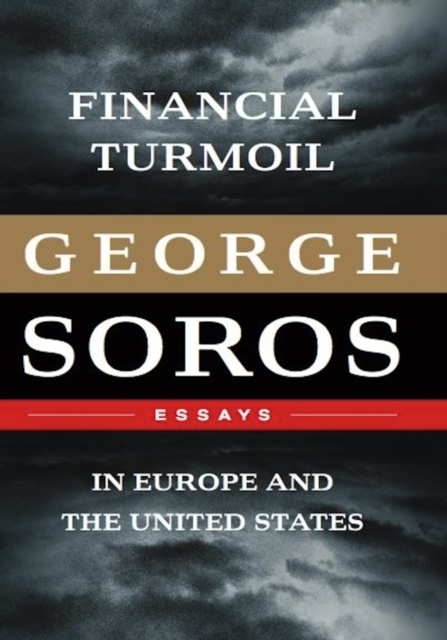
Financial Turmoil in Europe and the United States
The dire economic situation we find ourselves in is not a result of economic forces alone, but of the policies pursued, and not pursued, by world leaders. In this collection of his recent writings on the global financial situation, George Soros presents his views and analysis of key economic policy choices leading up to, during, and following the financial crisis of 2008-2009. Soros explores domestic and international policy choices like how to manage the (then) potential implosion of Fannie Mae & Freddie Mac, deploying measures to stem global contagion from the sub-prime crisis, alternative options on bailing out lesser developed countries and why this was vital, the structural problems of European economic management, and more. Financial Turmoil in Europe and the United States elegantly distills the choices at hand, and takes the reader on a journey of real time economic policy work and experimentation.
eBook


Agrarian Change and Crisis in Europe, 1200-1500
Agrarian Change and Crisis in Europe, 1200-1500 addresses one of the classic subjects on economic history: the process of aggregate economic growth and the crisis that engulfed the European continent during the late Middle Ages. This was not an ordinary crisis. During the period 1200-1500, Europe witnessed endemic episodes of famine and a wave of plague epidemics that amounted to one of its worst health crises, rivaled only by the Justinian plague in the sixth century. These challenges called into question the production of goods and services and the distribution of wealth, opening the possibility of fundamental systemic change.
This book offers an empirical synthesis on a host of economic, demographic, and technological developments which characterized the period 1200-1500. It covers virtually the entire continent and places equal emphasis both on providing a solid factual framework and comparing and contrasting various theoretical interpretations. The broad geographical and conceptual scope of the book renders it indispensable not only for undergraduate students who take courses relating to the economic and social life of the Middle Ages but also to more advanced scholars who often specialize in only one country or region.
eBook

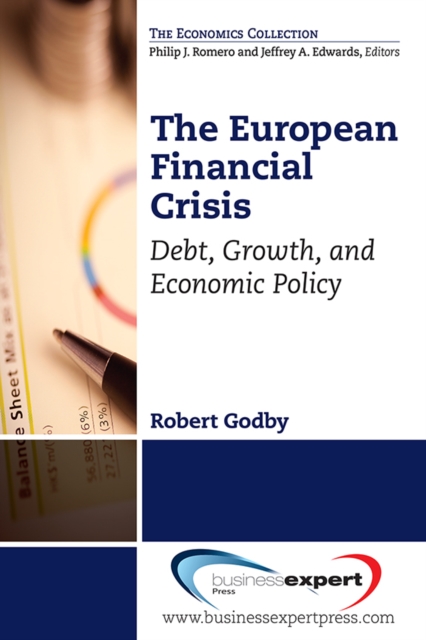
The European financial crisis
The European debt crisis has posed a challenge for many people to understand, both non-Europeans and Europeans alike. Even economists, finance specialists, and market commentators are often uncertain of its causes or in the interpretation of events ongoing, or of past events that have taken place that then shaped the current situation. Typically, this lack of comprehension results from a lack of understanding of how European institutions work, the structure of European politics and the Eurozone, the economics of the financial system, or the relationship of debt markets to current government policies in the European Union (EU). The purpose of this book is to describe the causes and outcomes of the European debt crisis (to the date of publication) within the context of three questions most often asked about the debt crisis: (i) what happened, (ii) why did it happen, and (iii) why has the crisis been so difficult for policy makers to address?
eBook