
Catalogue Search | MBRL


Are you sure you want to remove the book from the shelf?

{{itemTitle}}
67,981
result(s) for
"Critical theory."
Sort by:


Unworkable
Unworkable discusses the ongoing implosion of our
globalized world from three distinct angles: the capitalist
elimination of labor through technological automation, the
dissolution of our shared social narratives, and the subtle
imposition of an increasingly pervasive ideological order. Aiming
to root out the lost cause of this implosion, Fabio Vighi returns
to Marx by way of Hegel, Lacan, Gorz, Baudrillard, and other
thinkers who, in different ways, have reflected on the complex
dialectical structure of modernity and its hidden conditions of
possibility. Capitalism, Vighi argues, fundamentally redefined the
meaning of work and prevented the emergence of alternative forms of
life. In our own time, the delusions of work and the values that
propel life under capitalism have become, in Vighi's analysis,
unworkable . And yet, even as we become an increasingly
\"workless\" society, we continue to abide by the same laws of
productivity and profit.
eBook

Critical theory
\"Critical theory emerged in the 1920s from the work of the Frankfurt School, the circle of German-Jewish academics who sought to diagnose--and, if at all possible, cure--the ills of society, particularly fascism and capitalism. In this book, Stephen Eric Bronner provides sketches of leading representatives of the critical tradition (such as George Lukâacs and Ernst Bloch, Theodor Adorno and Walter Benjamin, Herbert Marcuse and Jurgen Habermas) as well as many of its seminal texts and empirical investigations\"--Publisher marketing.
Book

Contemporary Critical Theory and Methodology
Contemporary critical theory's methodology is currently taking shape under the impact both of transformative internal develops within the discipline, and of external pressures and incentives arising from a series of international debates.
In this book, Piet Strydom presents a groundbreaking treatment of critical theory's methodology, using as a base the reconstruction of the left-Hegelian tradition, the relation between critical theory and pragmatism, and the associated metatheoretical implications. He assesses extant positions, presents a detailed yet comprehensive restatement and development of critical theory's methodology, compares it with a wide range of current concepts of social criticism and critique, and analyzes leading critical theorists' exemplary applications of it. Besides immanent transcendence and the sign-mediated epistemology common to the left-Hegelian tradition, special attention is given to the abductive imagination, reconstruction, normative and causal explanation, explanatory mechanisms and the communicative framework which enables critical theory to link up with its addressees and the public.
Contemporary Critical Theory and Methodology is recommended reading for senior undergraduate and postgraduate students, as well as professionals working within disciplines such as sociology, philosophy, political science, critical theory and cultural studies.
eBook

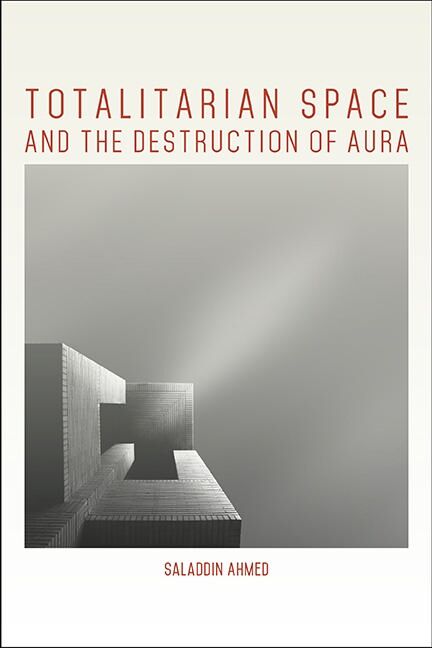
Totalitarian Space and the Destruction of Aura
We live today within a system in which state and corporate power
aim to render space flat, transparent, and uniform, for only then
can it be truly controlled. The gaze of power and the commodity
form are capable of infiltrating even the darkest of corners, and
often, we invite them into our most private spaces. We do so as a
matter of convenience, but also to placate ourselves and cope with
the alienation inherent in our everyday lives. The resulting
dominant space can best be termed totalitarian. It is space
stripped of uniqueness, deprived of the \"spatial aura\" necessary
for authentic experience. In Totalitarian Space and the
Destruction of Aura , Saladdin Ahmed sets out to help us grasp
what has been lost before no trace remains. He draws attention to
that which we might prefer not to see, but despite the bleakness of
this indictment of reality, the book also offers a message of hope.
Namely, it is only once we comprehend the magnitude of the threat
to our spatial experience and our own complicity in sustaining this
system that we can begin to resist the totalizing forces at work.
eBook

Theory Does Not Exist
A wide-ranging collection of essays that makes the case for the humanities as central to our self-understanding, for theory as the latest incarnation of a perennial concern with the relation between words and things, and for the ancient as constitutive of the modern.
eBook

Introducing critical theory
The last few decades have seen an explosion in the production of critical theories, with deconstructionists, poststructuralists, postmodernists, second-wave feminists, new historicists, cultural materialists, postcolonialists, black critics and queer theorists, among a host of others, all vying for our attention. The world around us can look very different on the critical theory applied to it. This vast range of interpretations can leave one feeling confused and frustrated. This book provides a route through the tangled jungle of competing theories.
Book
Critical Theory from the Margins
Great critical theorists from Marx and Engels to Adorno and
Horkheimer not only came from the margins but also stayed faithful
to the plight of the marginalized. They refused to compromise about
the struggle for equality and tried to universalize its
emancipatory essence. From Marx to Benjamin, critical philosophers
who showed fidelity to the cause were denied a career in European
universities and made impoverished, stateless, and homeless.
Marginalization and critical theory are inseparable; yet, today,
Marxism is institutionalized, and the Frankfurt School's Critical
Theory is gentrified. Critical Theory from the Margins ,
however, revives the Critical Theory that endorses criticism,
aiming to negate dominant regimes of truth. It is unapologetic in
its fidelity to the universalist struggles of the minoritized. In
that spirit, Saladdin Ahmed shows that capitalism imposes a
totalitarian social mode of existence and neoliberalism perpetuates
fascism as a class of ideology across nationalist and religious
movements. This book, then, is both a theorization and an argument
in favor of the application of the episteme of the silenced as the
essence of the critical education necessary for achieving universal
emancipation.
eBook