
Catalogue Search | MBRL


Are you sure you want to remove the book from the shelf?

{{itemTitle}}
11,843
result(s) for
"Criticism, Textual."
Sort by:


Reading the Letters of Pliny the Younger
This is the first general introduction to Pliny's Letters published in any language, combining close readings with broader context and adopting a fresh and innovative approach to reading the letters as an artistically structured collection. Chapter 1 traces Pliny's autobiographical narrative throughout the Letters; Chapter 2 undertakes detailed study of Book 6 as an artistic entity; while Chapter 3 sets Pliny's letters within a Roman epistolographical tradition dominated by Cicero and Seneca. Chapters 4 to 7 study thematic letter cycles within the collection, including those on Pliny's famous country villas and his relationships with Pliny the Elder and Tacitus. The final chapter focuses on the 'grand design' which unifies and structures the collection. Four detailed appendices give invaluable historical and scholarly context, including a helpful timeline for Pliny's life and career, detailed bibliographical help on over 30 popular topics in Pliny's letters and a summary of the main characters mentioned in the Letters.
eBook


Printing the Middle Ages
In Printing the Middle Ages Siân Echard looks to the postmedieval, postmanuscript lives of medieval texts, seeking to understand the lasting impact on both the popular and the scholarly imaginations of the physical objects that transmitted the Middle Ages to the English-speaking world. Beneath and behind the foundational works of recovery that established the canon of medieval literature, she argues, was a vast terrain of books, scholarly or popular, grubby or beautiful, widely disseminated or privately printed. By turning to these, we are able to chart the differing reception histories of the literary texts of the British Middle Ages. For Echard, any reading of a medieval text, whether past or present, amateur or academic, floats on the surface of a complex sea of expectations and desires made up of the books that mediate those readings.Each chapter of Printing the Middle Ages focuses on a central textual object and tells its story in order to reveal the history of its reception and transmission. Moving from the first age of print into the early twenty-first century, Echard examines the special fonts created in the Elizabethan period to reproduce Old English, the hand-drawn facsimiles of the nineteenth century, and today's experiments with the digital reproduction of medieval objects; she explores the illustrations in eighteenth-century versions of Guy of Warwick and Bevis of Hampton; she discusses nineteenth-century children's versions of the Canterbury Tales and the aristocratic transmission history of John Gower's Confessio Amantis; and she touches on fine press printings of Dante, Froissart, and Langland.
eBook


WHICH TEXTUALISM?
The academic indictment of textualism was almost in. Although textualism has in recent decades gained considerable prominence within the federal judiciary, legal scholars remain skeptical: critics argue that textualism is insensitive to the actual workings of Congress, overly rigid, or (conversely) overly malleable and thus not much different from its main competitor purposivism. Moreover, some critics charge that textualism is not a neutral method of interpretation at all. Instead, these commentators insist, textualism is often used as a smokescreen by conservative judges to reach ideologically acceptable outcomes.
Journal Article


Exploring the Self, Subjectivity, and Character across Japanese and Translation Texts
This study investigates our multiple selves as manifested in how we use language. Applying philosophical contrastive pragmatics to original and translation of Japanese and English works, the concept of empty yet populated self in Japanese is explored.
eBook

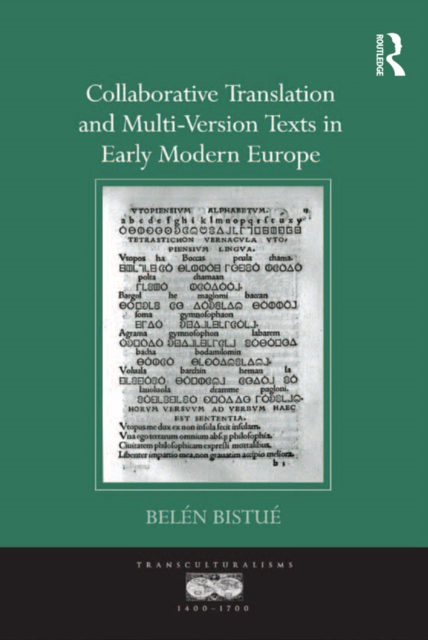
Collaborative Translation and Multi-Version Texts in Early Modern Europe
Focusing on team translation and the production of multilingual editions, and on the difficulties these techniques created for Renaissance translation theory, this book interrogates textual practices that were widespread in medieval and Renaissance Europe but have been excluded from translation and literary history. Comparing actual translation texts and strategies with the forceful theoretical demands for unity that characterize the reflections of early modern translators, the author challenges assumptions frequently made in translation and literary analysis.
eBook