
Catalogue Search | MBRL


Are you sure you want to remove the book from the shelf?

{{itemTitle}}
2,795
result(s) for
"Criticism -- United States -- History -- 20th century"
Sort by:

Listening for America : inside the great American songbook from Gershwin to Sondheim
\"\"Not since the late Leonard Bernstein has classical music had a combination salesman-teacher as irresistible as Kapilow.\" -Kansas City Star Few people in recent memory have dedicated themselves as devotedly to the story of twentieth- century American music as Rob Kapilow, the composer, conductor, and host of the hit NPR music radio program, What Makes It Great? Now, in Listening for America, he turns his keen ear to the Great American Songbook, bringing many of our favorite classics to life through the songs and stories of eight of the twentieth century's most treasured American composers-Kern, Porter, Gershwin, Arlen, Berlin, Rodgers, Bernstein, and Sondheim. Hardly confining himself to celebrating what makes these catchy melodies so unforgettable, Kapilow delves deeply into how issues of race, immigration, sexuality, and appropriation intertwine in masterpieces like Show Boat and West Side Story. A book not just about musical theater but about America itself, Listening for America is equally for the devotee, the singer, the music student, or for anyone intrigued by how popular music has shaped the larger culture, and promises to be the ideal gift book for years to come\"-- Provided by publisher.
Book

Maximum Movies—Pulp Fictions
In the words of Richard Maltby . . . \"Maximum Movies--Pulp Fictions describes two improbably imbricated worlds and the piece of cultural history their intersections provoked.\" One of these worlds comprises a clutch of noisy, garish pulp movies--Kiss Me Deadly, Shock Corridor, Fixed Bayonets!, I Walked with a Zombie, The Lineup, Terror in a Texas Town, Ride Lonesome--pumped out for the grind houses at the end of the urban exhibition chain by the studios' B-divisions and fly-by-night independents. The other is occupied by critics, intellectuals, cinephiles, and filmmakers such as Jean-Luc Godard, Manny Farber, and Lawrence Alloway, who championed the cause of these movies and incited the cultural guardians of the day by attacking a rigorously policed canon of tasteful, rarified, and ossified art objects. Against the legitimate, and in defense of the illegitimate, in an insolent and unruly manner, they agitated for the recognition of lurid sensational crime stories, war pictures, fast-paced Westerns, thrillers, and gangster melodramas were claimed as examples of the true, the real, and the authentic in contemporary culture--the foundation upon which modern film studies sits.
eBook

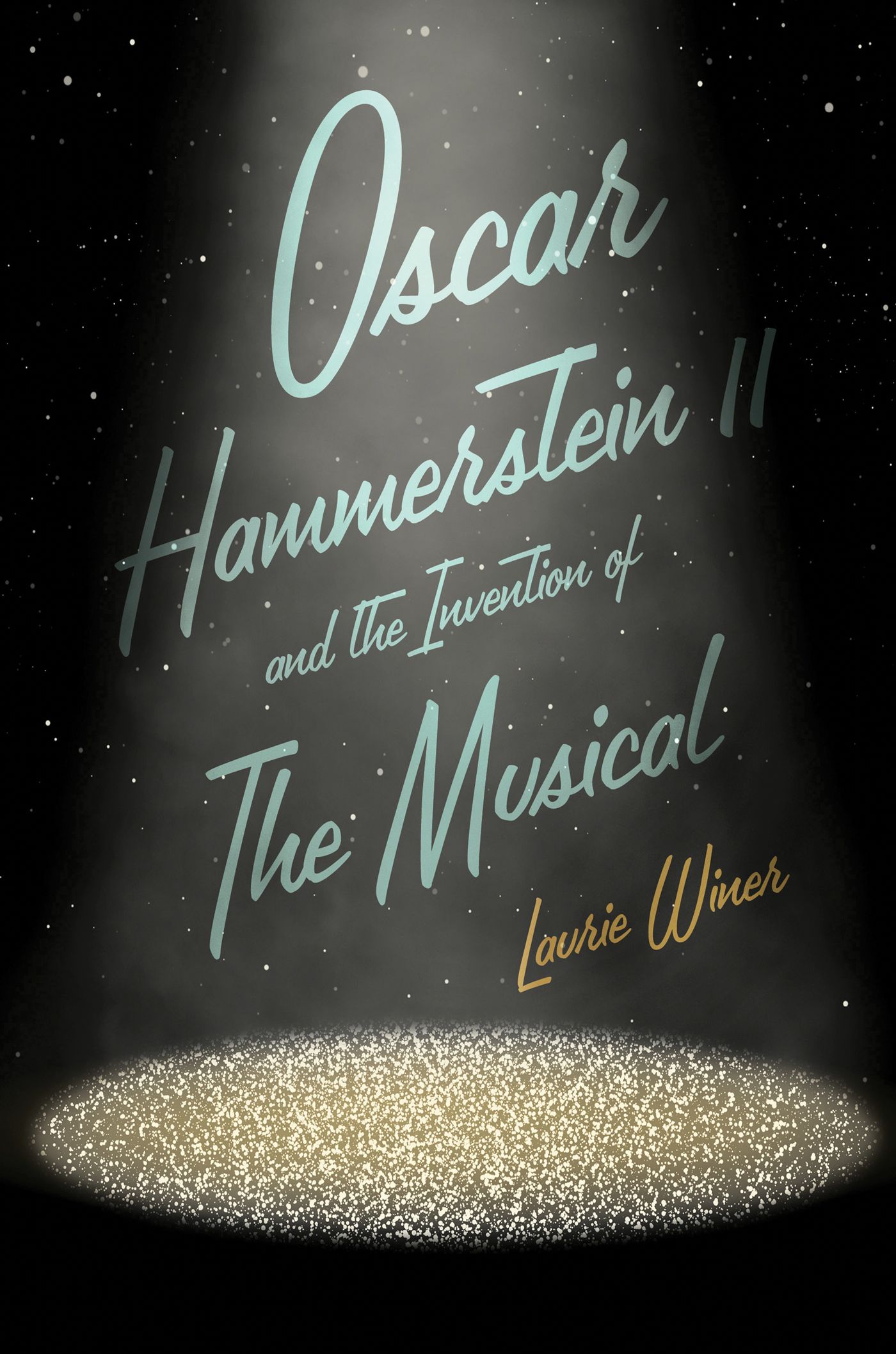
Oscar Hammerstein II and the invention of the musical
A new look at artist Oscar Hammerstein II as a pivotal and underestimated force in the creation of modern American culture \"A charming . . . passion animates [Winer's] Oscar Hammerstein II and the Invention of the Musical.\"-Brad Leithauser, New York Times Book Review You know his work-Show Boat, Oklahoma!, Carousel, The King and I. But you don't really know Oscar Hammerstein II, the man who, more than anyone else, invented the American musical. Among the most commercially successful artists of his time, he was a fighter for social justice who constantly prodded his audiences to be better than they were. Diving deep into Hammerstein's life, examining his papers and his lyrics, critic Laurie Winer shows how he orchestrated a collective reimagining of America, urging it forward with a subtly progressive vision of the relationship between country and city, rich and poor, America and the rest of the world. His rejection of bitterness, his openness to strangers, and his optimistic humor shaped not only the musical but the American dream itself. His vision can continue to be a touchstone to this day.
eBook


Frontier figures
Frontier Figures is a tour-de-force exploration of how the American West, both as physical space and inspiration, animated American music. Examining the work of such composers as Aaron Copland, Roy Harris, Virgil Thomson, Charles Wakefield Cadman, and Arthur Farwell, Beth E. Levy addresses questions of regionalism, race, and representation as well as changing relationships to the natural world to highlight the intersections between classical music and the diverse worlds of Indians, pioneers, and cowboys. Levy draws from an array of genres to show how different brands of western Americana were absorbed into American culture by way of sheet music, radio, lecture recitals, the concert hall, and film. Frontier Figures is a comprehensive illumination of what the West meant and still means to composers living and writing long after the close of the frontier.
eBook


Thinking en español
Thinking en españolcaptures conversations with leading Chicana and Chicano literary critics. This unique book consists of interviews with founding members of Chicano criticism conducted by the author, Jesús Rosales, who, through his conversations with leaders such as Luis Leal, María Herrera-Sobek, Tey Diana Rebolledo, and Juan Rodríguez, shows the path of criticism from 1848 to the present.The twelve critics interviewed for this project share certain characteristics. For each one, Mexico plays an essential role in his or her personal and academic background, and each is bilingual and bicultural, having received formal literary education in Spanish graduate programs. As products of the working class, each scholar here shares a sense of social consciousness and commitment that lends an urgency to their desire to promote Chicano literature and culture at the local, regional, national, and international levels. They serve as a source of inspiration and commitment for future generations of scholars of Chicano literature and leave a lasting legacy of their own.Thinking en españollegitimizes Chicana/o criticism as an established discipline, and documents the works of some of the most important critics of Chicano literature at the turn of the twentieth and into the twenty-first century. This timely book immortalizes literary historical figures and documents the trajectory of Chicano criticism.
eBook

Feast of excess : a cultural history of the New Sensibility
\"In 1952, John Cage shocked audiences with 4'33\", his compositional ode to the ironic power of silence. From Cage's minimalism to Chris Burden's radical performance art two decades later (in one piece he had himself shot), the post-war American avant-garde shattered the divide between low and high art, between artist and audience. They changed the cultural landscape. [This book] is [a] ... portrait of 'The New Sensibility,' as it was named by Susan Sontag in 1965, [which] sought to push culture in extreme directions: either towards stark minimalism or gaudy maximalism\"-- Provided by publisher.
Book

Our savage art
The most notorious poet-critic of his generation, William Logan has defined our view of poets good and bad, interesting and banal, for more than three decades. Featured in the New York Times Book Review, the Times Literary Supplement, and the New Criterion, among other journals, Logan's eloquent, passionate prose never fails to provoke readers and poets, reminding us of the value and vitality of the critic's savage art. Like The Undiscovered Country: Poetry in the Age of Tin, which won the National Book Critics Circle Award in Criticism, Our Savage Art features the corrosive wit and darkly discriminating critiques that have become the trademarks of Logan's style. Opening with a defense of the critical eye, this collection features essays on Robert Lowell's correspondence, Elizabeth Bishop's unfinished poems, the inflated reputation of Hart Crane, the loss of the New Critics, and a damning-and already highly controversial-indictment of an edition of Robert Frost's notebooks. Logan also includes essays on Derek Walcott and Geoffrey Hill, two crucial figures in the divided world of contemporary poetry, and an attempt to rescue the reputation of the nineteenth-century poet John Townsend Trowbridge. Short reviews consider John Ashbery, Anne Carson, Billy Collins, Rita Dove, Louise Glück, Jorie Graham, Robert Hass, Seamus Heaney, and dozens of others. Though he might be called a cobra with manners, Logan is a fervent advocate for poetry, and Our Savage Art continues to raise the standard of what the critic can do.
eBook