
Catalogue Search | MBRL


Are you sure you want to remove the book from the shelf?

{{itemTitle}}
16
result(s) for
"Critics England Biography."
Sort by:


Lady in the dark
Iris Barry (1895–1969) was a pivotal modern figure and one of the first intellectuals to treat film as an art form, appreciating its far-reaching, transformative power. Although she had the bearing of an aristocrat, she was the self-educated daughter of a brass founder and a palm-reader from the Isle of Man. An aspiring poet, Barry attracted the attention of Ezra Pound and joined a demimonde of Bloomsbury figures, including Ford Maddox Ford, T. S. Eliot, Arthur Waley, Edith Sitwell, and William Butler Yeats. She fell in love with Pound's eccentric fellow Vorticist, Wyndham Lewis, and had two children by him. In London, Barry pursued a career as a novelist, biographer, and critic of motion pictures. In America, she joined the modernist Askew Salon, where she met Alfred Barr, director of the new Museum of Modern Art. There she founded the museum's film department and became its first curator, assuring film's critical legitimacy. She convinced powerful Hollywood figures to submit their work for exhibition, creating a new respect for film and prompting the founding of the International Federation of Film Archives. Barry continued to augment MoMA's film library until World War II, when she joined the Office of Strategic Services to develop pro-American films with Orson Welles, Walt Disney, John Huston, and Frank Capra. Yet despite her patriotic efforts, Barry's \"foreignness\" and association with such filmmakers as Luis Buñuel made her the target of an anticommunist witch hunt. She eventually left for France and died in obscurity. Drawing on letters, memorabilia, and other documentary sources, Robert Sitton reconstructs Barry's phenomenal life and work while recasting the political involvement of artistic institutions in the twentieth century.
eBook

On Empson
Are literary critics writers? As Michael Wood says, \"Not all critics are writers--perhaps most of them are not--and some of them are better when they don't try to be.\" The British critic and poet William Empson (1906-84), one of the most important and influential critics of the twentieth century, was an exception--a critic who was not only a writer but also a great one. In this brief book, Wood, himself one of the most gifted writers among contemporary critics, explores Empson as a writer, a distinguished poet whose criticism is a brilliant literary performance--and proof that the act of reading can be an unforgettable adventure. Drawing out the singularity and strength of Empson's writing, including its unfailing wit, Wood traces the connections between Empson's poetry and criticism from his first and best-known critical works, Seven Types of Ambiguity and Some Versions of Pastoral, to later books such as Milton's God and The Structure of Complex Words. Wood shows why this pioneer of close reading was both more and less than the inventor of New Criticism - more because he was the greatest English critic since Coleridge, and didn't belong to any school; and less because he had severe differences with many contemporary critics, especially those who dismissed the importance of an author's intentions. Beautifully written and rich with insight, On Empson is an elegant introduction to a unique writer for whom literature was a nonstop form of living.
BOOK
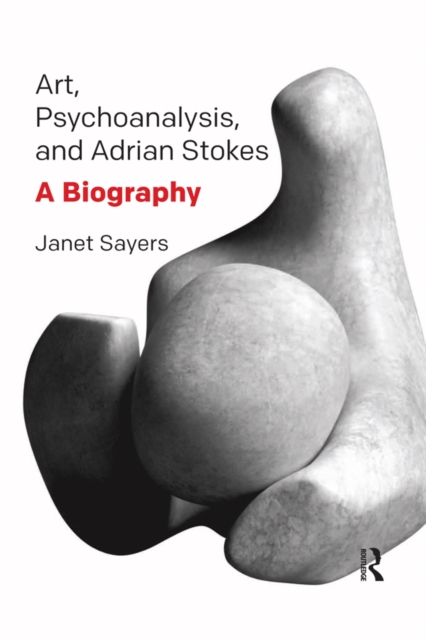
Art, Psychoanalysis, and Adrian Stokes
Illustrated with Barbara Hepworth's abstract stone carving, with other works of art, and with fascinating vignettes from Adrian Stokes's writing, this biography highlights his revolutionary emphasis on the materials-led inspiration of architecture, sculpture, painting, and the avant-garde creations of the Ballets Russes. In also detailing Stokes's role as catalyst of the transformation of St Ives in Cornwall into an internationally-acclaimed centre of modern art, and his falling in love again in his early forties, this biography shows how Stokes used all these experiences, together with his many years of psychoanalytic treatment by Melanie Klein, in forging insights about ways the outer world gives form to the inner world of fantasy and imagination.
eBook


Samuel Butler, Victorian Against the Grain
Samuel Butler (1835-1902), Victorian satirist, critic, and visual artist, possessed one of the most original and inquiring imaginations of his age. The author of two satires,Erewhon(1872) andThe Way of All Flesh(1903), Butler's intellectually adventurous explorations along the cultural frontiers of his time appeared in volume after eccentric volume. Author of four works on evolution, he was one of the most prolific evolutionary speculators of his time. He was an innovative travel writer and art historian who used the creative insights of his own painting, photography, and local knowledge to invent, in works likeAlps and Sanctuaries(1881), a vibrant Italian culture that contrasted with the spiritually frigid experience of his High Church upbringing.
Despite his range and achievement, there remains surprisingly little contemporary analytical commentary on Butler's work.Samuel Butler, Victorian against the Grainis an interdisciplinary collection of essays that provides a critical overview of Butler's career, one which places his multifaceted body of work within the cultural framework of the Victorian age. The essays, taken together, discuss the formation of Victorian England's ultimate polymath, an artistic and intellectual ventriloquist who assumed an extraordinary range of roles - as satirist, novelist, evolutionist, natural theologian, travel writer, art historian, biographer, classicist, painter, and photographer.
eBook


Memoirs of a Leavisite
In the second half of the last century, the teaching of English literature was very much influenced and, in some places, entirely dominated by the ideas of F. R. Leavis. What was it like to be taught by this iconic figure? How and why did one become a Leavisite? In this unique book, part memoir, part study of Leavis, David Ellis takes himself as representative of that pool of lower middle class grammar school pupils from which Leavisites were largely recruited, and explores the beliefs of both the Leavises, their lasting impact on him and why ultimately they were doomed to failure. At the heart of this book are questions about what English should and can be that are by no means finally settled.
eBook

Jewish Art and Yiddish Art History
Through the 1920 Yiddish little magazine Renesans, Leo Koenig aimed to articulate a specifically Jewish art. His objective was to foster the conditions of its creation, to identify the ways in which it was being created, and to interpret its history. Renesans crystallized a set of priorities for the Jewish artistic present, the criteria for success, and a projected future. Koenig has been credited as the first art critic in Yiddish; we propose that Koenig’s combined work as editor, author, and theorist should also be understood as a key example of Yiddish art history.
Our introduction of the term Yiddish art history is intended to draw attention to the lively theorization of Jewish art in Yiddish and as part of Yiddishist and cultural nationalist projects in the Eastern European Jewish diaspora. Koenig’s work in Renesans is not just a suitable object of study for this field; we argue that Koenig was himself developing Yiddish art history, attempting a fusion of discourse and artwork with the aim of creating a Jewish national consciousness.
Koenig’s biography is explored as a means of understanding the ideas and art movements that would influence Renesans. The contents of the journal are then analyzed to show how Koenig aimed to curate and define his conception of Jewish art. This attempt is contextualized with its local reception in the London Yiddish press, and its limitations are explored in relation to Koenig’s theoretical writing itself.
Journal Article

Rosa Newmarch and Russian Music in Late Nineteenth and Early Twentieth-Century England
Philip Ross Bullock looks at the life and works of Rosa Newmarch (1857-1940), the leading authority on Russian music and culture in late nineteenth- and early twentieth-century England. Although Newmarch's work and influence are often acknowledged - most particularly by scholars of English poetry, and of the role of women in English music - the full range of her ideas and activities has yet to be studied. As an inveterate traveller, prolific author, and polyglot friend of some of Europe's leading musicians, such as Elgar, Sibelius and Jan k, Newmarch deserves to be better appreciated. On the basis of both published and archival materials, the details of Newmarch's busy life are traced in an opening chapter, followed by an overview of English interest in Russian culture around the turn of the century, a period which saw a long-standing Russophobia (largely political and military) challenged by a more passionate and well-informed interest in the arts Three chapters then deal with the features that characterize Newmarch's engagement with Russian culture and society, and - more significantly perhaps - which she also championed in her native England; nationalism; the role of the intelligentsia; and feminism. In each case, Newmarch's interest in Russia was no mere instance of ethnographic curiosity; rather, her observations about and passion for Russia were translated into a commentary on the state of contemporary English cultural and social life. Her interest in nationalism was based on the conviction that each country deserved an art of its own. Her call for artists and intellectuals to play a vital role in the cultural and social life of the country illustrated how her Russian experiences could map onto the liberal values of Victorian England. And her feminism was linked to the idea that women could exercise roles of authority and influence in society through participation in the arts. A final chapter considers how her late interest in the music of Czechoslovakia pi
eBook