
Catalogue Search | MBRL


Are you sure you want to remove the book from the shelf?

{{itemTitle}}
90
result(s) for
"Cryptographers."
Sort by:



The lost symbol : a novel
Symbologist Robert Langdon, summoned to Washington, D.C. by his mentor, finds himself plunged into a clandestine world of Masonic secrets, hidden history, and secret locations--all of which seem to be dragging him toward a single, inconceivable truth.
BOOK

A GHZ-Based Protocol for the Dining Information Brokers Problem
This article introduces the innovative Quantum Dining Information Brokers Problem, presenting a novel entanglement-based quantum protocol to address it. The scenario involves n information brokers, all located in distinct geographical regions, engaging in a metaphorical virtual dinner. The objective is for each broker to share a unique piece of information with all the others simultaneously. Unlike previous approaches, this protocol enables a fully parallel, single-step communication exchange among all the brokers, regardless of their physical locations. A key feature of this protocol is its ability to ensure that both the anonymity and privacy of all the participants are preserved, meaning that no broker can discern the identity of the sender of any received information. At its core, the Quantum Dining Information Brokers Problem serves as a conceptual framework for achieving anonymous, untraceable, and massively parallel information exchange in a distributed system. The proposed protocol introduces three significant advancements. First, while quantum protocols for one-to-many simultaneous information transmission have been developed, this is, to the best of our knowledge, one of the first quantum protocols to facilitate many-to-many simultaneous information exchange. Second, it guarantees complete anonymity and untraceability for all senders, a critical improvement over sequential applications of one-to-many protocols, which fail to ensure such robust anonymity. Third, leveraging quantum entanglement, the protocol operates in a fully distributed manner, accommodating brokers in diverse spatial locations. This approach marks a substantial advancement in secure, scalable, and anonymous communication, with potential applications in distributed environments where privacy and parallelism are paramount.
Journal Article

Origin : a novel
Robert Langdon, Harvard professor of symbology and religious iconology, arrives at the Guggenheim Museum Bilbao to attend the unveiling of a discovery that \"will change the face of science forever\". The evening's host is his friend and former student, Edmond Kirsch, a forty-year-old tech magnate whose dazzling inventions and audacious predictions have made him a controversial figure around the world. This evening is to be no exception: he claims he will reveal an astonishing scientific breakthrough that will answer two of the fundamental questions of human existence. But the meticulously orchestrated evening suddenly erupts into chaos. Langdon is forced into a desperate bid to escape Bilbao. With him is Ambra Vidal, the elegant museum director who worked with Kirsch to stage the provocative event. Together they flee to Barcelona on a perilous quest to locate a cryptic password that will unlock Kirsch's secret. Navigating the dark corridors of hidden history and extreme religion, Langdon and Vidal must evade a tormented enemy whose all-knowing power seems to emanate from Spain's Royal Palace itself.
Book

Joe Rochefort's war : the odyssey of the codebreaker who outwitted Yamamoto at Midway
This is the first biography of Capt. Joe Rochefort, the Officer in Charge of Station Hypo the U.S. Navy's decrypt unit at Pearl Harbor and his key role in breaking the Imperial Japanese Navy's main code before the Battle of Midway. It brings together the disparate threads of Rochefort's life and career, beginning with his enlistment in the Naval Reserve in 1918 at age 17 (dropping out of high school and adding a year to his age). It chronicles his earliest days as a mustang (an officer who has risen from the ranks), his fortuitous posting to Washington, where he headed the Navy's codebreaking desk at age 25, then, in another unexpected twist, found himself assigned to Tokyo to learn Japanese. This biography records Rochefort's surprising love-hate relationship with cryptanalysis, his joyful exit from the field, his love of sea duty, his adventure-filled years in the '30s as the right-hand man to the Commander in Chief, U.S. Fleet, and his reluctant return to codebreaking in mid-1941 when he was ordered to head the Navy's decrypt unit at Pearl (Station Hypo). The book focuses on Rochefort's inspiring leadership of Hypo, recording first his frustrating months in late 1941 searching for Yamamoto's fleet, then capturing a guilt-ridden Rochefort in early 1942 mounting a redemptive effort to track that fleet after the Japanese attack at Pearl Harbor . It details his critical role in May 1942 when he and his team, against the bitter opposition of some top Navy brass, concluded Midway was Yamamoto's invasion target, making possible a victory regarded by many as the turning point in the Pacific War. The account also tells the story of Rochefort's ouster from Pearl, the result of the machinations of key officers in Washington, first to deny him the Distinguished Service Medal recommended by Admiral Nimitz, then to effect his removal as OIC of Hypo. The
book reports his productive final years in the Navy when he supervises the building of a floating drydock on the West Coast, then, back in Washington, finds himself directing a planning body charged with doing spade work leading to the invasion of Japan. The Epilogue narrates the postwar effort waged by Rochefort's Hypo colleagues to obtain for him the DSM denied in 1942--a drive that pays off in 1986 when President Reagan awards him the medal posthumously at a White House ceremony attended by his daughter and son. It also explores Rochefort's legacy, primarily his pioneering role at Pearl in which, contrary to Washington's wishes, he reported directly to Commander in Chief, US Fleet, providing actionable intelligence without any delays and enabling codebreaking to play the key role it did in the Battle of Midway. Ultimately, this book is aimed at bringing Joe Rochefort to life as the irreverent, fiercely independent and consequential officer that he was. It assumes his career can't be understood without looking at his entire life. It seeks to capture the interplay of policy and personality, and the role played by politics and personal rifts at the highest levels of Navy power during a time of national crisis. This bio emerges as a history of the Navy's intelligence culture.
eBook
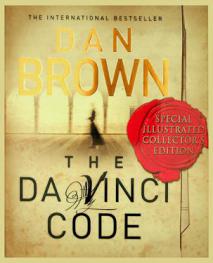

Origin
Robert Langdon, Harvard professor of symbology and religious iconology, arrives at the Guggenheim Museum Bilbao to attend the unveiling of a discovery that will change the face of science forever. The evening's host is his friend and former student, Edmond Kirsch, a forty-year-old tech magnate whose dazzling inventions and audacious predictions have made him a controversial figure around the world. This evening is to be no exception: he claims he will reveal an astonishing scientific breakthrough to challenge the fundamentals of human existence. But Langdon and several hundred other guests are left reeling when the meticulously orchestrated evening is blown apart before Kirsch's precious discovery can be revealed. With his life under threat, Langdon is forced into a desperate bid to escape, along with the museum's director, Ambra Vidal. Together they flee to Barcelona on a perilous quest to locate a cryptic password that will unlock Kirsch's secret. In their path lie dark forces which will do anything to stop them. To evade a tormented enemy who is one step ahead of them at every turn, Langdon and Vidal must navigate labyrinthine passageways of hidden history and ancient religion. On a trail marked only by enigmatic symbols and elusive modern art, Langdon and Vidal uncover the clues that will bring them face-to-face with a world-shaking truth that has remained buried - until now.--Publisher's description.
BOOK

U.S. Navy Codebreakers, Linguists, and Intelligence Officers against Japan, 1910-1941
This unique reference presents 59 biographies of people who were key to the sea services being reasonably prepared to fight the Japanese Empire when the Second World War broke out, and whose advanced work proved crucial. These intelligence pioneers invented techniques, procedures, and equipment from scratch, not only allowing the United States to hold its own in the Pacific despite the loss of most of its Fleet at Pearl Harbor, but also laying the foundation of today's intelligence methods and agencies. One-hundred years ago, in what was clearly an unsophisticated pre-information era, naval intelligence (and foreign intelligence in general) existed in rudimentary forms almost incomprehensible to us today. Founded in 1882, the U.S. Office of Naval Intelligence (ONI)—the modern world's \"oldest continuously operating intelligence agency\"—functioned for at least its first forty years with low manning, small budgets, low priority, and no prestige. The navy's early steps into communications intelligence (COMINT), which included activities such as radio interception, radio traffic analysis, and cryptology, came with the 1916 establishment of the Code and Signals Section within the navy's Division of Communications and with the 1924 creation of the \"Research Desk\" as part of the Section. Like ONI, this COMINT organization suffered from low budgets, manning, priority, and prestige. The dictionary focuses on these pioneers, many of whom went on, even after World War II, to important positions in the Navy, the State Department, the Armed Forces Security Agency, the National Security Agency, and the Central Intelligence Agency. It reveals the work and innovations of well and lesser-known individuals who created the foundations of today's intelligence apparatus and analysis.
eBook