
Catalogue Search | MBRL


Are you sure you want to remove the book from the shelf?

{{itemTitle}}
536
result(s) for
"Cryptography History."
Sort by:

Can you crack the code? : a fascinating history of ciphers and cryptography
\"Codes can carry big secrets! Throughout history, lots of good guys and lots of bad guys have used codes to keep their messages under wraps. This fun and flippable nonfiction features stories of hidden treasures, war-time maneuverings, and contemporary hacking as well as explaining the mechanics behind the codes in accessible and kid friendly forms. Sidebars call out activities that invite the reader to try their own hand at cracking and crafting their own secret messages. This is the launch of an exciting new series that invites readers into a STEM topic through compelling historical anecdotes, scientific backup, and DIY projects\"-- Provided by publisher.
Book

Secret Cables of the Comintern, 1933-1943
Drawing on secret and therefore candid coded telegraphs exchanged between Communist Party leaders around the world and their overseers at the Communist International (Comintern) headquarters in Moscow, this book uncovers key aspects of the history of the Comintern and its significant role in the Stalinist ruling system during the years 1933 to 1943. New information on aspects of the People's Front in France, civil wars in Spain and China, World War II, and the extent of the Comintern's cooperation with Soviet intelligence is brought to light through these archival records, never examined before.
eBook

The hidden history of code-breaking : the secret world of cyphers, uncrackable codes, and elusive encryptions
A fascinating exploration of the uncrackable codes and secret cyphers that helped win wars, spark revolutions and change the faces of nations.
BOOK

Venona
Only in 1995 did the United States government officially reveal the existence of the super-secret Venona Project. For nearly fifty years American intelligence agents had been decoding thousands of Soviet messages, uncovering an enormous range of espionage activities carried out against the United States during World War II by its own allies. So sensitive was the project in its early years that even President Truman was not informed of its existence. This extraordinary book is the first to examine the Venona messages-documents of unparalleled importance for our understanding of the history and politics of the Stalin era and the early Cold War years.Hidden away in a former girls' school in the late 1940s, Venona Project cryptanalysts, linguists, and mathematicians attempted to decode more than twenty-five thousand intercepted Soviet intelligence telegrams. When they cracked the unbreakable Soviet code, a breakthrough leading eventually to the decryption of nearly three thousand of the messages, analysts uncovered information of powerful significance: the first indication of Julius Rosenberg's espionage efforts; references to the espionage activities of Alger Hiss; startling proof of Soviet infiltration of the Manhattan Project to build the atomic bomb; evidence that spies had reached the highest levels of the U.S. State and Treasury Departments; indications that more than three hundred Americans had assisted in the Soviet theft of American industrial, scientific, military, and diplomatic secrets; and confirmation that the Communist party of the United States was consciously and willingly involved in Soviet espionage against America. Drawing not only on the Venona papers but also on newly opened Russian and U. S. archives, John Earl Haynes and Harvey Klehr provide in this book the clearest, most rigorously documented analysis ever written on Soviet espionage and the Americans who abetted it in the early Cold War years.
eBook


Breaking Japanese Diplomatic Codes David Sissons and D Special Section during the Second World War
During the Second World War, Australia maintained a super-secret organisation, the Diplomatic (or `D’) Special Section, dedicated to breaking Japanese diplomatic codes. The Section has remained officially secret as successive Australian Governments have consistently refused to admit that Australia ever intercepted diplomatic communications, even in war-time. This book recounts the history of the Special Section and describes its code-breaking activities. It was a small but very select organisation, whose `technical’ members came from the worlds of Classics and Mathematics. It concentrated on lower-grade Japanese diplomatic codes and cyphers, such as J-19 (FUJI), LA and GEAM. However, towards the end of the war it also worked on some Soviet messages, evidently contributing to the effort to track down intelligence leakages from Australia to the Soviet Union. This volume has been produced primarily as a result of painstaking efforts by David Sissons, who served in the Section for a brief period in 1945. From the 1980s through to his death in 2006, Sissons devoted much of his time as an academic in the Department of International Relations at ANU to compiling as much information as possible about the history and activities of the Section through correspondence with his former colleagues and through locating a report on Japanese diplomatic codes and cyphers which had been written by members of the Section in 1946. Selections of this correspondence, along with the 1946 report, are reproduced in this volume. They comprise a unique historical record, immensely useful to scholars and practitioners concerned with the science of cryptography as well as historians of the cryptological aspects of the war in the Pacific. “This publication fills an important gap in the present available knowledge concerning code-breaking in Australia during World War II. It also gives overdue recognition to the important contribution made by David Sissons to this subject”. Professor John Mack, School of Mathematics and Statistics, University of Sydney.
eBook

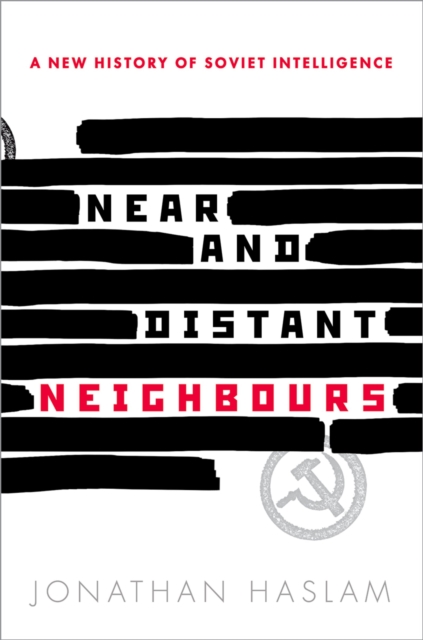
Near and Distant Neighbours
Near and Distant Neighbours is the first ever substantiated and complete history of Soviet intelligence. Based on a mass of newly declassified Russian secret intelligence documentation, it reveals the true story of Soviet intelligence from its very beginnings in 1917 right through to the end of the Cold War. Covering both main branches of Soviet espionage - civilian and military - Jonathan Haslam charts the full range of the Soviet intelligence effort and the story of its development:in cryptography, disinformation, special forces, and counter-intelligence. In a tragic irony, an organization that so casually disposed of others critically depended upon the human factor. Due to their lack of expertise and technological know-how, from early on the Soviets were forced to rely heavily on secret agents instead of the more sophisticated code-breaking techniques of other intelligence agencies. But in this they were highly successful, recruiting spy rings such as the infamous 'Cambridge Five' in the 1930s. Had it not been for Soviet espionage againstBritain's code-breaking effort during the Second World War, Stalin might never have won the victory that later enabled him to dominate half of Europe. Similarly, espionage directed at his allies enabled the Soviets to build an atomic bomb earlier than expected and to take calculated risks in post-wardiplomacy, such as his audacious blockade of Berlin which led to the Berlin Airlift. Khrushchev's denunciation of Stalin in 1956 alienated many of the foreign 'friends' so valued by the Soviet intelligence services. It also made new recruitment of foreign agents much more difficult, as the USSR rapidly lost its glamour and ideological appeal to potential supporters in the West during the 1950s. However, the gap was finally bridged through exploiting greedy and disloyal Western intelligence officers, using blackmail and bribery - and with great success. In fact, it was theultimate irony that the KGB and GRU had never been more effective than when the Soviet Union began to collapse from within.
eBook

Secret history : the story of cryptology
\"Codes are a part of everyday life, from the ubiquitous Universal Price Code (UPC) to postal zip codes. They need not be intended for secrecy. They generally use groups of letters (sometimes pronounceable code words) or numbers to represent other words or phrases. There is typically no mathematical rule to pair an item with its representation in code. A few more examples will serve to illustrate the range of codes\"-- Provided by publisher.
Book

Cryptographic Methods During the Mexican Revolution
This paper reviews an important period in the use of cryptographic methods in Mexican History, the Mexican Revolution from 1910-1916. As is the case in any civil war, there were many groups in conflict. Among several leaders in the Mexican Revolution, it is worth mentioning Porfirio Díaz, Francisco I. Madero and Venustiano Carranza. They represent three main groups which used characteristic cryptographic methods. In this paper, we describe some of the methods used by these groups during the Mexican Revolution.
Journal Article