
Catalogue Search | MBRL


Are you sure you want to remove the book from the shelf?

{{itemTitle}}
21
result(s) for
"Cuba Foreign relations 1959-1990."
Sort by:

The last year of President Kennedy and the \multiple path\ policy toward Cuba
\"This book presents new aspects of the U.S. \"multiple path\" policy towards Cuba that was designed and adopted after the Missile Crisis (October 1962) until the assassination of President Kennedy on November 22, 1963, from a Cuban perspective. The policy was characterized by its contradictory profile, since simultaneously as aggressions were directed at Cuba, it also included the establishment of channels of communication with the Cuban government. The book also analyzes the Cuban-Soviet dispute during the same period. The Cuban experiences have still not been sufficiently discussed, and the aspects offered will enrich the knowledge of the U.S.-Cuban relationship during the mentioned period.\"-- Provided by publisher.
Book

Cuba in a Global Context
Cuba in a Global Context examines the unlikely prominence of the island nation's geopolitical role. The contributors to this volume explore the myriad ways in which Cuba has not only maintained but often increased its reach and influence in Latin America, Europe, Africa, and Asia.
From the beginning, the Castro regime established a foreign policy that would legitimize the revolutionary government, if not in the eyes of the United States at least in the eyes of other global actors. The essays in this volume shed new light on Cuban diplomacy with communist China as well as with Western governments such as Great Britain and Canada.
In recent years, Cubans have improved their lives in the face of the ongoing U.S. embargo. The promotion of increased economic and political cooperation between Cuba and Venezuela served as a catalyst for the Petrocaribe group. Links established with countries in the Caribbean and Central America have increased tourism, medical diplomacy, and food sovereignty across the region. Cuban transnationalism has also succeeded in creating people-to-people contacts involving those who have remained on the island and members of the Cuban diaspora. While the specifics of Cuba's international relations are likely to change as new leaders take over, the role of Cubans working to assert their sovereignty has undoubtedly impacted every corner of the globe.
eBook


Allende’s Chile and the Inter-American Cold War
Fidel Castro described Salvador Allende's democratic election as president of Chile in 1970 as the most important revolutionary triumph in Latin America after the Cuban revolution. Yet celebrations were short lived. In Washington, the Nixon administration vowed to destroy Allende's left-wing government while Chilean opposition forces mobilized against him. The result was a battle for Chile that ended in 1973 with a right-wing military coup and a brutal dictatorship lasting nearly twenty years.Tanya Harmer argues that this battle was part of a dynamic inter-American Cold War struggle to determine Latin America's future, shaped more by the contest between Cuba, Chile, the United States, and Brazil than by a conflict between Moscow and Washington. Drawing on firsthand interviews and recently declassified documents from archives in North America, Europe, and South America--including Chile's Foreign Ministry Archive--Harmer provides the most comprehensive account to date of Cuban involvement in Latin America in the early 1970s, Chilean foreign relations during Allende's presidency, Brazil's support for counterrevolution in the Southern Cone, and the Nixon administration's Latin American policies. The Cold War in the Americas, Harmer reveals, is best understood as a multidimensional struggle, involving peoples and ideas from across the hemisphere.
eBook

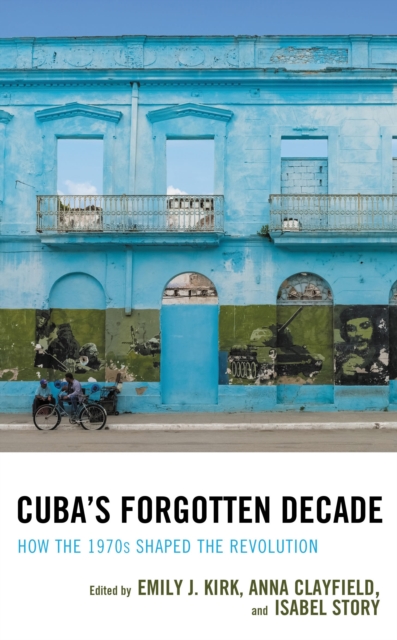
Cuba's forgotten decade
The 1970s have largely been overlooked in scholarly studies of the Cuban Revolution, or, at the very least, dismissed simply as a period of “Sovietization” characterized by widespread bureaucratization, institutionalization, and adherence to Soviet orthodoxy. Consequently, scant research exists that examines the major changes that took place across the decade and their role in determining the course of the Revolution. This book provides, for the first time, a comprehensive assessment of the 1970s which challenges prevailing interpretations. Drawing from multidisciplinary perspectives and exploring a range of areas—including politics, international relations, culture, education, and healthcare—its contributing authors demonstrate that the decade was a time of intense transformation which proved pivotal to the development of the Revolution. Indeed, many of the ideas, approaches, policies, and legislation developed and tested during the 1970s maintain a very visible legacy in contemporary Cuba. In highlighting the complexity of the 1970s, this volume ultimately aims to contribute to a greater understanding of the Cuban Revolution and how it chooses to face the challenges of the twenty-first century.
eBook

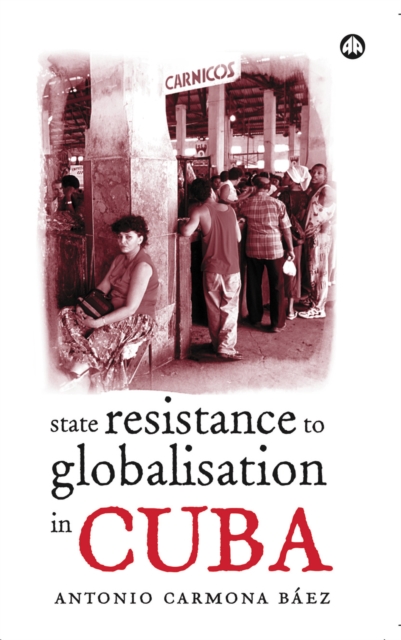
State Resistance to Globalisation in Cuba
How has the government and the people of Cuba actively resisted neo-liberal globalisation? How is it that the Cuban Communist Party continues to exist? To what extent is Cuba affected by global trends and pressures?
Antonio Carmona Báez challenges those on the Left who romantically support the Cuban Revolution as well as those who claim that the free market is the ideal economic model for all states. Instead, he presents an intelligent account of the serious and contradictory consequences of Cuba's social, political and economic restructuring.
The author revisits the history of the Cuban Revolution, and the crisis after the fall of Cuba's superpower ally, the Soviet Union, to provide answers to these questions.
eBook

Cuba's revolutionary world
As Castro's democratic reform movement veered off course, a revolution that seemed to signal the death knell of dictatorship in Latin America brought about its tragic opposite. Jonathan C. Brown examines in forensic detail how the turmoil that rocked a small Caribbean nation in the 1950s became one of the century's most transformative events.
Book
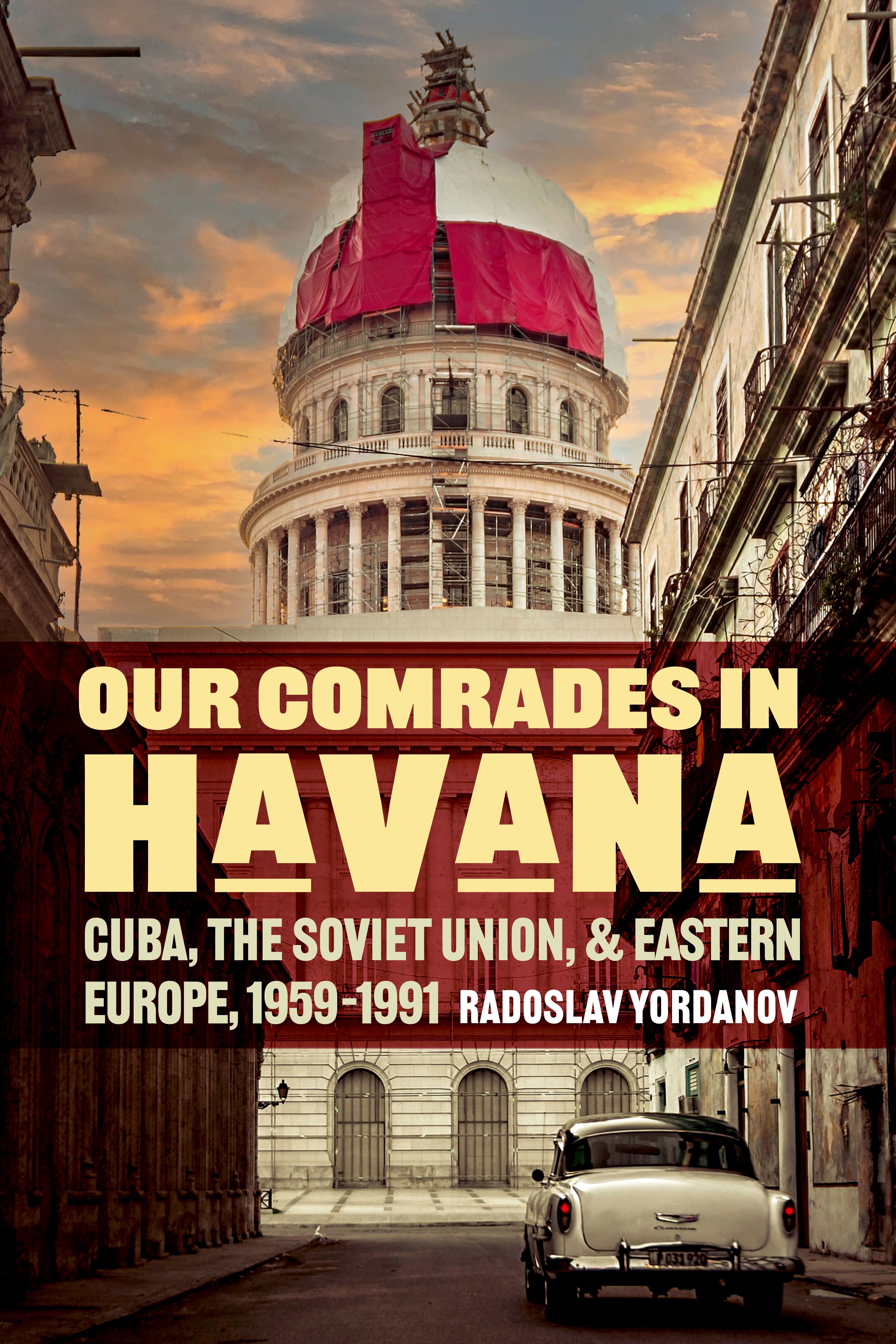
Our comrades in Havana : Cuba, the Soviet Union, and Eastern Europe, 1959-1991
In the immediate aftermath of its successful revolution, Cuba was heralded by socialist nations as the vanguard of communism in Latin America in the early 1960s. But by the late 1980s, Cuba's inability to adopt the modes of socialist planning and Mikhail Gorbachev's reforms had deeply soured the relationship between Havana and the Soviet-led socialist bloc. While secondary literature often highlights Cuba's political and economic relations with Washington and Moscow, Havana's ideological, political, and economic relations with the Eastern European states have received considerably less attention. This book aims to fill this gap by offering a detailed chronological account of how Cuba's post-revolutionary development was influenced by Eastern European diplomats.
Outside of their roles as representatives of their respective states, Eastern European diplomats were entrusted with the task of educating local Cuban leadership in the intricacies of Marxism-Leninism, steering Cuba's governors onto the \"correct path of development,\" helping them eradicate \"erroneous ideas\" of economic development, and showing them the validity of socialist \"morals and ideology.\" By considering these developments and analyzing firsthand accounts of Eastern European diplomats' experiences in Havana, historian Radoslav Yordanov reconstructs the thinking of Eastern European diplomats and specialists in their dealings with Cuba from the 1959 Cuban revolutionary victory to the 1991 dissolution of the Soviet Union, shedding new light on Cuba's role in the global Cold War.
eBook