
Catalogue Search | MBRL


Are you sure you want to remove the book from the shelf?

{{itemTitle}}
17,940
result(s) for
"Cultural Characteristics"
Sort by:
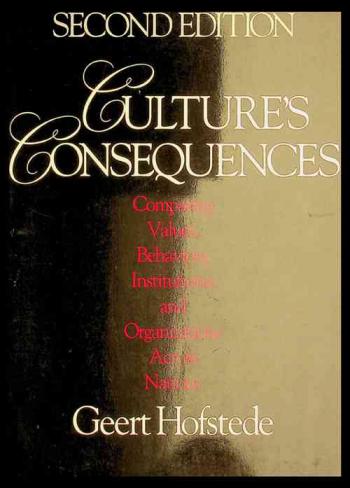
Culture's consequences : comparing values, behaviors, institutions, and organizations across nations
The Second Edition of this classic work, first published in 1981 and an international bestseller, explores the differences in thinking and social action that exist among members of more than 50 modern nations. Geert Hofstede argues that people carry \"mental programs\" which are developed in the family in early childhood and reinforced in schools and organizations, and that these programs contain components of national culture. They are expressed most clearly in the different values that predominate among people from different countries. Geert Hofstede has completely rewritten, revised and updated Cultures Consequences for the twenty-first century, he has broadened the book's cross-disciplinary appeal, expanded the coverage of countries examined from 40 to more than 50, reformulated his arguments and a large amount of new literature has been included. The book is structured around five major dimensions: power distance; uncertainty avoidance; individualism versus collectivism; masculinity versus femininity; and long term versus short-term orientation. --Publisher.

Ethnicity, Commodity, In/Corporation
Ethnic groups increasingly seek empowerment by formally incorporating themselves, by deploying their sovereign status for material ends, and by copyrighting their cultural practices as intellectual property. Building on ethnographic case studies from Kenya, Nepal, Peru, Russia, and many other countries, this collection poses the question: Does the turn to the incorporation and commodification of ethnicity really herald a new historical moment in the global politics of identity?.
eBook

Textbook of cultural psychiatry
\"Cultural psychiatry deals with the impact of culture on causation, perpetuation and treatment of patients suffering with mental illness. The role of culture in mental illness is increasingly being recognised, and the misconceptions that can occur as a result of cultural differences can lead to misdiagnoses, under or over-diagnosis. This second edition of the Textbook of Cultural Psychiatry has been completely updated with additional new chapters on globalisation and mental health, social media and tele-psychiatry. Written by world-leading experts in the field, this new edition provides a framework for the provision of mental health care in an increasingly globalised world. The first edition of the Textbook of Cultural Psychiatry was commended in the BMA Book Awards in 2008 and was the recipient of the 2012 Creative Scholarship Award from the Society for the Study of Psychiatry and Culture\"--Provided by publisher.
Book

On the number of independent cultural traits carried by individuals and populations
In species subject to individual and social learning, each individual is likely to express a certain number of different cultural traits acquired during its lifetime. If the process of trait innovation and transmission reaches a steady state in the population, the number of different cultural traits carried by an individual converges to some stationary distribution. We call this the trait-number distribution. In this paper, we derive the trait-number distributions for both individuals and populations when cultural traits are independent of each other. Our results suggest that as the number of cultural traits becomes large, the trait-number distributions approach Poisson distributions so that their means characterize cultural diversity in the population. We then analyse how the mean trait number varies at both the individual and population levels as a function of various demographic features, such as population size and subdivision, and social learning rules, such as conformism and anti-conformism. Diversity at the individual and population levels, as well as at the level of cultural homogeneity within groups, depends critically on the details of population demography and the individual and social learning rules.
Journal Article

Becoming Australian : migration, settlement, citizenship
The year 2013 is the 40th anniversary of the end of the 'White Australia policy'. In these four decades Australia's immigration policy has shifted from a primary concern with cultural homogeneity or Britishness to a focus on demand-based skills through an increasingly fine-tuned system of points tests, occupation lists and employer-sponsored visas. Despite disproportionate politicisation of asylum seekers in recent public discourse, the intake of refugees and humanitarian entrants has remained relatively small. While Australia's contemporary migrant and refugee intake is truly multicultural, and governments continue to adhere to an official multicultural policy, integration into the Australian community and culture has been the dominant process, especially for second and third generation Australians. Australian identity and citizenship have changed in the last forty years, making Australia and its people more pluralistic and richly diverse. Becoming Australian focuses on the ways in which migrants and refugees meet the challenges of 'becoming Australian' and the transformative process for Australia and its people as they incorporate the continuing influx of multicultural peoples.
Book

The evolution of the socio-cultural and religious characteristics of cancer patients in Morocco: case of the National Institute of Oncology Rabat
Background
In 2020, Morocco recorded more than 59,370 new cases of cancer and more than 35,265 cases of death (International Agency for Research on Cancer, Annual report Morocco, 2020). Cancer is always accompanied by socially constructed, differentiated, and contingent interpretations and practices according to the socio-cultural and religious characteristics of each region. The study aims at describing the evolution of the socio-cultural and religious aspects of Moroccan cancer patients followed at the National Institute of Oncology (NIO) of Rabat between 2010 and 2020.
Methods
We have prospectively studied all cancer cases diagnosed at the National Oncology Institute (NIO), Rabat in 2019. We have collected 1102 cases. The data collected was compared with the results of the study carried out in 2010 (1600 cases). Statistical analysis has been assessed by SPSS 20 software and the correlations between socio-cultural characteristics were examined using a chi-square test.
Results
From a socio-economic point of view, almost all patients claim that cancer is a costly disease as well as a disease that leads to a drop in income and the inevitable impoverishment of Moroccan patients. The illiteracy rate is still high; rising from 38% in 2010 to 42.80% in 2020. On the psychological level, damage to body image (alopecia, mastectomy, hysterectomy,) can lead to stigmatizing and harms the marital relationship. The number of patients experiencing divorce and marital separation that seems to occur following cancer pathology remains high, despite a decrease of nearly 50% between 2010 and 2020. Concerning the spiritual aspect, in the Arab-Amazigh-Muslim culture, the impact of the occurrence of cancer is very particular, and the repercussions are assessed differently depending on the degree of conviction. For practicing believers, cancer is considered a divine test and an opportunity to improve. In the Qur’an, God tests the best of his disciples to reward them The rate of practicing believers has evolved from 49% in 2010 to 85.50% in 2020.But for non-practicing believers, cancer is regarded as a divine punishment coming from outside. New behaviors reported by this research concern the use of “roquia”. This spiritual cure is considered as an anti-cancer remedy. It uses Allah’s words from the holy “qur’an”, his faires names and his attributes. 42% of patients use “roquia”. Concerning phytotherapy, there was an increase in the percentage of participants using medicinal plants and even the most harmful plants (Arestiloch, Euphorbia) from 26% in 2010 to 51.50% in 2020.
Conclusion
The precarious social level of cancer patients, the lack of social and medical coverage, illiteracy, and lack of knowledge of religion, as well as dissatisfaction with conventional medicine, may lead patients to the use of traditional medicine (medicinal plants, visit of “marabouts”, “roquia”). This can have a negative impact on the quality of access to oncology care.
Journal Article


Deep China
Deep China investigates the emotional and moral lives of the Chinese people as they adjust to the challenges of modernity. Sharing a medical anthropology and cultural psychiatry perspective, Arthur Kleinman, Yunxiang Yan, Jing Jun, Sing Lee, Everett Zhang, Pan Tianshu, Wu Fei, and Guo Jinhua delve into intimate and sometimes hidden areas of personal life and social practice to observe and narrate the drama of Chinese individualization. The essays explore the remaking of the moral person during China's profound social and economic transformation, unraveling the shifting practices and struggles of contemporary life.
eBook


Like or Not Like Studying Science: Exploring Students’ Personal and Cultural Characteristics
This research examines students’ interests in studying science in the UK, focusing on the context of declining interest in science subjects. A total of 1618 students aged 10 to 14 participated, responding to a questionnaire covering various constructs, such as subject preferences, stereotypes of science people, science extracurricular activities, career pathways, and views of science. Descriptive and inferential analyses, including three models of multiple regression, revealed several key findings. Students from non-Western backgrounds showed lower engagement in science extracurricular activities compared to their Western counterparts. Engagement in science-related activities positively influenced students’ views of science. Interestingly, students’ educational background (primary or secondary education) had a negative impact on their views of science. The study also highlighted a preference for non-STEM subjects over specific STEM fields, with curiosity and hands-on learning influencing favourite subjects. Addressing stereotypes and promoting gender equity in science education are essential. Early educational experiences and science extracurricular activities positively impacted students’ liking for science. Students’ views of science were influenced by hands-on experiences, gender, and educational background, indicating the need to challenge stereotypes. These insights inform science education policy and practice to promote interest and engagement among young learners in the UK.
Journal Article