
Catalogue Search | MBRL


Are you sure you want to remove the book from the shelf?

{{itemTitle}}
74,690
result(s) for
"Cultural Communication"
Sort by:


Person to person peacebuilding, intercultural communication and English language teaching : voices from the virtual intercultural borderlands
This book maps person to person peacebuilding as it intersects with, and is embedded in, intercultural communication. It foregrounds the voices and discourses of participants in an intercultural online service-learning project focused on peace through education in Afghanistan, primarily through synchronous English language tutoring.
eBook

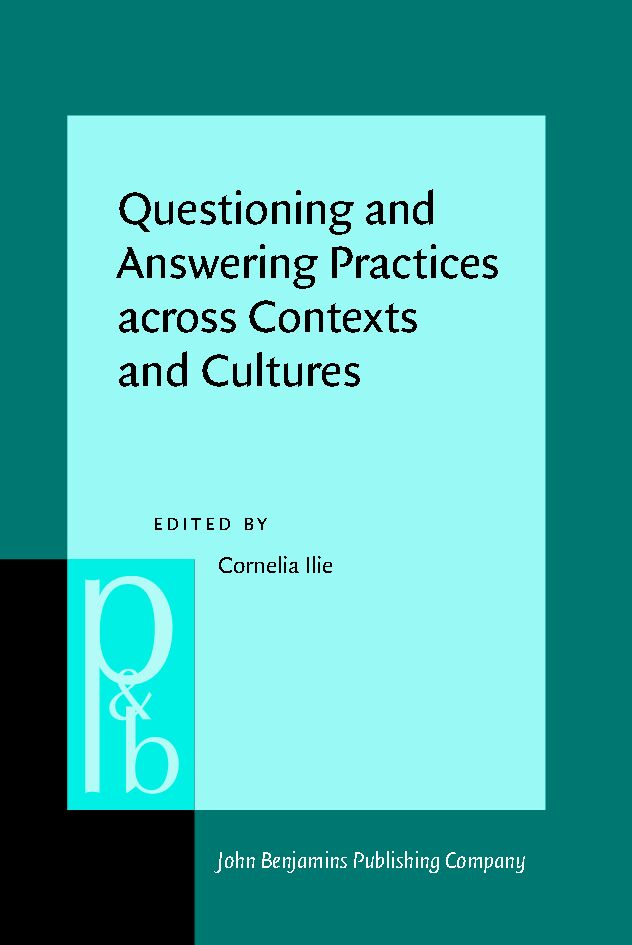
Questioning and Answering Practices across Contexts and Cultures
This book showcases innovative research about the multi-functional and dynamic interrelatedness of questioning and answering practices in institution- and culture-specific interactions ranging from under-explored to extensively researched ones.
eBook

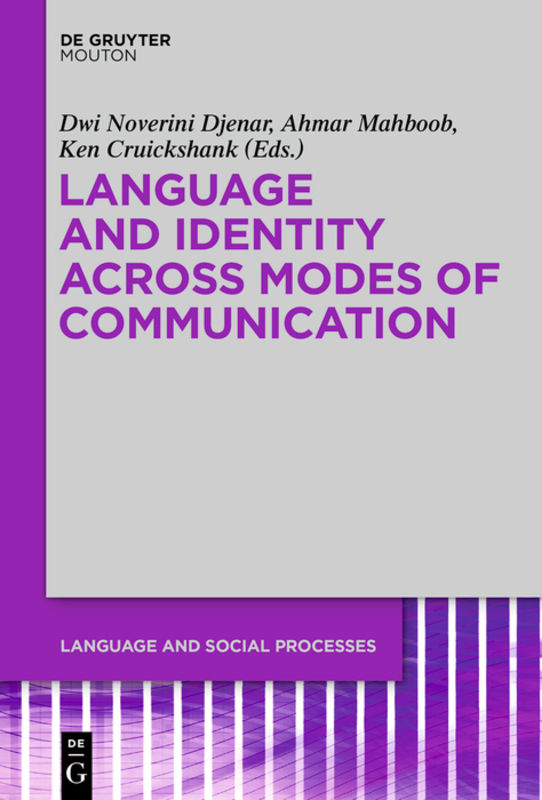
Language and Identity across Modes of Communication
The series contributes to the development of promising new approaches to the sociolinguistic, sociohistorical and linguistic anthropological study of social issues that centrally involve language. In particular, while still addressing the fundamental insights gleaned from variationist studies, foremost among which is the open-ended, heterogeneous nature of human language in all its varieties, it focuses on new, data-driven methodologies, quantitative and qualitative, in the social and cultural study of language that go beyond the more traditional concerns of sociolinguistics (for example, social networks, communities of practice, global population movements, the historical and present-day significance of demography for situations of language contact, the spatial dimensions of language, language and ideology, new dialect formation, historical sociolinguistics). The series includes monographs as well as edited volumes.
eBook


Intercultural Competence and Cultural Learning through Telecollaboration
This paper presents the findings of a six-week telecollaborative project between sixteen American students enrolled in a second-semester German class at an American university and sixteen German students enrolled in an advanced English course at a high school in Germany. Students discussed various cultural topics with their partner in two e-mails per week. The study strove to reveal the American college students' understanding of their own and of German culture, their interest in cultural learning, and possible changes therein through telecollaboration. Moreover, the study aimed at exploring if intercultural competence can be exhibited, and thus assessed, through an e-mail exchange. For that purpose, Byram's model of intercultural competence (1997) was used for the data analysis. In addition, pre- and post-surveys were administered to help answer one of the research questions. The results of the study revealed that students' interest in cultural learning did not change significantly. Additionally, the results showed that the majority of Byram's objectives can be demonstrated in an e-mail exchange.
Journal Article

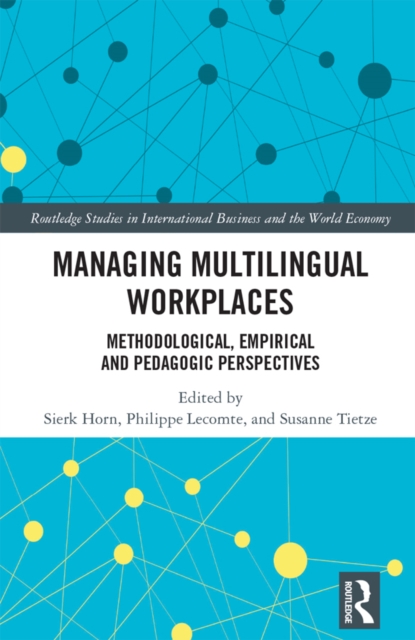
Managing Multilingual Workplaces
This book sets new trajectories for language-sensitive business and management research and pedagogy. The existence of language plurality characterises these. Empirical studies have been established as important and relevant for contemporary research. It has shifted language-sensitive research from the periphery to the centre of international management research. However, this field is rapidly changing, and new thematic approaches have begun to emerge. By addressing this, the book offers genuine and more nuanced insights into existing themes and comes with applications of emergent conceptual developments in different settings. The second part of the book covers methodologies and gives examples and cutting-edge insights into the role of translation in the execution of empirical research and theorising arising from it. Finally, the book draws together innovative ways of how to address the challenges of a multilingual teaching classroom and how to innovate in order to incorporate such diversity through pedagogic practice.
This book provides a source that unites insights from multilingual empirical research, methodological considerations and pedagogic practice in order to advance knowledge and debate. It will be a 'handy source' of information that offers direct access to the latest guidance on language-sensitive management challenges. It will, therefore, appeal to an internationally minded and mobile audience, including scholars, students and decision-makers.
eBook