
Catalogue Search | MBRL


Are you sure you want to remove the book from the shelf?

{{itemTitle}}
10,629
result(s) for
"Cultural exchanges"
Sort by:

Indigenous knowledge‐bridging to support ecological stewardship in Canada and Tanzania
Indigenous peoples worldwide assert their cultural and political governance through ecological stewardship and traditional land use. With the rapid degradation of ecosystems globally, there is a growing need to strengthen the role of Indigenous knowledge systems and values in environmental stewardship. One promising yet understudied way to meet this need is through knowledge‐bridging. We explore how international knowledge‐bridging fosters solidarity in the ongoing struggle for Indigenous self‐determination and resource rights. Drawing from exchanges between Maasai communities in Tanzania and First Nations in British Columbia and the Yukon, we examine how Indigenous groups assert their roles as environmental stewards through distinct governance systems. Despite Indigenous communities being embedded in vastly different histories and political contexts, our research highlights shared concerns about climate change and other stressors, underscoring the urgency of knowledge‐bridging and strengthened connections. Bridging Indigenous knowledge systems in environmental stewardship diversified ecological governance perspectives by fostering mutual support and learning. Our work highlights the ecological relevance of upholding cultural teachings that promote sustainability through arts‐based methods and participatory videography for contextually relevant storytelling. Participatory video proved to be an accessible and powerful tool for cross‐cultural knowledge exchange. Follow‐up interviews affirmed the impact of this method, revealing how Indigenous participants felt empowered and motivated to support co‐learning in the context of growing pressure on nature and its resources. Read the free Plain Language Summary for this article on the Journal blog. Muhtasari Watu wa asili duniani kote wana tamaduni tajiri na mifumo ya maarifa ambayo ni muhimu sana kwa utunzaji endelevu wa mazingira. Hata hivyo, mara nyingi watunga sera hupuuza mbinu hizi za asili na kuzipendekeza zile za Magharibi. Kupuuza maarifa na desturi za jadi za watu wa asili husababisha uharibifu wa mifumo ya ikolojia na kuendeleza pembezoni mwa jamii za asili. Kutambua mchango muhimu wa maarifa ya asili ni hatua ya msingi katika usimamizi bora wa mazingira. Mradi wetu uliunganisha jamii za asili nchini Kanada na Tanzania ili kusaidia utunzaji wa mazingira na kuimarisha uongozi wao juu ya ardhi na vyanzo vya maji. Kwa kushirikiana na watafiti wasio wa asili, Wamasai kutoka Tanzania, na jamii za mataifa ya kwanza kutoka British Columbia na Yukon, tuliwezesha mabadilishano ya maarifa ‐na mbinu za usimamizi wa ardhi na maji. Kazi yetu inaonyesha kuwa mabadilishano ya kitamaduni yanaweza kuimarisha mshikamano na kusaidia jamii za asili katika juhudi zao za kulinda mazingira yao na kudai haki zao. Tuliandaa matembezi ya kitamaduni na miradi ya video shirikishi ili kuwakutanisha jamii za Wamasai na mataifa ya kwanza. Washiriki walijadiliana, na kushirikishana desturi zao, na walirekodi uzoefu wao kupitia video. Hii ilijenga uelewano wa pande zote na heshima, na kutoa jukwaa la kujifunza mbinu mbalimbali za utunzaji wa mazingira kutoka kwa kila upande. Mabadilishano haya yalionesha mambo yanayofanana kati ya Wamasai na mataifa ya kwanza kuhusu changamoto na mikakati yao ya kulinda ardhi yao. Washiriki walihisi kuunganishwa zaidi na tamaduni zao na kupewa nguvu ya kuchukua hatua. Wamasai waliongeza uwezo wao wa kufanya utafiti na kusambaza maarifa, huku mataifa ya kwanza wakihamasishwa na ustahimilivu wa Wamasai, na kuimarisha azma yao ya kutetea ardhi na utamaduni wao. Mradi wetu unaonyesha kuwa kuunganisha maarifa ya watu wa asili kunaweza kuimarisha utunzaji wa mazingira na kuwawezesha jamii. Kwa kusaidia utafiti unaoongozwa na watu wa asili na kukuza mshikamano wa kimataifa, unaweza kuchangia katika kulinda mandhari ya kitamaduni na kiikolojia. Kazi hii ni muhimu siyo tu kwa jamii zinazohusika, bali pia kwa juhudi za kimataifa za kulinda bioanuwai na kukabiliana na mabadiliko ya tabianchi. Indoropu o olomon Ore iltong'ana lo rkwaak tenkop nalulunga neete imbarakinot o mbukunot naibokie naibung'ie eramatie ormanyara. Ore etiu neija, ore ilaitobirak loonbarakinot ombukunot nemeshilaa. Kuna barakinot ooltung'anak lorkwak neshilaa inonkuapi eboo, nemeshilaa imbarakinot o mbukunot oltunglak loorkwak neyeu obuket tialo olmanyara. Tenishilaa kna neyau dupot tialo omanyara. Ore olmuradi lang' neitutum ltung'anak loorkwak tenkop e Canada oltung'anak le Tanzania, pee eretoo eramatata ol‐manyara neisho engolon erikore enye tialo enkulukuoni. O eretokino ilajurrok leme loorkwak loolmaasai oingwa oloso le Tanzania, oloshon loonkwapi edukuya, oing'waa British Colombia o Yukon. Nikitang'ara induat eng'eno enkitashikinoto. O erripot enkulukwoni enkare. Ore esiai ang' neitodolu ajo Ore impukunot oo Itung'anak lorkwaak naa keidimie meibung'a naboishu, Neretoki sii ltung'anak Lenye tialo Eramatata olmanyara eng'oroto osipati enye. Kinterutwa apa eramatata olmuradini tiatua orkwaak, peekintutum irmaasai onkwapi eboo. Iyolo iloiteng'eni neshomoita aiteng'ena imbaa naiporita orkwaak. Netobiraka enkidimata sapuk. Etopona irmaasai inkoitoi naing'urie arashu inaaramatie orkwaak neiteng'enie irkuliek. Njere iyolo inguapi eboo neiteng'ena too inaasita irmaasai. Iyolo ele muradi lang' naa keitutum eng'eno ooltung'anak lorkwaak peidim atorip ormanyara lenye. Ore orbae leripoto ormanyara nedumu enaboisho ormaasai oltung'anak loonkwapi eboo. Netumoki ataa tenebo teripoto ormanyara. Njere iyolo ena siai neme enoltunag'ani obo, kake eyeu ake eretokino oonkwapi eboo, pee kirip tenebo enkulukuoni peime iyoo iyook orishat oonkibelekenyat enkop. Read the free Plain Language Summary for this article on the Journal blog.
Journal Article
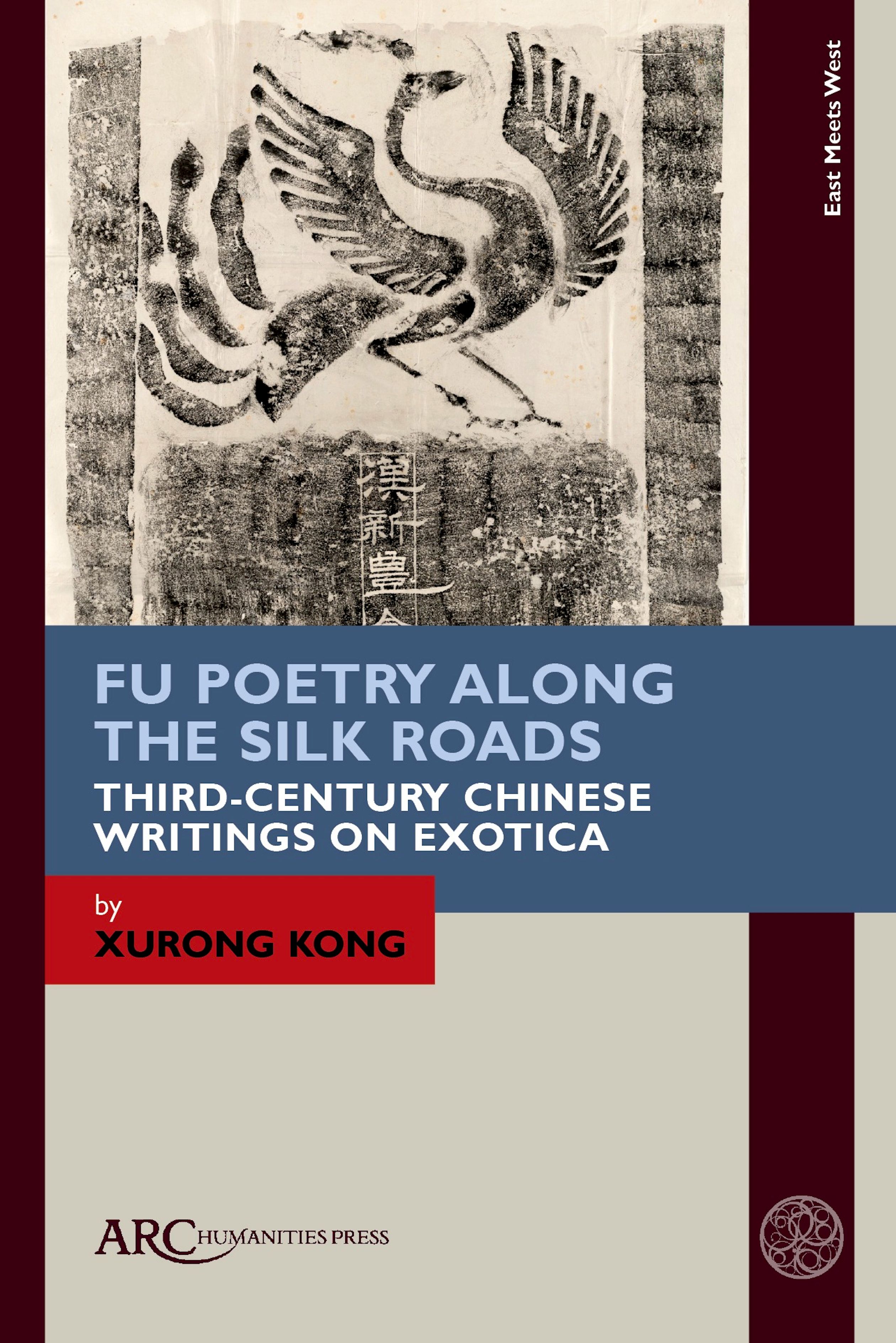
Fu Poetry Along the Silk Roads
This book explores the dissemination of ideas and information on the early silk roads between Europe and China, through the first detailed study of the Sinicization of foreign objects in Chinese poetic writing of the third century CE. Third-century literary developments and the prevailing literary works from that era leave us with an impressive amount of information concerning exotic objects, such as plants, animals, and crafts, and record the cultural exchange between distant peoples whose goods, ideas, and technologies entered China. These hitherto-forgotten rhapsodies express the profound interest and excitement of learned men for foreign objects. They bear witness to the cultural exchanges between China and other civilizations and provide a more nuanced insight of early medieval China as an integrated society rather than an isolated one.
eBook

Migration in the Medieval Mediterranean
Migration in the Medieval Mediterranean argues that the cross-Mediterranean movement of peoples was a central aspect of the medieval world. Medieval people migrated in search of safety after regime change, secure life amongst coreligionists, and prosperous careers. This kind of travel between Muslim and Christian regions demonstrates the mutual influences, interconnections, and communications linking them, surpassing the differences between the two civilizations.
eBook

What Drives Herbal Traditions? The Influence of Ecology and Cultural Exchanges on Wild Plant Teas in the Balkan Mountains
This study investigates the ethnobotanical diversity of wild plant teas across various populations in the Balkan mountain regions, focusing on cultural and ecological influences. Data were collected through ethnobotanical field surveys conducted in thirteen distinct areas, encompassing approximately 900 interviews with local populations, including Albanians, Bosniaks, North Macedonians, Goranis, and Serbs. The study identifies 143 genera used in traditional teas, with species frequency and distribution patterns analysed concerning elevation and cultural factors. Statistical analyses using Principal Component Analysis (PCA) and Cluster Analysis revealed clear grouping patterns between populations based on ecological zones. The results show a clear correlation between altitude and the herbal use of plant genera, with higher elevations (above 700 m) supporting a greater variety of local species. Cultural practices, such as tea consumption during communal gatherings, also significantly shaped the selection of plants across different populations. For instance, Sideritis species were most prevalent among Albanian and North Macedonian communities, while Thymus and Mentha species were widely used across all groups. Moreover, cultural exchanges can explain the similarity of wild teas reported by Bosniaks (in Bosnia) and North Albanians, located far away from each other but showing similar traits due to possible common origins or the effect of centuries of pastoralism, which may have generated a constant exchange of local plant practices. The study concludes that ecological conditions and cultural exchanges significantly influence the choice, use, and resilience of wild plant herbal traditions in the Balkans. However, modern pressures such as urbanisation and market-driven consumption are increasingly threatening these practices. This highlights the need for conservation strategies that integrate ecological preservation and cultural heritage safeguarding.
Journal Article

Cultural Translation in Metal: Interpreting European Figures through Benin Kingdom’s Artistic Conventions
This paper situates Benin’s bronze artworks within the framework of early modern Atlantic cross-cultural interactions via the lenses of cultural translation, visual anthropology, and material culture studies. Foreign motifs, such as European weaponry, vessels, and attire, were meticulously recontextualised within Benin’s hierarchical visual syntax, which was characterised by hierarchical scale, stylised regalia, and the symbolic importance of the Oba. These visual adaptations illustrate “Beninisation” when the European figure is symbolically subordinated and transformed to reinforce indigenous power structures. The study examines plaques and sculptures to illustrate the roles of European individuals in courtly contexts as tribute bearers, musicians, or ornamental figures, often in ceremonial and spatial subordination. In the Benin worldview, Europeans are considered manageable outsiders, reinforcing the Oba’s cosmopolitan authority. Comparative case studies from Kongo, Asante, and Dahomey indicate that West African societies reinterpreted foreign parts to stress local identity and political vision. In the sixteenth and seventeenth centuries, in Flemish and Spanish art, African figures were often rendered as exotic or subordinate, serving to elevate European heroes and reveal deep imbalances in representational agency. It asserts that Benin’s bronze statues are diplomatic, historical, and cultural artefacts in addition to being technical masterpieces. They demonstrate how African polities used material culture and imagery to navigate power, identity, and significance within global modernity.
Journal Article

Identity Dynamics and Diplomatic Narratives: Malaysian Chinese Perspectives
Objectives: This research provides a comprehensive analysis of Malaysia-China relations during Najib Razak's administration, examining the political, economic, and socio-cultural dimensions of bilateral cooperation. Under Najib's leadership, Malaysia pursued a multifaceted approach to strengthening ties with China, characterized by frequent high-level visits, extensive economic engagements, and collaborative initiatives. The study explores political cooperation, focusing on efforts to address maritime security and territorial disputes in the South China Sea through dialogue and bilateral channels. Economically, it examines the significant growth in Malaysia-China relations, increased trade volumes, Chinese foreign direct investment (FDI) inflows, and collaborative investment projects. Socio-culturally, the research looks at educational exchanges, tourism cooperation, and initiatives like the Malaysia My Second Home (MM2H) Program, which facilitated closer ties and mutual understanding between the two nations. The study concludes with policy implications for policymakers and researchers, emphasizing the need to address trade imbalances, prioritize dialogue and cooperation in addressing regional challenges, and expand bilateral cooperation beyond traditional sectors to capitalize on emerging opportunities. Methods: The research methodology employed in this study involves a qualitative analysis of secondary data sources. Data from reputable sources such as government reports, academic publications, and international organizations' databases were collected and analyzed to provide a comprehensive overview of Malaysia-China relations during Najib Razak's administration. This qualitative approach allowed for an in-depth examination of the political, economic, and socio-cultural dynamics shaping bilateral cooperation, offering valuable insights into the complexities of Malaysia-China relations. Through rigorous analysis and interpretation of the available data, the study provides a nuanced understanding of the factors influencing perceptions of diplomatic engagements between the two countries, contributing to the scholarly discourse on international relations and bilateral cooperation. Results: The study found that during Najib Razak's administration, Malaysia-China relations experienced significant growth and development across various dimensions. Politically, both nations engaged in constructive dialogue to manage maritime security and territorial disputes in the South China Sea, emphasizing bilateral channels to address these issues. Economically, the relations flourished with a marked increase in trade volumes, substantial Chinese FDI inflows, and numerous collaborative investment projects. However, the study also highlighted challenges such as trade imbalances and the need for greater transparency in mega projects, which necessitate policy adjustments for sustainable economic cooperation. Socio-culturally, the research indicated strong bilateral ties fostered through educational exchanges, tourism cooperation, and initiatives like the MM2H Program, which enhanced mutual understanding and appreciation between the Malaysian and Chinese populations. Conclusion: The research concludes that Malaysia-China relations during Najib Razak's administration were characterized by multifaceted cooperation and significant achievements in political, economic, and socio-cultural dimensions. To ensure a resilient and dynamic partnership that promotes mutual prosperity and development, the study emphasizes the importance of addressing trade imbalances, prioritizing dialogue and cooperation in addressing regional challenges, and expanding bilateral cooperation beyond traditional sectors to capitalize on emerging opportunities. The findings provide valuable insights for policymakers and researchers, contributing to a deeper understanding of Malaysia-China relations and offering a basis for future strategies to enhance bilateral cooperation.
Journal Article

The Role of Museums and Galleries in the Formation of Cultural Landscapes and Tourism
This study evaluates cultural landscapes and tourism in Kazakhstan, Kyrgyzstan, Albania and Ukraine, based on a survey of 443 residents. The cultural landscape ratings are: Astana (4+), Bishkek (2–3), Tirana (4–5), and Kyiv (3.5). Cultural tourism development is rated as follows: Astana (3), Bishkek (3–4), Tirana (4–5), and Kyiv (3). The cultural landscape and tourism are influenced by political power, national identity, economic development, tourist interest, cultural carriers, historical monuments, infrastructure, and investment in culture. The survey also examines preferences, visit frequency, and accessibility of cultural institutions. Kyiv sees the highest visit frequency, while Bishkek has the lowest. Museums, galleries, cinemas, theatres, and cultural parks are key destinations, but many respondents report low accessibility and inclusivity. Lists of cultural institutions were created for mapping the cities’ main attractions.
Journal Article

Phylogenetic Perspectives and Ethnobotanical Insights on Wild Edible Plants of the Mediterranean, Middle East, and North Africa
This study investigates the phylogenetic and geographical distribution of wild food plants (WFPs) across 30 Mediterranean and North African (MENA) regions, focusing on the intersection of evolutionary lineage, ecological adaptation, and cultural utilization. A phylogenetic analysis of 111 genera of WFPs used in traditional diets reveals clusters reflecting shared ancestry, functional adaptations, and ecological resilience. Key regions such as Lebanon and Ikaria stand out as potential centers for the diversity of wild food plant use, suggesting that the Eastern Mediterranean may be a primary origin area, especially for species adapted to semi-arid climates. Major plant families including Lamiaceae, Rosaceae, and Fabaceae form distinct clusters that underscore their common ancestry and adaptability, making them foundational to traditional diets and medicinal applications across various environments. Geographical analysis indicates historical connections, such as those between Malta and Egypt, supporting the hypothesis that ancient trade routes influenced the spread and cultural exchange of wild food plant use across the Mediterranean. The study emphasizes the integration of phylogenetic and ethnobotanical perspectives, shedding light on how biodiversity, ecological adaptation, and cultural practices intersect in these regions. This research demonstrates that WFPs serve as both ecological and cultural assets, crucial for preserving traditional diets and supporting biodiversity conservation amid environmental changes. Integrating evolutionary and cultural knowledge can enrich ecological understanding and contribute to the sustainable use of plant resources in the MENA regions.
Journal Article
“In that moment, we felt close, as if the border had been torn down”: Contacts between Milojka Štrukelj Primary School and San Vendemiano, 1960s–1980s
This article explores the contacts between Milojka Štrukelj Primary School in Nova Gorica and the lower secondary school in San Vendemiano, framing them as a form of regional cooperation between Slovenia and Italy. The partnership began in the 1960s, amidst bloc divisions and an unresolved national border between Italy and Yugoslavia. At the time, the legacies of fascism and the Second World War still deeply resonated on both sides. The article focuses on two key aspects of this collaboration: school holiday camps and the cultural exchange in 1972. Supported by local, regional, and national political institutions, the schools aimed to foster cross-border connections among young people, grounded in mutual respect and the overcoming of prejudice. This ambitious initiative also functioned as a form of cultural diplomacy between the two countries. Drawing on archival documents and press coverage, the article highlights the key features and lasting impact of these contacts, which helped shape the experiences of several generations of Slovene and Italian children.
Journal Article

You Are Safe Here: Community Sponsorship Policy and Refugee Integration in the UK
Globally, resettlement is considered one of the most durable solutions for refugees. The UK has introduced a Community Sponsorship Scheme that enables communities to resettle refugee families providing them with enhanced integration support aided by volunteers. This paper investigates the nature of integration support that sponsored refugees receive utilising the analytical framework of UK’s Indicators of Integration (IoI). Data was collected from interviews with refugee adults resettled in diverse and less diverse areas. Our findings illustrate the importance of support given by volunteer groups to enable access to resources and connections. We establish that there is much potential for sponsorship programmes to add value to refugee support suggesting that the current expansion of sponsorship from its Canadian roots may help facilitate refugee integration. However, further research is needed to uncover the long-term experiences of sponsored refugees and to compare their outcomes to those of forced migrants arriving via different mechanisms.
Journal Article