
Catalogue Search | MBRL


Are you sure you want to remove the book from the shelf?

{{itemTitle}}
12
result(s) for
"Cultural pluralism--Germany"
Sort by:

Migration, memory, and diversity : Germany from 1945 to the present
\"Within Germany, policies and cultural attitudes toward migrants have been profoundly shaped by the difficult legacies of the Second World War and its aftermath. This wide-ranging volume explores the complex history of migration and diversity in Germany from 1945 to today, showing how conceptions of 'otherness' developed while memories of the Nazi era were still fresh, and identifying the continuities and transformations they exhibited through the Cold War and reunification. It provides invaluable context for understanding contemporary Germany's unique role within regional politics at a time when an unprecedented influx of immigrants and refugees present the European community with a significant challenge\"--Publisher description.
Book

Fragmented Fatherland
1945 to 1980 marks an extensive period of mass migration of students, refugees, ex-soldiers, and workers from an extraordinarily wide range of countries to West Germany. Turkish, Kurdish, and Italian groups have been studied extensively, and while this book uses these groups as points of comparison, it focuses on ethnic communities of varying social structures—from Spain, Iran, Ukraine, Greece, Croatia, and Algeria—and examines the interaction between immigrant networks and West German state institutions as well as the ways in which patterns of cooperation and conflict differ. This study demonstrates how the social consequences of mass immigration became intertwined with the ideological battles of Cold War Germany and how the political life and popular movements within these immigrant communities played a crucial role in shaping West German society.
eBook
Multiculturalism in transit
Multiculturalism is one of the most controversial topics in both the United States and Germany.This interdisciplinary collection of essays by German scholars in American Studies and American scholars in German Studies analyze the \"other\" from this dual perspective and from their respective disciplines such as literary and cultural studies, political science, anthropology,and history. More particularly they examine multiculturalism in terms of national and ethnic identities, as well as gender and race, and look at the disciplines and institutions that produce and legitimize discourses on subjects such as minority literatures, feminism, and the notion of foreignness itself. What becomes clear is the fact that careful attention must be paid to the particular conditions and different ideological concepts that shape this term, i.e., the \"national\" historical, political, social, and institutional contexts in which it appears, circulates, and accrues meanings.
eBook

Emblems of Pluralism
From outlawing polygamy and mandating public education to protecting the rights of minorities, the framing of group life by the state has been a subject of considerable interest and controversy throughout the history of the United States. The subject continues to be important in many countries. This book deals with state responses to cultural difference through the examination of a number of encounters between individuals, groups, and the state, in the United States and elsewhere. The book opens the concepts of groups and the state, arguing for the complexity of their relations and interpenetrations. Carol Weisbrod draws on richly diverse historical and cultural material to explore various structures that have been seen as appropriate for adjusting relations between states and internal groups. She considers the experience of the Mormons, the Amish, and Native Americans in the United States, the Mennonites in Germany, and the Jews in Russia to illustrate arrangements and accommodations in different times and places. The Minorities Treaties of the League of Nations, political federalism, religious exemptions, nonstate schools, and rules about adoption are among the mechanisms discussed that sustain cultural difference and create frameworks for group life, and, finally, individual life. At bottom, Emblems of Pluralism concerns not only relations between the state and groups, public and private, but also issues of identity and relations between the self and others.
eBook

Ethnic Diversity and the Nation State
This book explores a largely forgotten legacy of multicultural political thought and practice from within Eastern Europe and examines its relevance to post-Cold War debates on state and nationhood. Featuring a Preface by former UK Home Secretary Charles Clarke, it weaves theory and practice to challenge established understandings of the nation state.
Eastern Europe is still too often viewed through the prism of ethnic conflict, which overlooks the region's positive contribution to modern debates on the political management of ethno-cultural diversity, and towards the construction of a united Europe 'beyond the nation-state'. Based on extensive archival research in Estonia, Latvia, Germany, Russia, as well as the League of Nations Archive in Geneva, this book explores this neglected multicultural legacy and assesses its significance in the post-Cold War era, which has seen the reappearance of national cultural autonomy laws in several states of Eastern Europe.
Ethnic Diversity and the Nation State is invaluable reading for students and scholars of political science, history, sociology and European studies, and also for policy makers and others interested in minority rights and ethnic conflict regulation.
eBook

Challenging Multiculturalism
In recent years, European political leaders from Angela Merkel to David Cameron have discarded the term multiculturalism and now express scepticism, critique and even hostility towards multicultural ways of organising their societies. Yet they are unprepared to reverse the diversity existing in their states. These contradictory choices have different political consequences in the 11 European countries examined in this book: Belgium, Britain, Denmark, France, Germany, Italy, the Netherlands, Poland, Russia, Sweden and Turkey. The future of European liberalism is being played out as multicultural notions of belonging, inclusion, tolerance and the national home are brought into question.
eBook

Muslims in 21st Century Europe
Muslims in 21 st Century Europe explores the interaction between native majorities and Muslim minorities in various European countries with a view to highlighting different paths of integration of immigrant and native Muslims.
Starting with a critical overview of the institutionalisation of Islam in Europe and a discussion on the nature of Muslimophobia as a social phenomenon, this book shows how socio-economic, institutional and political parameters set the frame for Muslim integration in Europe. Britain, France, Germany, the Netherlands, and Sweden are selected as case studies among the 'old' migration hosts. Italy, Spain and Greece are included to highlight the issues arising and the policies adopted in southern Europe to accommodate Muslim claims and needs.
The book highlights the internal diversity of both minority and majority populations, and analyses critically the political and institutional responses to the presence of Muslims.
Anna Triandafyllidou is Assistant Professor at the Democritus University of Thrace in Greece, Senior Research Fellow at ELIAMEP in Athens, and Professor at the College of Europe in Bruges. Her main areas of research and teaching are migration, nationalism, and European integration. Recent books include Irregular Migration in Europe (2010, Ashgate), European Immigration: A Sourcebook (2007, Ashgate), Multiculturalism, Muslims and Citizenship: A European Approach (2006, Routledge), Transcultural Europe (2006) and Contemporary Polish Migration in Europe (2006, The Edwin Allen Press).
1. Muslims and Multiculturalism in 21st century Europe, Anna Triandafyllidou and Daniel Faas 2. Islamophobia qua Racial Discrimination: Muslimophobia, Burak Erdenir 3. Public Policies towards Muslims and the Institutionalization of 'Moderate Islam' in Europe: some critical reflections, Sara Silvestri 4. Muslims in Germany: From Guest Workers to Citizens? Daniel Faas 5. Britain: Contemporary developments in cases of Muslim-state engagement, Tariq Modood and Nasar Meer 6. From Empire to Republic, the French Muslim Dilemma, Valerie Amiraux 7. Islam in the Netherlands, Dutch Islam, Thijl Sunier 8. Sweden: Cooperation and Conflict, Jonas Otterbeck 9. Muslims in Italy: models of integration and new citizenship, Maurizia Russo Spena 10. Muslims in Spain: Blurring past and present Moors, Ricard Zapata-Barrero and Nynke de Witte 11. Greece: The Challenge of Native and Immigrant Muslim Populations, Anna Triandafyllidou
eBook

Many Globalizations
Globalization is a far more complex set of phenomena than is suggested by the popular stereotype of American imperialism. The wide range of country studies in this book shows that while a global culture heavily influenced by US values is indeed emerging, it is not US‐directed and that many non‐US cultures are contributing to other subglobalization processes. In particular, globalization is not exclusively secular–materialist in character, with substantial, if underrecognized, inputs from Christian evangelism, both Protestant and Roman Catholic, as well as other religions such as Islam and Buddhism.
eBook
Identities
\"Identity\" has become a core concept of the social and cultural sciences. Bringing together perspectives from sociology, anthropology, psychology, history, and literary criticism, this book offers a comprehensive and critical overview on how this concept is currently used and how it relates to memory and constructions of historical meaning.
eBook
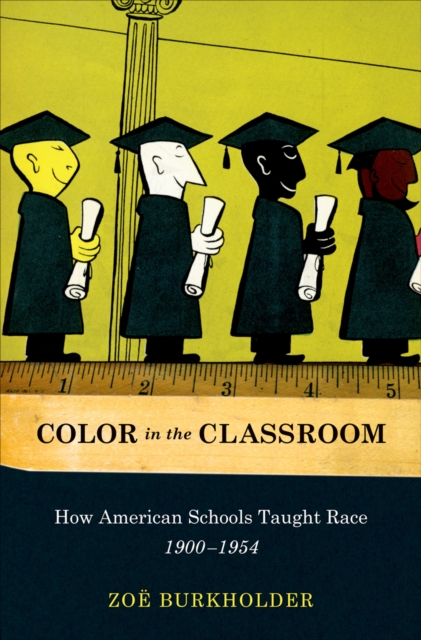
Color in the classroom : how American schools taught race, 1900-1954
Between the turn of the twentieth century and the \"Brown v. Board of Education\" decision in 1954, the way that American schools taught about \"race\" changed dramatically. This transformation was engineered by the nation's most prominent anthropologists, including Franz Boas, Ruth Benedict, and Margaret Mead, during World War II. Inspired by scientific racism in Nazi Germany, these activist scholars decided that the best way to fight racial prejudice was to teach what they saw as the truth about race in the institution that had the power to do the most good-American schools. Anthropologists created lesson plans, lectures, courses, and pamphlets designed to revise what they called \"the \"race\" concept\" in American education. They believed that if teachers presented race in scientific and egalitarian terms, conveying human diversity as learned habits of culture rather than innate characteristics, American citizens would become less racist. Although nearly forgotten today, this educational reform movement represents an important component of early civil rights activism that emerged alongside the domestic and global tensions of wartime. Drawing on hundreds of first-hand accounts written by teachers nationwide, Zoe Burkholder traces the influence of this anthropological activism on the way that teachers understood, spoke, and taught about race. She explains how and why teachers readily understood certain theoretical concepts, such as the division of race into three main categories, while they struggled to make sense of more complex models of cultural diversity and structural inequality. As they translated theories into practice, teachers crafted an educational discourse on race that differed significantly from the definition of race produced by scientists at mid-century. Schoolteachers and their approach to race were put into the spotlight with the \"Brown v. Board of Education\" case, but the belief that racially integrated schools would eradicate racism in the next generation and eliminate the need for discussion of racial inequality long predated this. Discussions of race in the classroom were silenced during the early Cold War until a new generation of antiracist, \"multicultural\" educators emerged in the 1970s.
eBook