
Catalogue Search | MBRL


Are you sure you want to remove the book from the shelf?

{{itemTitle}}
73
result(s) for
"Cultural property Social aspects United States."
Sort by:


The Filipino Primitive
How museums' visual culture contributes to knowledge accumulation
Sarita See argues that collections of stolen artifacts form the foundation of American knowledge production. Nowhere can we appreciate more easily the triple forces of knowledge accumulation-capitalist, colonial, and racial-than in the imperial museum, where the objects of accumulation remain materially, visibly preserved. The Filipino Primitive takes Karl Marx's concept of \"primitive accumulation,\" usually conceived of as an economic process for the acquisition of land and the extraction of labor, and argues that we also must understand it as a project of knowledge accumulation.
Taking us through the Philippine collections at the University of Michigan Natural History Museum and the Frank Murphy Memorial Museum, also in Michigan, See reveals these exhibits as both allegory and real case of the primitive accumulation that subtends imperial American knowledge, just as the extraction of Filipino labor contributes to American capitalist colonialism. With this understanding of the Filipino foundations of the American drive toward power and knowledge, we can appreciate the value of Filipino American cultural producers like Carlos Bulosan, Stephanie Syjuco, and Ma-Yi Theater Company who have created incisive parodies of this accumulative epistemology, even as they articulate powerful alternative, anti-accumulative social ecologies.
eBook

U.S. cultural diplomacy and archaeology : soft power, hard heritage
Archaeology's links to international relations are well known: launching and sustaining international expeditions requires the honed diplomatic skills of ambassadors. This book explores how international partnerships inherent in archaeological legal instruments and policies, especially involvement with major US museums, contribute to the underlying principles of US cultural diplomacy.
Book

U.S. Cultural Diplomacy and Archaeology
Archaeology's links to international relations are well known: launching and sustaining international expeditions requires the honed diplomatic skills of ambassadors. U.S. foreign policy depends on archaeologists to foster mutual understanding, mend fences, and build bridges. This book explores how international partnerships inherent in archaeological legal instruments and policies, especially involvement with major U.S. museums, contribute to the underlying principles of U.S. cultural diplomacy.
Archaeology forms a critical part of the U.S. State Department's diplomatic toolkit. Many, if not all, current U.S.-sponsored and directed archaeological projects operate within U.S. diplomatic agendas. U.S. Cultural Diplomacy and Archaeology is the first book to evaluate museums and their roles in presenting the past at national and international levels, contextualizing the practical and diplomatic processes of archaeological research within the realm of cultural heritage. Drawing from analyses and discussion of several U.S. governmental agencies' treatment of international cultural heritage and its funding, the history of diplomacy-entangled research centers abroad, and the necessity of archaeologists' involvement in diplomatic processes, this seminal work has implications for the fields of cultural heritage, anthropology, archaeology, museum studies, international relations, law, and policy studies.
eBook

Community-based archaeology
Archaeology impacts the lives of indigenous, local, or descendant communities. Yet often these groups have little input to archaeological research, and its results remain inaccessible. As archaeologists consider the consequences and benefits of research, the skills, methodologies, and practices required of them will differ dramatically from those of past decades. As an archaeologist and a Native American, Sonya Atalay has investigated the rewards and complex challenges of conducting research in partnership with indigenous and local communities. In Community-Based Archaeology, she outlines the principles of community-based participatory research and demonstrates how CBPR can be effectively applied to archaeology. Drawing on her own experiences with research projects in North America and the Near East, Atalay provides theoretical discussions along with practical examples of establishing and developing collaborative relationships and sharing results. This book will contribute to building an archaeology that is engaged, ethical, relevant, and sustainable.
eBook

Archaeological Theory and the Politics of Cultural Heritage
This controversial book is a survey of how relationships between indigenous peoples and the archaeological establishment have got into difficulty, and a crucial pointer to how to move forward from this point.
With lucid appraisals of key debates such as NAGPRA, Kennewick and the repatriation of Tasmanian artefacts, Laurajane Smith dissects the nature and consequences of this clash of cultures.
Smith explores how indigenous communities in the USA and Australia have confronted the pre-eminence of archaeological theory and discourse in the way the material remains of their past are cared for and controlled, and how this has challenged traditional archaeological thought and practice.
Essential reading for all those concerned with developing a just and equal dialogue between the two parties, and the role of archaeology in the research and management of their heritage.
1. Introduction 2 . The Cultural Politics of Identity: Defining the Problem 3. Archaeological Theory and the 'Politics' of the Past 4. Archaeology and the Context of Governance: Expertise and the State 5. Archaeological Stewardship: The Rise of Cultural Resource Management and the 'Scientific Professional' arcHaeologist 6. Significance Concepts and the Embedding of Processual Discourse in Cultural Resource Management 7. The Role of Legislation in the Governance of Material Culture in America and Australia 8. NAGPRA and Kennewick: Contesting Archaeological Govrnance in America 9. The 'Death of Archaeology': Contesting Archaeological Covernance in Australia 10. Conclusion
Laurajane Smith is Lecturer in cultural heritage studies and archaeology at the University of York, UK. She previously taught Indigenous Studies at the University of New South Wales, Sydney and worked as a cultural heritage consultant for many years. Her research interests include heritage and the construction and negotiation of cultural and social identities, and public policy and heritage management, archaeological theory and politics, feminist archaeology.
'Essential reading ... Well-written [and] easy to follow ... a useful companion volume.' - Rodney Harrison, The Australian National University
'Laurajane Smith has produced a significant work that will hopefully stimulate archaeological departments in South African universities to pay more attention to educating future CRM practitioners. This book is compulsory reading for CRM practitioners, archaeology students and their professors alike.' – South African Archaeological Bulletin
eBook
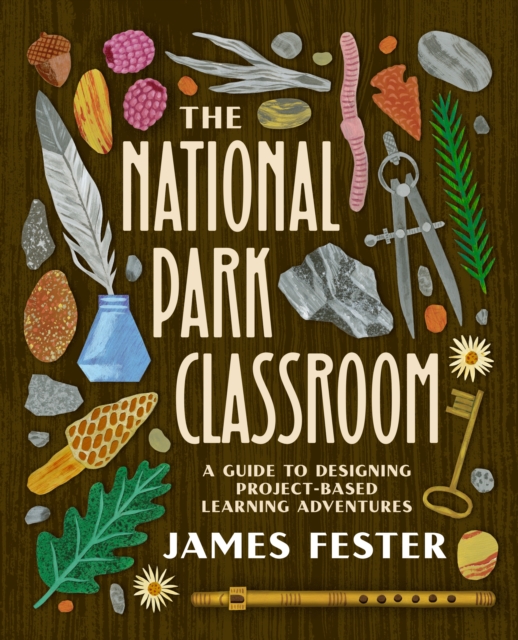
The National Park Classroom
Bring proven teaching methods from the national parks into your classroom to address common instructional challenges and improve student outcomes.The U.S.National Park Service describes its parks as \"America's largest classrooms,\" and for years, its rangers have been developing educational approaches that invite visitors to engage with their.
eBook

Maya Cultural Heritage
Situated at the intersection of cultural heritage and local community, this book enlarges our understanding of the Indigenous peoples of southern México and northern Central America who became detached from “the ancient Maya” through colonialism, government actions, and early twentieth-century anthropological and archaeological research. Through grass-roots heritage programs, local communities are reconnecting with a much valorized but distant past. Maya Cultural Heritage explores how community programs conceived and implemented in a collaborative style are changing the relationship among, archaeological practice, the objects of archaeological study, and contemporary ethnolinguistic Mayan communities. Rather than simply describing Maya sites, McAnany concentrates on the dialogue nurtured by these participatory heritage programs, the new “heritage-scapes” they foster, and how the diverse Maya communities of today relate to those of the past.
eBook

Not Native American Art
The faking of Native American art objects has proliferated as
their commercial value has increased, but even a century ago
experts were warning that the faking of objects ranging from
catlinite pipes to Chumash sculpture was rampant. Through a series
of historical and contemporary case studies, Janet Catherine Berlo
engages with troubling and sometimes confusing categories of
inauthenticity.
Based on decades of research as well as interviews with
curators, collectors, restorers, replica makers, reenactors, and
Native artists and cultural specialists, Not Native American Art
examines the historical and social contexts within which people
make replicas and fakes or even invent new objects that then become
\"traditional.\" Berlo follows the unexpected trajectories of such
objects, including Northwest Coast carvings, \"Navajo\" rugs made in
Mexico, Zuni mask replicas, Lakota-style quillwork, and Mimbres
bowl forgeries. With engaging anecdotes, the book offers a rich and
nuanced understanding of a surprisingly wide range of practices
that makers have used to produce objects that are \"not Native
American art.\"
eBook

Rich Indians
Long before lucrative tribal casinos sparked controversy, Native Americans amassed other wealth that provoked intense debate about the desirability, morality, and compatibility of Indian and non-Indian economic practices. Skillfully blending social, cultural, and economic history, Alexandra Harmon examines seven such instances of Indian affluence and the dilemmas they presented both for Native Americans and for Euro-Americans--dilemmas rooted in the colonial origins of the modern American economy.This wide-ranging book looks at controversies concerning Powhatan economic status and aims during the Virginia colony's first years; the ambitions of some bicultural eighteenth-century Creeks and Mohawks; prospering Indians of the Southeast in the early 1800s; inequality among removed tribes during the Gilded Age; the spending of oil-rich Osages in the Roaring Twenties; resurgent tribal communities from Alaska to Maine in the 1970s; and casinos that have drawn gamblers to Indian country across the United States since the 1990s. Harmon's study not only compels us to look beyond stereotypes of greedy whites and impoverished Indians, but also convincingly demonstrates that Indians deserve a prominent place in American economic history and in the history of American ideas.
eBook