
Catalogue Search | MBRL


Are you sure you want to remove the book from the shelf?

{{itemTitle}}
225
result(s) for
"Culture hero"
Sort by:

Archaeology of the Waiat mysteries on Woeydhul Island in Western Torres Strait
Secret societies, involving restricted and hierarchically organised initiation rituals, are conspicuous in the chronicles of many past and present societies. These rarely leave a substantial written record and yet archaeology can provide vivid insight into past performances, for example in relation to Roman ‘mystery cults’. Far less research, however, has focused on Australia and the Pacific Islands. This article presents archaeological evidence for ceremonies practised on Woeydhul Island in the Western Torres Strait, exploring initiation rituals at the cusp of contemporary memory. By doing so, it provides a detailed and long-term history for Torres Strait Islander secret societies and ritual activities involving dugong bone mounds, stone arrangements and worked stingray spines.
Journal Article

Godot, an Israeli Critic
Godot is not only offstage, he is the personification of offstage. Though years of (missed) encounters have passed since he was absent from his first appearance in 1955, Israelis still regard him as born and bred in their own neighbourhood. As a once-new immigrant to a country of immigrants, Godot's familiarity has rapidly developed, and from one Israeli production to the next he has grown to be a doppelgänger, an open-eyed though mute spokesman, an active and activating contradiction in terms: a dark mirror held up to Israeli values, ideas and behaviours. As an unseen, aggressively passive partner, Godot has been harnessed to absorb and then project major Israeli mental, social, political and ideological issues and identities.
Journal Article

NGARU: A CULTURE HERO OF MANGAIA
This study explores the story of Ngaru, a famous culture hero from Mangaia, as recorded in several 19th-century prose and song texts by a local scholar, Mamae, and his colleague, the missionary, William Wyatt Gill. Important themes are revealed, including Mangaian understandings of the concept, mana; the form and content of oral tradition; the important Polynesian number, eight; and, the parallels between Ngaru and the Greek hero, Heracles, who both beat the presiding spirit powers in the world of the dead.
Journal Article
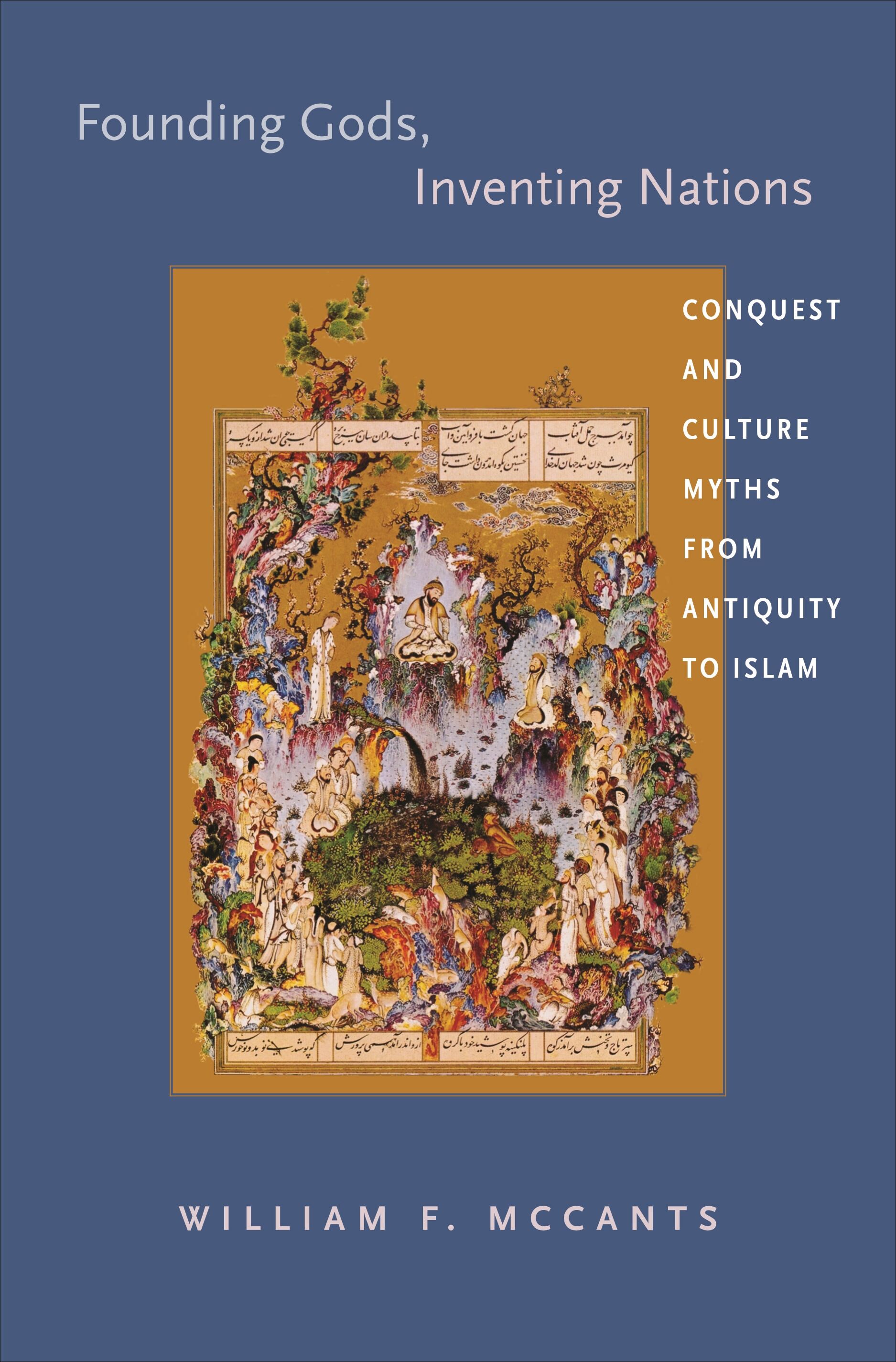
Founding gods, inventing nations
From the dawn of writing in Sumer to the sunset of the Islamic empire, Founding Gods, Inventing Nations traces four thousand years of speculation on the origins of civilization. Investigating a vast range of primary sources, some of which are translated here for the first time, and focusing on the dynamic influence of the Greek, Roman, and Arab conquests of the Near East, William McCants looks at the ways the conquerors and those they conquered reshaped their myths of civilization's origins in response to the social and political consequences of empire.
eBook

The I Ching
TheI Chingoriginated in China as a divination manual more than three thousand years ago. In 136 BCE the emperor declared it a Confucian classic, and in the centuries that followed, this work had a profound influence on the philosophy, religion, art, literature, politics, science, technology, and medicine of various cultures throughout East Asia. Jesuit missionaries brought knowledge of theI Chingto Europe in the seventeenth century, and the American counterculture embraced it in the 1960s. Here Richard Smith tells the extraordinary story of how this cryptic and once obscure book became one of the most widely read and extensively analyzed texts in all of world literature.
In this concise history, Smith traces the evolution of theI Chingin China and throughout the world, explaining its complex structure, its manifold uses in different cultures, and its enduring appeal. He shows how the indigenous beliefs and customs of Japan, Korea, Vietnam, and Tibet \"domesticated\" the text, and he reflects on whether this Chinese classic can be compared to religious books such as the Bible or the Qur'an. Smith also looks at how theI Chingcame to be published in dozens of languages, providing insight and inspiration to millions worldwide--including ardent admirers in the West such as Leibniz, Carl Jung, Philip K. Dick, Allen Ginsberg, Hermann Hesse, Bob Dylan, Jorge Luis Borges, and I. M. Pei. Smith offers an unparalleled biography of the most revered book in China's entire cultural tradition, and he shows us how this enigmatic ancient classic has become a truly global phenomenon.
eBook

The Most Revered of Foxes: Knowledge of Animals and Animal Power in an Ainu Kamui Yukar
Kamui yukar (chants of spiritual beings) are one among over twenty genres of Ainu oral performance. Highly rhythmical, kamui yukar are sung in the first person voice of the spiritual being whose story is told. Normally these spiritual beings are natural phenomena, usually animals. This article examines and translates the third kamui yukar, the Chant of the Fox About Itself recorded by Chiri Yukie in her 1976 collection, the Ainu shin'yōshū. It looks at the general characteristics of foxes and the human-fox relationship within the Ainu world view and argues that the fox of this chant (identified as a black fox; Ainu: shitunpe) is a different and more powerful order of being than the red fox (Ainu: chironnup) that is the subject of most other Ainu fox chants and lore. It argues that the special powers seen in the shitunpe reflect the Ainu understanding of the connection between more powerful animal spiritual beings and the particular location in the landscape where they are understood to dwell.
Journal Article

Nobel Genius
Awards shape careers, make research visible, and create role models. They provide evidence of prestige and credit and play a key role in evaluating individual scientists. Nevertheless, the understanding of prize cultures in science has remained surprisingly superficial. This book explores the prize cultures of the most famous scientific award worldwide: the Nobel Prize. It contributes to modern approaches in history and sociology of science that focus on the social context of scientific practices and gives new insights into the role of status and impact in academia.
eBook

Hot Pants and Spandex Suits
The superheroes from DC and Marvel comics are some of the most iconic characters in popular culture today. But how do these figures idealize certain gender roles, body types, sexualities, and racial identities at the expense of others? Hot Pants and Spandex Suits offers a far-reaching look at how masculinity and femininity have been represented in American superhero comics, from the Golden and Silver Ages to the Modern Age. Scholar Esther De Dauw contrasts the bulletproof and musclebound phallic bodies of classic male heroes like Superman, Captain America, and Iron Man with the figures of female counterparts like Wonder Woman and Supergirl, who are drawn as superhumanly flexible and plastic. It also examines the genre's ambivalent treatment of LGBTQ representation, from the presentation of gay male heroes Wiccan and Hulkling as a model minority couple to the troubling association of Batwoman's lesbianism with monstrosity. Finally, it explores the intersection between gender and race through case studies of heroes like Luke Cage, Storm, and Ms. Marvel. Hot Pants and Spandex Suits is a fascinating and thought-provoking consideration of what superhero comics teach us about identity, embodiment, and sexuality.
eBook

Sexuality and Garden Ritual in the Trobriands and Tikopia: Tudava meets the Atua I Kafika
There are remarkable parallels between the rituals performed over the yam gardens by the Trobriand Islanders and those performed by the Tikopia. The strikingly similar garden rituals appear to be dramatizations, not simply of the mythic origin and structure of the gardens, but of the mythic origin and structure of society itself. The metaphor used in both cases is that of human reproduction. Many of the differences between the two ritual systems appear to relate, in the first place, to differing theories of human reproduction and, behind them, to differing rules of descent.
Journal Article

Hero Me Not
First introduced in the pages of X-Men , Storm is
probably the most recognized Black female superhero. She is also
one of the most powerful characters in the Marvel Universe, with
abilities that allow her to control the weather itself. Yet that
power is almost always deployed in the service of White characters,
and Storm is rarely treated as an authority figure. Hero Me
Not offers an in-depth look at this fascinating yet often
frustrating character through all her manifestations in comics,
animation, and films. Chesya Burke examines the coding of Storm as
racially \"exotic,\" an African woman who nonetheless has bright
white hair and blue eyes and was portrayed onscreen by biracial
actresses Halle Berry and Alexandra Shipp. She shows how Storm,
created by White writers and artists, was an amalgam of various
Black stereotypes, from the Mammy and the Jezebel to the Magical
Negro, resulting in a new stereotype she terms the Negro Spiritual
Woman. With chapters focusing on the history, transmedia
representation, and racial politics of Storm, Burke offers a very
personal account of what it means to be a Black female comics fan
searching popular culture for positive images of powerful women who
look like you.
eBook