
Catalogue Search | MBRL


Are you sure you want to remove the book from the shelf?

{{itemTitle}}
2
result(s) for
"Cultuurgeschiedenis gtt"
Sort by:

Kant and the Culture of Enlightenment
Katerina Deligiorgi interprets Kant’s conception of enlightenment within the broader philosophical project of his critique of reason. Analyzing a broad range of Kant’s works, including his Critique of Pure Reason, the Critique of Judgment, his lectures on anthropology and logic, as well as his shorter essays, she identifies the theoretical and practical commitments that show the achievement of rational autonomy as an ongoing project for the realization of a culture of enlightenment. Deligiorgi also considers Kant’s ideas in relation to the work of Diderot, Rousseau, Mendelssohn, Reinhold, Hamann, Schiller, and Herder. The perspective opened by this historical dialogue challenges twentieth-century revisionist interpretations of the Enlightenment to show that the “culture of enlightenment” is not simply a fragment of our intellectual history but rather a live project.
eBook
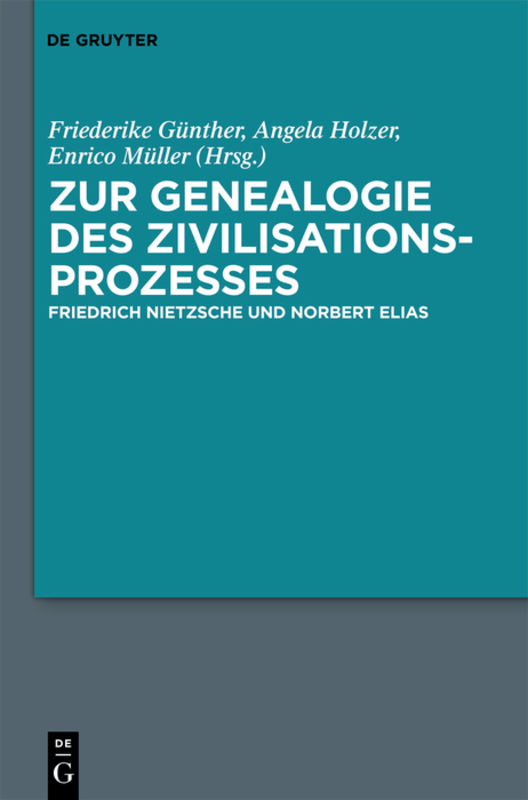
Zur Genealogie des Zivilisationsprozesses
Friedrich Nietzsche und Norbert Elias haben zivilisationsgeschichtliche Entwürfe Europas vorgelegt, die unter den Bedingungen einer stetig voranschreitenden Globalisierung weiter an Bedeutung gewinnen werden.Die philosophische Brisanz ihres Zugriffs wird v.a.
eBook