
Catalogue Search | MBRL


Are you sure you want to remove the book from the shelf?

{{itemTitle}}
46
result(s) for
"Currency question Asia."
Sort by:


Toward an East Asian Exchange Rate Regime
East Asian exchange rates have become a global flashpoint. U.S. policymakers blame artificially low Asian currency values for global imbalances, including America's ballooning current account deficit. The solution, they argue, lies in some combination of greater exchange rate flexibility and the appreciation of Asian currencies against the dollar. Asian officials recognize the need to let their exchange rates rise, but they fear that would hamper growth and cut sharply into the value of their dollar reserves. Toward an East Asian Exchange Rate Regime offers a timely and comprehensive analysis of the resulting debates, drawing on expertise from China, Japan, South Korea, and the United States. The introduction reviews the issues at stake, sketches a variety of proposed exchange rate regimes, and discusses comparisons between East Asia and the West. Subsequent chapters examine the connection between global financial imbalances and East Asian monetary cooperation, China's potential role in regional coordination, the relationship between monetary and trade integration, and different paths toward regional cooperation. Authoritative yet concise, this is an essential primer on East Asian monetary integration. Contributors include Gongpil Choi (Korean Institute of Finance, Federal Reserve Bank of San Francisco), Masahiro Kawai (University of Tokyo, Asian Development Bank), Kwanho Shin (Korea University), Yunjong Wang (SK Institute), Masaru Yoshitomi (RIETI,Tokyo), and Yongding Yu (Chinese Academy of Social Sciences).
eBook


Lever of Empire
This book, the first full account of Japan's financial history and the Japanese gold standard in the pivotal years before World War II, provides a new perspective on the global political dynamics of the era by placing Japan, rather than Europe, at the center of the story. Focusing on the fall of liberalism in Japan in late 1931 and the global politics of money that were at the center of the crisis, Mark Metzler asks why successive Japanese governments from 1920 to 1931 carried out policies that deliberately induced deflation and depression. His search for answers stretches from Edo to London to the ragged borderlands of the Japanese empire and from the eighteenth century to the 1950s, integrating political and monetary analysis to shed light on the complex dynamics of money, empire, and global hegemony. His detailed and broad ranging account illuminates a range of issues including Japan's involvement in the economic dynamics that shook interwar Europe, the character of U.S. isolationism, and the rise of fascism as an international phenomenon.
eBook

Some Principles for Development of Statistics for a Gulf Cooperation Council Currency Union
Looking ahead to the creation of a Gulf Cooperation Council (GCC) Currency Union in 2010, the paper covers some implications for the statistical programs of the GCC countries. Despite uncertainty over the structure of the proposed union, the paper envisions several types of mutually reinforcing statistics-convergence criteria, statistics on the core policy variables and instruments, additional macroeconomic data, specialized statistics related to the economic and institutional conditions within the union, and public information. Major changes to national statistical programs are needed that should begin soon.
eBook
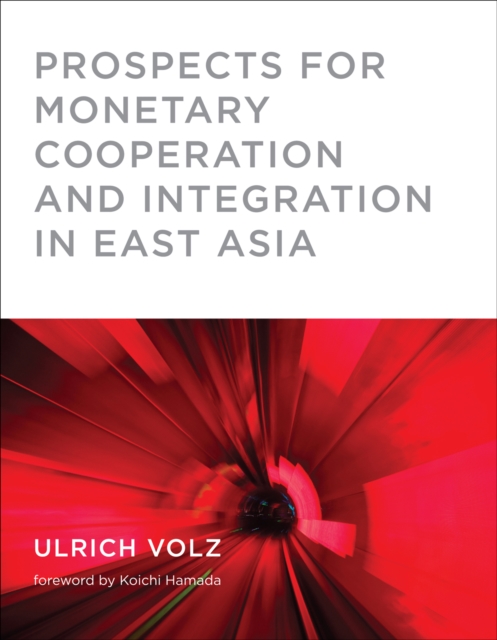
Prospects for Monetary Cooperation and Integration in East Asia
An investigation into monetary cooperation in East Asia that examines options ranging from informal policy coordination to the introduction of a common currency.
East Asian countries were notably uninterested in regional monetary integration until the late 1990s, when the Asian financial crisis revealed the fragility of the region's exchange rate arrangements and highlighted the need for a stronger regional financial architecture. Since then, the countries of East Asia have begun taking steps to explore monetary and financial cooperation, establishing such initiatives as regular consultations among finance ministers and central bank governors and the pooling of foreign exchange reserves. In this book, Ulrich Volz investigates the prospects for monetary cooperation and integration in East Asia, using state-of-the-art theoretical and empirical tools to analyze the most promising policy options. Volz points out that monetary cooperation can be defined broadly to include options ranging from informal policy consultations to European-style monetary union. He recommends a gradual approach toward monetary integration in East Asia, one that pursues less extensive forms of monetary cooperation before tackling such highly challenging projects as a regional exchange rate system or a regional monetary union. The simpler, less demanding forms of policy coordination would, Volz argues, allow East Asian countries to develop an integrationist spirit and gain experience in cooperation. Monetary integration is not an end in itself, Volz reminds us, but a means to promote economic and financial development and create a stable macroeconomic environment that is conducive to investment and growth. After providing an in-depth analysis of the costs and benefits of monetary integration, Volz examines different options for East Asian countries. He then proposes a strategy whereby countries first opt for a managed float of exchange rates guided by a regional currency basket into which an “Asian currency unit” is introduced as a virtual parallel currency to circulate alongside national currencies.
eBook
The Jingshan Report
The Jingshan Report is a collection of research papers on key issues for China's financial opening, including reform of the RMB exchange rate regime, management of cross-border capital flows and financial support for the Belt and Road Initiative. Authored by leading experts in the relevant fields, the report examines the evolution, current status and problems with the financial opening policy over the past four decades, and puts forward policy recommendations on how to steadily push forward China's financial opening.
eBook

Yen Bloc or Yuan Bloc: An Analysis of Currency Arrangements in East Asia
This paper examines the role of Japan against that of China in the exchange rate regime in East Asia in light of growing interest in forming a currency union in the region. The analysis suggests that currency unions with China tend to generate higher average welfare gains for East Asian countries than currency unions with Japan or the United States. Overall, Japan does not appear to be a dominant player in forming a currency union in East Asia, and this trend is likely to continue if China's relative presence continues to rise in the regional trade.
eBook

Distortions to agricultural incentives in Europe's transition economies
This series of books brings together analytical narratives of the evolution over the past half-century of policy-imposed distortions to farmer incentives and food prices in 80 countries, drawing on a new, consistent set of estimates spanning 90 percent of the world's agricultural markets.
eBook

Getting finance in South Asia 2009 : indicators and analysis of the commercial banking sector
This title is part of an initiative by the World Bank to develop standard indicators to measure the performance and soundness of the financial sector in the South Asia region and help pinpoint where performance is strong and where improvements are most needed. Phases I, II, and III, completed with active support and assistance from regulatory authorities in South Asia, compiled a standard set of finance indicators for five countries: Bangladesh, India, Nepal, Pakistan, and Sri Lanka. This first formally published volume encompasses Phase IV of the study, which updates all indicators under the four categories of access to finance, performance and efficiency, stability, and corporate governance, and adds two new categories: capital market developments, and market concentration and competitiveness. The addition of these measures provides a new and more holistic perspective on getting finance in South Asia, and also helps improve our understanding of the financial systems in South Asian countries. Countries in South Asia have undertaken reforms to reduce government ownership of financial institutions, bring prudential regulations in line with international norms, and strengthen banking supervision. These reforms have borne results. This volume shows that commercial banks in Bangladesh, India, Nepal, Pakistan, and Sri Lanka generally expanded access to finance and improved their performance and efficiency, stability, corporate governance, and market concentration and competitiveness over the period from 2001 to 2006. But results vary widely across and even within these areas, as shown by the countries' rankings on the indicators, which show that, with the notable exception of India, South Asian domestic debt markets are still at an early stage of development.
eBook