
Catalogue Search | MBRL


Are you sure you want to remove the book from the shelf?

{{itemTitle}}
859,939
result(s) for
"Curriculum"
Sort by:


Reinventing the Curriculum
Scotland's Curriculum for Excellence offers an example of a different approach to national curriculum development. It combines what are claimed to be the best features of top-down and bottom-up approaches to curriculum development, and provides an indication of the broad qualities that school education should promote rather than a detailed description of curriculum content. Advocates of the approach argue that it provides central guidance for schools and maintains national standards whilst at the same time allowing schools and teachers the flexibility to take account of local needs when designing programmes of education. Reinventing the Curriculum uses Scotland's Curriculum for Excellence as a rich case study, analyzing the strengths and weaknesses of this approach to curriculum design and development, and exploring the implications for curriculum planning and development around the world.
eBook


Midline Catheters: A Novel Curriculum for Emergency Medicine Residents
Audience and Type of Curriculum: This curriculum is designed for all levels of emergency medicine (EM) Residents. The curriculum covers the appropriate anatomy, indications, contraindications, and specific steps for placement of midline catheters. Length of Curriculum: Three one-hour sessions over a period of three months or a single three-hour session. Introduction: Midline catheters have become more mainstream in the emergency department as a replacement for central lines. They are readily insertable into a peripheral vein and useful for access, blood draws, and medication administration, which are well known benefits of peripheral lines. They also offer long-term reliable access and are becoming more accepted for caustic medication administration, which are clear indications for central line placement. They are significantly more comfortable than a central line and may be associated with lower rates of catheter related bloodstream infections (CRBSI) when compared to peripherally inserted central catheter (PICC) lines.1 These combined advantages have led to increasing interest in midline use in the emergency department. Unfortunately, EM residents are often not educated on the indications for midline catheters and are not trained in placing them either. We propose a midline curriculum for EM resident success in this area. Educational Goals: The purpose of this curriculum is to teach emergency medicine residents how to place and utilize midline catheters. Educational Methods: The educational strategies used in this curriculum include written and skills assessments as well as in-person lectures, and asynchronous learning. Specifically, there is a pre- intervention and post-intervention knowledge assessment as well as a pre- and post-skills assessment and skills check list. The knowledge assessments are conducted using written multiple-choice exams, and the skills curriculum evaluation is performed with task trainers and instructor feedback. Research Methods: Educational content was evaluated by learners via online survey. Efficacy of the educational content was assessed using scores and feedback from the written pre- and post-intervention examinations and procedural skills assessments. Results: Thirty-nine residents completed the study curriculum. Overall, we found the written exam score improved from pre- to post-intervention by roughly 5% (75% to 80% on average). The time to midline placement from tourniquet to vessel catheterization was significantly improved from pre-intervention at 7 minutes, 32 seconds to post-intervention at 5 minutes, 0 seconds. The post-curriculum survey taken by participants demonstrated an increased self-reported likelihood of placing a midline on a patient and improved self-reported core knowledge. However, self-reported clinical skills did not improve significantly. Discussion: The intent of our midline curriculum was to improve EM resident knowledge regarding line usage, placement, and confidence in using them in practice. The EM residents’ knowledge, ability to place, and self-reported intent to use midlines more often was improved based on our pre/post written, skills assessments and our feedback sessions. This project was well received and will hopefully result in more midline placement in the emergency department which should benefit learners, nurses, and patients.
Journal Article

Simulation-Based Preparation for the American Board of Emergency Medicine Certifying Exam: A Comprehensive Curriculum for Residents
This curriculum is designed for junior and senior emergency medicine (EM) residents who are preparing for the new American Board of Emergency Medicine (ABEM) Certifying Exam.
This curriculum can be completed over the course of an EM residency program to prepare junior residents for the individual content areas encountered on the new Certifying Exam. Alternatively, it can be implemented during a single session to simulate the actual exam for senior residents.
With ABEM transitioning to a new format for its Certifying Exam, there is a critical need for targeted preparatory materials that reflect these changes.
The goal of this curriculum is to equip residents with the knowledge and skills needed to succeed on the ABEM Certifying Exam. It includes a comprehensive set of case types expected to appear on the Certifying Exam, with a focus on assessing competencies not currently evaluated by the existing written Qualifying Exam and retiring Oral Exam. The curriculum is designed to be delivered to current residents in a single-day exam format to closely replicate the structure and experience of the new Certifying Exam.
The educational strategy used in this curriculum consists of a set of eight simulation scenarios written in an Observed Structured Clinical Examination (OSCE) format. Each scenario targets a distinct area of the recently introduced ABEM Certifying Exam. These content areas include clinical decision-making, prioritization, reassessment, difficult conversations, managing conflict, ultrasound, procedural skills, and patient-centered communications. The OSCE structure intentionally reflects that of the ABEM Certifying Exam to enhance realism, ensure consistency, and maintain educational relevance.
This eight-case simulation curriculum focuses on core EM competencies, including decision-making, communication, conflict resolution, prioritization, procedural skills, and ultrasound. Initially developed by experts in simulation and medical education, each case was subsequently refined through a structured peer review process. This process involved written evaluations by external reviewers followed by pilot testing across multiple EM residency programs and at the Society for Academic Emergency Medicine Annual Meeting. Faculty facilitators and resident learners provided targeted feedback using the Simulation Scenario Evaluation Tool1 and modified usability surveys, assessing factors such as case realism, scenario flow, clarity of learning objectives, alignment of assessment criteria, and practical feasibility for implementation.
Pilot testing across multiple institutions and at a national academic meeting demonstrated the curriculum's strong educational value, clarity, and usability. Feedback from both facilitators and residents was overwhelmingly positive, highlighting the simulation scenarios' realism, clinical relevance, and effectiveness in exam preparation.
This comprehensive simulation-based curriculum, designed to align with the ABEM Certifying Exam, proved to be feasible, effective, and well-received by both learners and facilitators. Key insights from its implementation emphasized the importance of thorough faculty preparation, flexibility in adapting to available resources, and the use of structured debriefing to support learning. Thoughtfully designed simulation experiences can significantly enhance EM resident preparedness for high-stakes assessments.
Certifying Exam, simulation, board certification, American Board of Emergency Medicine, residency.
Journal Article
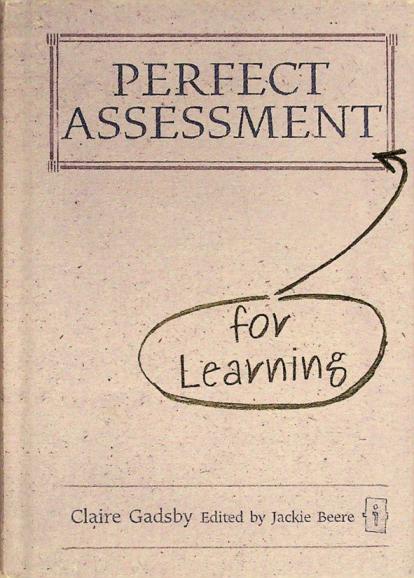
Perfect assessment for learning
A simple how to guide for implementing sustainable Assessment for Learning in your school.
Novel Asynchronous Emergency Medicine Sub-Internship Curriculum Utilizing Free Open Access Medical Education (FOAM)
This emergency medicine asynchronous curriculum is designed for emergency medicine sub-interns.
The curriculum runs monthly over a four-week sub-internship rotation.
Emergency medicine sub-interns are at an intermediate stage of training and require exposure to material that agrees with their training level. Asynchronous learning is an effective way to supplement sub-interns' learning, and free open-access medical education (FOAM) provides valuable content for asynchronous curricula.
The global purpose of the curriculum is to supplement sub-interns' learning with high-yield emergency medicine topics while introducing them to various FOAM resources.
A gap-analysis was conducted to suggest content most appropriate for the asynchronous curriculum, and the curriculum was designed with adult learning theories in mind. The educational strategies used in the curriculum include articles, videos, podcasts, diagrams, cases, and practice questions from various high-quality FOAM resources. The content is broken up into four core modules (trauma, eye complaints, shock, obstetric and gynecologic (OBGYN) complaints) and two bonus modules (orthopedic complaints, ultrasound basics), and the modules are available on the sub-internship website for students to access throughout their rotation.
The educational content was evaluated by the learners using pre-rotation, post-module, and post-rotation surveys.
Survey results show that at least 95% of students agreed with meeting each of the modules' learning objectives. The curriculum also significantly increased learners' confidence in evaluating specific chief complaints and ultrasounds. Students reported an increased likelihood of changing their clinical practice, an increased awareness of the role of social determinants of health, and an increased preparedness for residency after engaging with the curriculum.
Asynchronous curricula using thoughtfully-selected FOAM content and resources can effectively supplement synchronous learning methods in emergency medicine sub-internships. The curriculum is easy to implement and receives high satisfaction from students.
Sub-Internship, asynchronous curriculum, free-open access medical education, trauma, eye complaints, shock, OBGYN complaints, ultrasound, social determinants of health.
Journal Article

A coherent curriculum for every student : curriculum proposals for possible adoption
\"This book exhibits a collection of proposals for how school curriculum may be conceived, designed, and realized\"-- Provided by publisher.
Book

Engaging diverse voices across sites of curriculum making in Australia: realities and possibilities
Research to date has pointed out that during periods of curriculum reform, public debate gets politicised resulting in an over-emphasis on top-down approaches to curriculum making. As a group of curriculum inquiry researchers, we are concerned that teachers, students, school leaders and community organisations are often side-lined as integral curriculum actors in curriculum making processes. This paper challenges top-down, discipline-siloed conceptualisations of curriculum making by bringing together three separate curriculum projects, as illustrations, for the purpose of rendering diverse articulations of curriculum as a social process. We apply Priestley et al.’s (Priestley et al., Curriculum making in Europe: Policy and practice within and across diverse contexts, Emerald Publishing Limited, 2021) sites of curriculum making as a conceptual frame, to articulate the diversity of curriculum making activities, curriculum actors and sites of curriculum making in primary and secondary settings. The three illustrations include examining how teachers and students participate in curriculum making about Asia and Australia’s engagement with Asia at macro and meso sites; how listening to secondary students as curriculum actors allows them to contribute to shaping school History beyond the nano sites of the classroom and how community and arts-based approaches empower primary students to engage in nano curriculum making (e.g. Hannigan & Kelly, Hannigan and Kelly, Lin et al. Sinner et al. Irwin (eds), Community arts education: Transversal global perspectives, Intellect, 2023). By engaging a collaborative approach that uses illustrations to draw a complementary transdisciplinary picture of the realities and possibilities of curriculum making across different sites, this paper makes a novel methodological contribution to the field of curriculum inquiry.
Journal Article