
Catalogue Search | MBRL


Are you sure you want to remove the book from the shelf?

{{itemTitle}}
1,829
result(s) for
"Curriculum-based assessment."
Sort by:
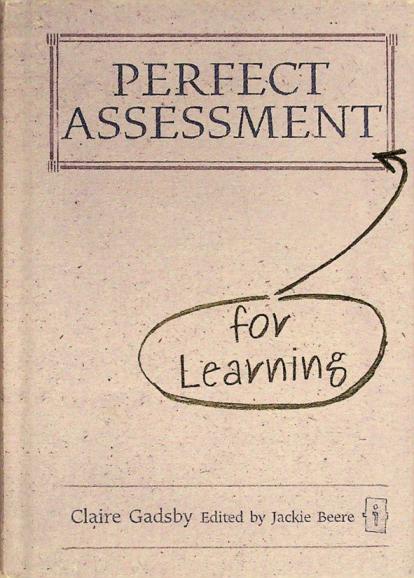
Perfect assessment for learning
A simple how to guide for implementing sustainable Assessment for Learning in your school.

Unlocking the Promise of Multitiered Systems of Support (MTSS) for Linguistically Diverse Students: Advancing Science, Practice, and Equity
With its emphasis on early identification, quality instruction, interventions for students at risk of educational failure, and use of data on student response to instruction, multitiered systems of support (MTSS) offer numerous advantages over a remedial approach. Leveraging the promise of MTSS will rely, however, on equitable distribution of the advantages of this approach, especially for culturally and linguistically diverse students (CLD). The articles in this special topic section address CLD student contexts and apply this knowledge to culturally responsive explorations of assessment and instruction with an emphasis on the role of English language proficiency and language of instruction. Recognizing the importance of early identification and progress monitoring, several studies focus on the adequacy of screeners and curriculum-based measurement (CBM) tools for CLD children within MTSS. Across the studies, several important themes emerge in unlocking the promise of MTSS for CLD students, including (a) the need for validated measures for use with CLD, especially those sensitive to levels of English proficiency; (b) the importance of English language proficiency (ELP) in understanding responsiveness to intervention; (c) the language of instruction holds important relationships to performance on screeners, CBM, and achievement outcomes; and (d) English language instruction did not appear to impede performance on outcomes. Implications for advancing practice are also discussed.
Journal Article


The assessment of learning in engineering education : practice and policy
This book considers the functions of assessment and its measurement in engineering education. Chapters two through three discuss efforts toward alternative curriculum in engineering and advanced level exams for university entry in engineering science. Chapter four reviews investigations of what engineers do at work and their implications assessment. Chapter five records the development of competency based assessment and considers its implications for the engineering curriculum. Chapter six discusses the impact of the accrediting authorities on assessment, outcomes based assessment, taxonomies and assessment in mastery and personalized systems of instruction. Chapters seven through eight consider student variability (e.g. intellectual development, emotional intelligence) and reflective practice. Questions are raised about the assessment of communication, creativity, innovation, teamwork, and the role of projects in integrated learning in chapter nine. Chapter ten though eleven focus on the implementation of outcomes based assessment, and the implications of two theories of competence for the design of the curriculum and its assessment. The book concludes by discussing assessment, moral purpose and social responsibility in the light of changes in the workforce, the role of educational institutions in preparation for industry, the need for lifelong education, and new approaches to assessment, and credentialing. Publisher.
Book

Curriculum-Based Measurement of Reading Decision Rules: Strategies to Improve the Accuracy of Treatment Recommendations
School psychologists regularly use decision rules to interpret student response to intervention in reading. Recent research suggests that the accuracy of those decision rules depends on the duration of progress monitoring, the number of observations available, and the amount of measurement error present. In this study, we extended existing research to evaluate the influence of a student's initial level of performance, goal line type, and decision rule type on the accuracy of interpretations of progress monitoring data. Normative goal lines performed best for students scoring far below benchmark at the beginning of the year, while goal lines based upon a spring benchmark score were appropriate for students performing just below expectations at the beginning of the year. The data point rule performed poorly across all progress monitoring conditions, while comparing the median of the 3 most recent observations to a goal line performed similarly to the trend line rule.
Journal Article

The ABC's of CBM : a practical guide to curriculum-based measurement
\"Curriculum-based measurement (CBM) has been adopted by growing numbers of school districts and states since the publication of this definitive practitioner guide and course text. The second edition presents step-by-step guidelines for using CBM in screening, progress monitoring, and data-based instructional decision making in PreK-12. It describes the materials needed and all aspects of implementation in reading, spelling, writing, math, and secondary content areas. Twenty sets of reproducible CBM administration and scoring guides and other tools are provided. Subject Areas/Key Words: assessments, CBM, curriculum-based measurement, data-based decision making, early interventions, early numeracy, early reading, elementary, IEPs, instructional planning, mathematics, measurement, MTSS, multi-tiered systems of support, progress monitoring, response to intervention, RTI, school psychology, secondary, special education, spelling, students, testing, universal screening, writing Audience: School psychologists, special educators, general education teachers, and reading specialists in PreK-12; instructors and graduate students in these fields. \"-- Provided by publisher.
Book
Reading Proficiency in Elementary: Considering Statewide Testing, Teacher Ratings and Rankings, and Reading Curriculum-Based Measurement
Determining the reading proficiency of elementary students is important in the prevailing educational climate of accountability in the United States. Collecting information about reading proficiency can be accomplished using a range of assessment approaches. This article examines the extent to which reading proficiency can be determined across two types of measures-curriculum-based measurement (CBM) and teacher judgment. Using a representative statewide sample of 980 students in kindergarten through sixth grade and their 51 homeroom teachers, concurrent data were collected on Iowa Assessments-Reading, Dynamic Indicators for Basic Early Literacy Skills Next CBMs, and teacher judgments of reading proficiency. Results showed that teachers rated students as proficient readers with high levels of accuracy and Dynamic Indicators for Basic Early Literacy Skills Next CBMs were relatively more accurate for identifying students at risk for reading problems. Recommendations presented here support using teacher and direct assessments for data-based decision making and instructional planning.
Journal Article
Improving Decision-Making: Procedural Recommendations for Evidence-Based Assessment: Introduction to the Special Issue
Assessing for applied decision-making is an essential role of a school psychologist. Advances in complex statistical analyses (e.g., item response theory, structural equation modeling) have allowed for more robust psychometric evaluation and assessment tools than ever before. School psychologists now have access to a wide range of evidence-based assessments across academic, behavioral, and cognitive domains. In contrast, relatively less research has examined the procedures through which assessment data are collected and analyzed. Such limitations restrict the utility of assessment data, as well as the validity of decisions made in consideration of said data. The primary goal of this special issue is to feature research that critically examines factors that facilitate or inhibit accurate and efficient decision-making in schools, including that which elucidates best practice for improving the input and output of assessment data. Articles provide empirical support and procedural guidance to improve decision-making in schools. Commentaries reflect on the current state of evidence and offer suggestions for future research and practice.
Journal Article
Short-Term Estimates of Growth Using Curriculum-Based Measurement of Oral Reading Fluency: Estimating Standard Error of the Slope to Construct Confidence Intervals
Curriculum-based measurement of oral reading fluency (CBM-R) is an established procedure used to index the level and trend of student growth. A substantial literature base exists regarding best practices in the administration and interpretation of CBM-R; however, research has yet to adequately address the potential influence of measurement error. This study extends results of Hintze and Christ (2004) by incorporating research-based estimates of the standard error of the estimate (SEE) to generate likely magnitudes for the standard error of the slope (SEb) across a variety of progress monitoring durations and measurement conditions. Fourteen progress monitoring durations (2-15 weeks) and nine levels of SEE (2, 4, 6, 8, 10, 12, 14, 16, 18) were used to derive SEb. The outcomes are discussed in relation to assessment practices, such as selecting optimal progress monitoring durations to reduce measurement error. Implications and limitations are
discussed.
Journal Article