
Catalogue Search | MBRL


Are you sure you want to remove the book from the shelf?

{{itemTitle}}
199
result(s) for
"Customs administration China History."
Sort by:


China’s Foreign Places
During the nineteenth and early twentieth centuries, the imperial powers—principally Britain, the United States, Russia, France, Germany and Japan—signed treaties with China to secure trading, residence and other rights in cities on the coast, along important rivers, and in remote places further inland. The largest of them—the great treaty ports of Shanghai and Tientsin—became modern cities of international importance, centres of cultural exchange and safe havens for Chinese who sought to subvert the Qing government. They are also lasting symbols of the uninvited and often violent incursions by foreign powers during China’s century of weakness. The extraterritorial privileges that underpinned the treaty ports were abolished in 1943—a time when much of the treaty port world was under Japanese occupation. China’s Foreign Places provides a historical account of the hundred or more major foreign settlements that appeared in China during the period 1840 to 1943. Most of the entries are about treaty ports, large and small, but the book also includes colonies, leased territories, resorts and illicit centres of trade. Information has been drawn from a wide range of sources and entries are arranged alphabetically with extensive illustrations and maps. China’s Foreign Places is both a unique work of reference, essential for scholars of this period and travellers to modern China. It is also a fascinating account of the people, institutions and businesses that inhabited China’s treaty port world.
eBook

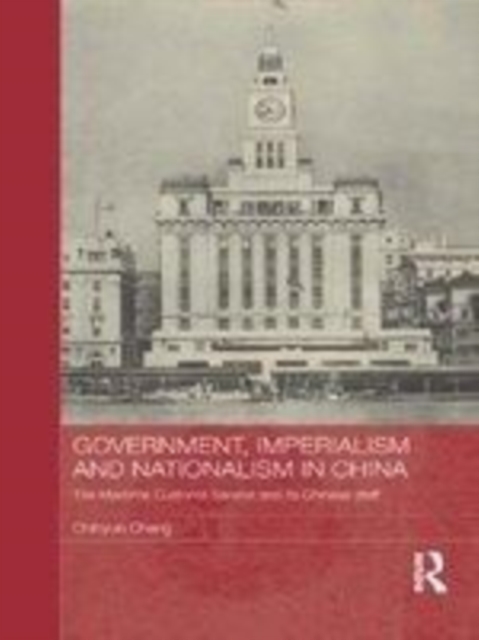
Government, Imperialism and Nationalism in China
The Chinese Maritime Customs Service, which was led by British staff, is often seen as one of the key agents of Western imperialism in China, the customs revenue being one of the major sources of Chinese government income but a source much of which was pledged to Western banks as the collateral for, and interests payments on, massive loans. This book, however, based on extensive original research, considers the lower level staff of the Chinese Maritime Customs Service, and shows how the Chinese government, struggling to master Western expertise in many areas, pursued a deliberate policy of encouraging lower level staff to learn from their Western superiors with a view to eventually supplanting them, a policy which was successfully carried out. The book thereby demonstrates that Chinese engagement with Western imperialists was in fact an essential part of Chinese national state-building, and that what looked like a key branch of Chinese government delegated to foreigners was in fact very much under Chinese government control.
eBook

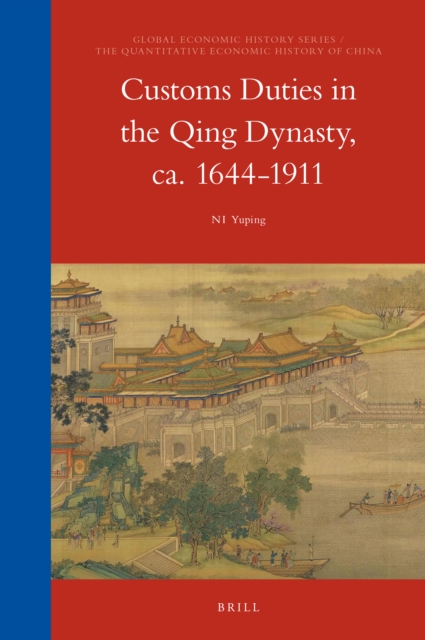
Customs duties in the Qing dynasty, ca. 1644-1911
The history of customs duties reflects the development of the Qing fiscal system, especially in its transition from a rather traditional to a more modern economy. Mainly based on Qing archives, this book, the first research monograph on this subject in the English language, not only gives a brief introduction of each customs post's transformation over time, but also provides the complete statistical data of each of these post over the Qing dynasty.Contributors are: Bas van Leeuwen, Bozhong Li, Maaten Duijvendak, Martin Uebele, Peter Foldvari, Yi Xu.
eBook

The Rise of Municipal Government in Early Twentieth-Century China: Local History, International Influence, and National Integration
Municipal government as an institutional form spread across China in the first decades of the twentieth century. Inspired by foreign models, the form embedded itself quickly into the domestic political order. As it came to be implemented in China, municipal government focused on policing and infrastructure. Municipal officials' promises of economic development and social discipline were attractive to local elites. New urban institutions opened avenues for ambitious younger men to build careers alongside established county and provincial administrations. Urban administration enjoyed cachet, being understood as an important priority worldwide. The creation of municipal governments facilitated the incorporation of new technologies, techniques, and training into the Chinese political order. Municipal government contributed to national integration by spreading common practices and building a new institutional framework that the Nationalist and Communist governments were able to knit together via new laws and personnel transfers in later decades.
Journal Article

Elusive Pirates, Pervasive Smugglers
Piracy and smuggling are as great a problem today as they were several hundreds of years ago. The studies in Elusive Pirates, Pervasive Smugglers, for the first time, carefully describe and critically analyze piracy and smuggling in the Greater China Seas region from the sixteenth century to the present. Because piracy and smuggling involve complex historical processes that are still evolving, to fully understand contemporary problems it is important to place them in larger historical and comparative perspectives. The essays in this book add significantly to the scholarship on East and Southeast Asian history, and in particular to the maritime history of the region we call the Greater China Seas. This is the first book to analyze the whole region from Japan to Southeast Asia as a single, integrated historical and geographical area. This book takes a radical departure from the standard terra-centered histories to place the seas at the center rather than at the margins of our inquiries. By focusing on the water we are better able to stitch together the diverse histories of Japan, China, and Southeast Asia. Although often dismissed as historically unimportant, the contributors to this anthology show that in fact pirates and smugglers have played significant roles in the development of the modern world. Elusive Pirates, Pervasive Smugglers should appeal to undergraduate and graduate students in history and Asian studies, as well as to general readers interested in pirates and maritime history.
eBook