
Catalogue Search | MBRL


Are you sure you want to remove the book from the shelf?

{{itemTitle}}
134
result(s) for
"Cyber intelligence (Computer security) United States."
Sort by:


Cybersecurity Law
This book gives insight into the legal aspects of data ownership in the 21st century.
With the amount of information being produced and collected growing at an ever accelerating rate, governments are implementing laws to regulate the use of this information by corporations. Companies are more likely than ever to face heavy lawsuits and sanctions for any misuse of information, which includes data breaches caused by cybercriminals.
This book serves as a guide to all companies that collect customer information, by giving instructions on how to avoid making these costly mistakes and to ensure they are not liable in the event of stolen information.
eBook

Gray day : my undercover mission to expose America's first cyber spy
\"A cybersecurity expert and former FBI 'ghost' tells the ... story of how he helped take down notorious FBI mole Robert Hanssen, the first Russian cyberspy\"-- Provided by publisher.
BOOK
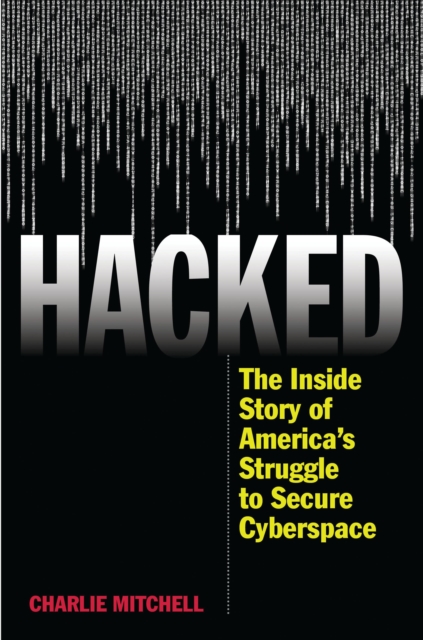
Hacked
The spectacular cyber attack on Sony Pictures and costly hacks of Target, Home Depot, Neiman Marcus, and databases containing sensitive data on millions of U.S. federal workers have shocked the nation. Despite a new urgency for the president, Congress, law enforcement, and corporate America to address the growing threat, the hacks keep coming—each one more pernicious than the last—from China, Russia, Iran, North Korea, the Middle East, and points unknown. The continuing attacks raise a deeply disturbing question: Is the issue simply beyond the reach of our government, political leaders, business leaders, and technology visionaries to resolve? In Hacked, veteran cybersecurity journalist Charlie Mitchell reveals the innovative, occasionally brilliant, and too-often hapless government and industry responses to growing cybersecurity threats. He examines the internal power struggles in the federal government, the paralysis on Capitol Hill, and the industry's desperate effort to stay ahead of both the bad guys and the government.
eBook

Professionalizing the Nation's Cybersecurity Workforce?
\"Professionalizing the Nation's Cybersecurity Workforce? Criteria for Decision-Making\" considers approaches to increasing the professionalization of the nation's cybersecurity workforce. This report examines workforce requirements for cybersecurity and the segments and job functions in which professionalization is most needed; the role of assessment tools, certification, licensing, and other means for assessing and enhancing professionalization; and emerging approaches, such as performance-based measures. It also examines requirements for the federal (military and civilian) workforce, the private sector, and state and local government. The report focuses on three essential elements: (1) understanding the context for cybersecurity workforce development, (2) considering the relative advantages, disadvantages, and approaches to professionalizing the nation's cybersecurity workforce, and (3) setting forth criteria that can be used to identify which, if any, specialty areas may require professionalization and set forth criteria for evaluating different approaches and tools for professionalization. \"Professionalizing the Nation's Cybersecurity Workforce? Criteria for Decision-Making\" characterizes the current landscape for cybersecurity workforce development and sets forth criteria that the federal agencies participating in the National Initiative for Cybersecurity Education--as well as organizations that employ cybersecurity workers--could use to identify which specialty areas may require professionalization and to evaluate different approaches and tools for professionalization. The following are appended: (1) Biographies of Committee Members; (2) Workshop Agendas; and (3) Speakers and Participants at Workshops Organized by the Committee. [This report was written by: Committee on Professionalizing the Nation's Cybersecurity Workforce: Criteria for Future Decision-Making; Computer Science and Telecommunications Board; Division on Engineering and Physical Sciences; National Research Council.]
eBook

Cyber-attaques
Régulièrement désignés comme responsables de cyberattaques, la Chine, la Russie, l'Iran et la Corée du Nord sont pourtant loin d'être les seuls États à conduire de telles opérations. Or c'est exclusivement sur cette \"bande des quatre\" que Washington, pratiquant volontiers le naming and shaming, braque les projecteurs. Ces dénonciations publiques disent beaucoup de la politique étrangère américaine et de la stratégie d'influence de Washington, de son intransigeance. Les États-Unis façonnent ainsi les perceptions à leur avantage, dans le débat crucial sur le droit international applicable au cyber-espace et dans la perspective d'imposer des sanctions à leurs adversaires. Un ouvrage clair et une approche innovante et pionnière pour comprendre cet enjeu hautement politique dans un domaine opaque des relations internationales : la cyber-conflictualité.
eBook

Privacy Rights in the Digital Age
This new edition discusses the practical, political, psychological, and philosphical challenges we face as technological advances have changed the landscape of traditional notions of privacy.
eBook

Introduction to US Cybersecurity Careers
Introduction to US Cybersecurity Careers is a concise introduction to the world of cybersecurity and the career opportunities therein.This book provides a basic rundown of industry sectors, roles, and places to search for job opportunities within the US cybersecurity industry.
eBook
How to Define and Build an Effective Cyber Threat Intelligence Capability
Intelligence-Led Security: How to Understand, Justify and Implement a New Approach to Security is a concise review of the concept of Intelligence-Led Security.Protecting a business, including its information and intellectual property, physical infrastructure, employees, and reputation, has become increasingly difficult.
eBook

The U.S. health system vulnerabilities
Background
The increasing integration of health information technology (health IT) into the U.S. healthcare system has brought both opportunities for improvement and new vulnerabilities. The 2024–2030 Federal Health IT Strategic Plan emphasizes equitable data access, quality representative data, and the responsible use of artificial intelligence (AI) to improve health outcomes. Yet, the growing complexity of digital infrastructures has amplified risks related to privacy and the security of protected health information (PHI). This study examines U.S. health system vulnerabilities by analyzing reported PHI breaches and situating them within evolving federal health IT priorities.
Methods
This mixed-methods descriptive study combines quantitative analysis of the U.S. Department of Health and Human ServiCE’s (HHS) Breach Portal data (2013–2023) with a qualitative review of federal policy and regulatory developments related to health IT. Breaches of PHI affecting more than 500 individuals were included, consistent with HHS reporting requirements. Duplicate and incomplete entries were removed. Breaches were categorized by cause and type. Quantitative results describe frequencies, proportions, and trends, while qualitative analysis of policy documents and breach narratives contextualizes these findings within the broader framework of digital health governance.
Results
From 2013 to 2023, the total number of reported PHI breaches and the share attributed to hacking and IT incidents increased markedly, while those involving theft, loss, or improper disposal declined. Healthcare providers accounted for most reported breaches, followed by business associates and health plans. Despite advances in interoperability and automation, the healthcare sector remains disproportionately affected by cybersecurity incidents. The qualitative analysis reveals persistent gaps between federal strategic goals and the practical implementation of privacy and security safeguards across healthcare.
Conclusion
This study underscores the paradox of digital transformation: while health IT adoption improves efficiency, coordination, and data sharing, it simultaneously exposes the healthcare system to new risks. Strengthening system resilience requires harmonized governance, continuous monitoring, and greater investment in digital literacy. As AI use and automation expand, policy reforms must ensure that innovation does not compromise patient privacy or deepen inequities. These findings contribute to a better understanding of health system vulnerabilities and offer insights for enhancing the security and resilience of the U.S. health system.
Journal Article