
Catalogue Search | MBRL


Are you sure you want to remove the book from the shelf?

{{itemTitle}}
45
result(s) for
"Cyberterrorism History."
Sort by:


Technology, Policy, Law, and Ethics Regarding U.S. Acquisition and Use of Cyberattack Capabilities
The United States is increasingly dependent on information and information technology for both civilian and military purposes, as are many other nations. Although there is a substantial literature on the potential impact of a cyberattack on the societal infrastructure of the United States, little has been written about the use of cyberattack as an instrument of U.S. policy.
Cyberattacks-actions intended to damage adversary computer systems or networks-can be used for a variety of military purposes. But they also have application to certain missions of the intelligence community, such as covert action. They may be useful for certain domestic law enforcement purposes, and some analysts believe that they might be useful for certain private sector entities who are themselves under cyberattack. This report considers all of these applications from an integrated perspective that ties together technology, policy, legal, and ethical issues.
Focusing on the use of cyberattack as an instrument of U.S. national policy, Technology, Policy, Law and Ethics Regarding U.S. Acquisition and Use of Cyberattack Capabilities explores important characteristics of cyberattack. It describes the current international and domestic legal structure as it might apply to cyberattack, and considers analogies to other domains of conflict to develop relevant insights. Of special interest to the military, intelligence, law enforcement, and homeland security communities, this report is also an essential point of departure for nongovernmental researchers interested in this rarely discussed topic.
eBook


Strategic Intelligence Management
Strategic Intelligence Management introduces both academic researchers and law enforcement professionals to contemporary issues of national security and information management and analysis.This contributed volume draws on state-of-the-art expertise from academics and law enforcement practitioners across the globe.
eBook

Cyber warfare : a reference handbook
This timely handbook traces the development of cyber capabilities from their roots in information warfare and cryptology to their potential military application in combat.
Book

Wars of Disruption and Resilience
Increasingly, the power of a large, complex, wired nation like the United States rests on its ability to disrupt would-be cyber attacks and to be resilient against a successful attack or recurring campaign. Addressing the concerns of both theorists and those on the national security front lines, Chris C. Demchak presents a unified strategy for survival in an interconnected, ever-messier, more surprising cybered world and examines the institutional adaptations required of our defense, intelligence, energy, and other critical sectors for national security. Demchak introduces a strategy of \"security resilience\" against surprise attacks for a cybered world that is divided between modern, digitally vulnerable city-states and more dysfunctional global regions. Its key concepts build on theories of international relations, complexity in social-technical systems, and organizational-institutional adaptation. Demchak tests the strategy for reasonableness in history's few examples of states disrupting rather than conquering and being resilient to attacks, including ancient Athens and Sparta, several British colonial wars, and two American limited wars. She applies the strategy to modern political, social, and technical challenges and presents three kinds of institutional adaptation that predicate the success of the security resilience strategy in response. Finally, Demchak discusses implications for the future including new forms of cyber aggression like the Stuxnet worm, the rise of the cyber-command concept, and the competition between the U.S. and China as global cyber leaders. Wars of Disruption and Resilience offers a blueprint for a national cyber-power strategy that is long in time horizon, flexible in target and scale, and practical enough to maintain the security of a digitized nation facing violent cybered conflict.
eBook

Dawn of the code war : America's battle against Russia, China, and the rising global cyber threat
\"Over the past decade, there have been a series of Internet-linked attacks on American interests, including North Korea's retaliatory hack of Sony Pictures, China's large-scale industrial espionage, Russia's 2016 propaganda campaign, and quite a lot more ... John Carlin has been on the frontlines of America's ongoing cyber war with its enemies. In this ... book, he tells the story of his years-long secret battle to keep America safe, and warns us of the perils that await us as we embrace the latest digital novelties--smart appliances, artificial intelligence, self-driving cars--with little regard for how our enemies might compromise them\"--Provided by publisher.
Book

Cybersecurity needs women
Safeguarding our lives online requires skills and experiences that lie beyond masculine stereotypes of the hacker and soldier, says Winifred R. Poster.
Safeguarding our lives online requires skills and experiences that lie beyond masculine stereotypes of the hacker and soldier, says Winifred R. Poster.
Journal Article

North Korea's cyber operations
This report presents an open source analysis of North Korea's cyber operations capabilities and its strategic implications for the United States and South Korea. The purpose is to mitigate the current knowledge gap among various academic and policy communities on the topic by synthesizing authoritative and comprehensive open source reference material. The report is divided into three chapters, the first chapter examining North Korea's cyber strategy. The authors then provide an assessment of North Korea's cyber operations capabilities by examining the organizational structure, history, and functions of North Korea's cyber units, their supporting educational training and technology base, and past cyber attacks widely attributed to North Korea. This assessment is followed by a discussion on policy implications for U.S. and ROK policymakers and the larger security community.
eBook
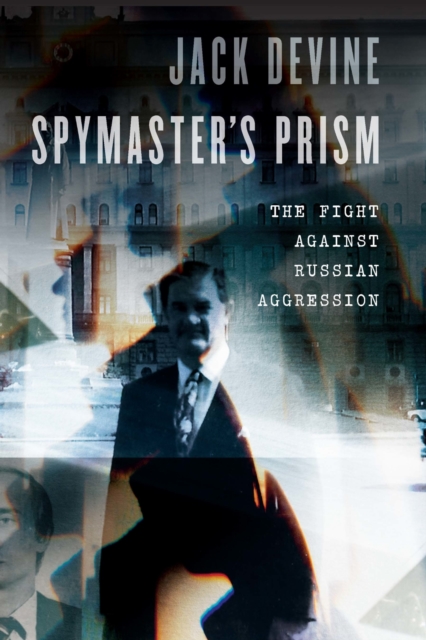
Spymaster's Prism
Spymaster's Prism is a prescient study of our unending
struggle with Russia and its intelligence agencies' relentless
effort to undermine our national security. Replete with the most
salient spy stories, covert actions, and counterintelligence
investigations from the beginning of the Cold War up until the eve
of Putin's misguided march on Kiev, legendary spymaster Jack Devine
builds a vivid and complex mosaic that illustrates how Russia has
employed intelligence activities to undermine our democracy
throughout modern history and lay the groundwork for this invasion.
Devine tells this story through the gimlet-eyed perspective of a
seasoned CIA professional who served his country for more than
three decades, some at the highest levels of the agency, offering
objective and candid analysis that will bring new insight into
Russia's invasion. Devine offers key lessons from our intelligence
successes and failures over the past seventy-five years that
illuminate how best to address our current strategic shortfalls,
emerge ahead in the war, and be prepared for what's to come from
any adversary. This cogent study illuminates why intelligence has
been such a key driver in the war and how it will be a critical
lever in order to prevail.
eBook