
Catalogue Search | MBRL


Are you sure you want to remove the book from the shelf?

{{itemTitle}}
61,847
result(s) for
"Cycling."
Sort by:


How does innovation arise in the bicycle sector? The users' role and their betrayal in the case of the 'gravel bike'
This paper examines the emergence of the 'gravel bike', a new and successful category of sports bicycles that gained prominence in the global cycling industry in the late 2010s, to advance the understanding of the role of users in the processes of sociotechnical innovation. The study traces the development of gravel cycling and the gravel bike within the framework of science and technology studies (STS), introducing the concept of 'user betrayal' to highlight how innovations initially driven by users can later diverge from their original values and needs. The development of the gravel bike represents a case where users' input played a crucial role in creating an alternative cycling culture that directly supported the introduction of a new, successful bicycle model. However, the commercialization and institutionalization of gravel cycling, driven by industries, institutions and sporting bodies, has led to a significant shift away from the values that motivated early enthusiasts. This case reveals the tensions between user-driven innovation and the forces of commodification, emphasizing how marketing and institutional pressures can undermine the original needs and ideals of user collectives. KEYWORDS user-driven innovation, user betrayal, commodification, gravel bike, cycling Introduction
Journal Article

The cyclist's training bible : the world's most comprehensive training guide
This all-new Cyclist's Training Bible presents the latest discoveries in cycling science, data analysis, daily planning, and skills development to help you create a personal training plan for success.
Book


Words to ride by : thoughts on bicycling
\"Notable luminaries throughout history have been inspired and humbled by the simple joy of riding a bicycle. For centuries, this powerful connection between people and bikes has driven humans forward as inventors, travelers, and thinkers. From Susan B. Anthony and Mark Twain to Eddy Merckx and Greg LeMond, collected here are entertaining, inspiring, and philosophical thoughts about cycling from writers (and riders) reflecting on the pleasures, power, and freedom of the bicycle. With beautiful black-and-white photos and illustrations on every spread, this elegant collection of quotations is sure to motivate anyone to get on their bike and enjoy the ride\"-- Provided by publisher.
Book

Cycling and Recycling
Technology has long been an essential consideration in public discussions of the environment, with the focus overwhelmingly on creating new tools and techniques. In more recent years, however, activists, researchers, and policymakers have increasingly turned to mobilizing older technologies in their pursuit of sustainability. In fascinating case studies ranging from the Early Modern secondhand trade to utopian visions of human-powered vehicles, the contributions gathered here explore the historical fortunes of two such technologies—bicycling and waste recycling—tracing their development over time and providing valuable context for the policy successes and failures of today.
eBook


Easy rider road book : a tour through the wild and inspiring side of bicycle culture
Bike culture is in constant interaction with fashion, music, design, politics and urban planning. Cycling is a way of life and a form of protest. 'Easy Rider Road Book' shows the wild, subversive side of cycling and the powerful bond it can create between people. It aims to inspire utopian thinking and show where the bike can take us.
BOOK
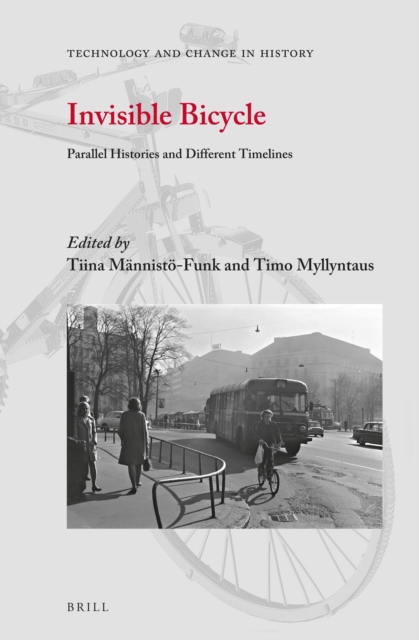
Invisible Bicycle
The Invisible Bicycle revisits and questions the existing timelines of bicycle history to create a more nuanced understanding of why and how the popularity of the bicycle and cycling has changed over time and varies in different locations.
eBook