
Catalogue Search | MBRL


Are you sure you want to remove the book from the shelf?

{{itemTitle}}
328
result(s) for
"Cylinder seals."
Sort by:


PLOMAT: plotting material flows of ‘commonplace’ Late Bronze Age seals in western Eurasia
Since the mid-twentieth century, the study of designs on seals has often focused on exotica and elite items. The PLOMAT project investigates visual and material communication outside of elite exchange networks during the Late Bronze Age in western Eurasia. The authors present results from plotting flows of ‘commonplace’ cylinder seals and those classified as ‘Common-Style Mittani’.
Journal Article

Ancient Egyptian Scarabs
First published in 2005. Routledge is an imprint of Taylor & Francis, an informa company.
eBook

Chalcolithic stamp seals from Tepe Gheshlagh, and a look into their application in ownership and exchange systems
Tepe Gheshlagh is one of the major sites with deposits of the Chalcolithic period in the east of the Central Zagros. The central question in the present study was the administrative system and ownership in the Chalcolithic period. With a descriptive-analytical method, an attempt was made to expound on Gheshlagh’s glyptic assemblage that attest to the existence of an ownership system and commercial exchanges. A structural analysis of the glyptic iconography suggested that each of the linear, circular, or repeating patterns were less mere personal insignias intended to exclude the possibility of alteration or forgery than they were marks belonging to a pre-literate system where each sign/symbol stood for individual commodity types that were transported or exchanged as such. At the same time, the composition of these widely varying geometric motifs followed certain conventions. Tepe Gheshlagh je eno najpomembnejših najdišč bakrene dobe na vzhodnem območju osrednjega Zagrosa. Ključni raziskovalni vprašanji naše študije sta organizacija administrativnih sistemov in koncept lastništva v tem obdobju. S pomočjo deskriptivno-analitične metode podrobneje obravnavamo zbirko pečatnikov iz Gheshlagha, ki dokazujejo sistem lastništva in trgovinske izmenjave. Strukturna analiza ikonografije pečatnikov kaže, da linearni, krožni in ponavljajoči se vzorci niso bili zgolj osebni simboli, namenjeni preprečevanju ponarejanja ali spreminjanja, temveč so predstavljali znake v okviru določenega sistema pred vpeljavo pisave. Vsak znak ali simbol je verjetno označeval določeno vrsto blaga, ki se je prenašalo ali izmenjevalo. Kljub veliki raznolikosti geometrijskih motivov je njihova sestava sledila določenim konvencijam, kar nakazuje na standardizirano vizualno komunikacijo v skupnosti.
Journal Article

Revisiting the ‘kriegerischer Gott’ of the Akkadian Period
Boehmer’s Die Entwicklung der Glyptik während der Akkad-Zeit (1965), although nearly 60 years old, is still the major work on the cylinder seals of the Akkadian Period (2334–2150 BCE). It examines different themes and motifs depicted on the cylinder seals during this period. One of the figures which Boehmer discusses is the ‘kriegerischer Gott’, or martial god. Boehmer records this ‘kriegerischer Gott’ as being depicted on only eight cylinder seals. Despite this limited number of examples, the figure exhibits a unique iconography, which suggests a unique, specific personage. Furthermore, he is depicted on the seal of the scribe Adda (BM 89115), one of the most well-known seals from Mesopotamia, in which he is depicted alongside Utu/Šamaš, Inana/Ištar, Enki/Ea and Isiumud/Usmu. Because the ‘kriegerischer Gott’ is depicted together with these great deities of the Akkadian pantheon, each with their own unique iconography, it suggests that he may likewise be a figure of some importance. Boehmer devotes only one page to his discussion on the ‘kriegerischer Gott’. A more detailed investigation into Boehmer’s ‘kriegerischer Gott’ is, therefore, required. This contribution will, therefore, re-examine this figure by analysing his iconography, the unique attributes which he has, the scenes in which he is depicted, and the figures with which he is associated. The possible identity of the ‘kriegerischer Gott’ will also be addressed.
Journal Article

A Middle Bronze II Cylinder Seal of North Syrian Style from Tel Shimron (Jezreel Valley)
The first excavation season at Tel Shimron brought to light a well-preserved hematite cylinder seal of outstanding artistic quality dating to the Middle Bronze IIA–B. The depicted creatures belong to the Egyptian and Syro-Levantine art spheres, but their rendering and the integration of additional pictorial elements conforms more to the latter. Stylistically, the seal relates to the Northern Levantine coastal region, and in particular to a group characterized by its deep and fluid linear carvings and plastic modeling of animal bodies in motion. Together with an example from Tell el-?Ajjul, its discovery in the Jezreel Plain marks the southern-most secured findspot for a seal of this style, and offers a welcome opportunity for a renewed discussion on processes of artistic interaction and hybridization in the Middle Bronze Age Levant.
Journal Article
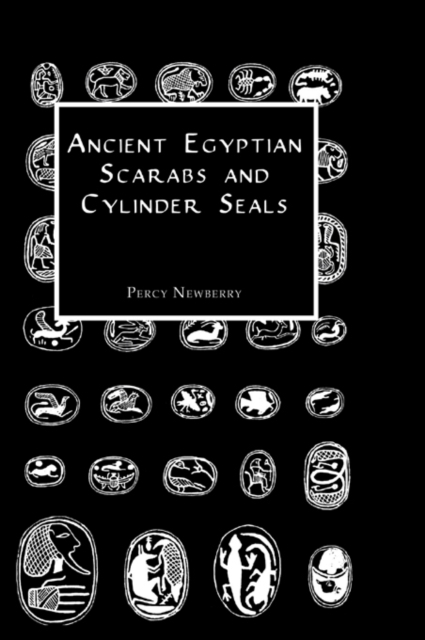
Ancient Egyptian scarabs and cylinder seals: the Timins Collection
First published in 2005. Routledge is an imprint of Taylor Francis, an informa company.
eBook

Through a Glass, Darkly: Long-Term Antiquities Auction Data in Context
The antiquities catalogues of major auction houses comprise an accessible long-term source of information about the auction market in antiquities and the market in antiquities more generally. The information contained in these catalogues has been used to investigate the nature and scale of the market and to assess the impact of legal and normative measures of market control. But, by way of two case studies, referencing Iraqi and Cambodian material sold at the New York branch of Sotheby’s, this article argues that, while auction catalogues do provide an invaluable source of information for investigating the antiquities market, it can be misleading. Changing material or monetary statistics might reflect commercial factors unrelated to market control. For more reliable research, long-term auction data should be contextualized with information available from other sources.
Journal Article
Small Finds, Big Values: Cylinder Seals and Coins from Iraq and Syria on the Online Market
Discussions about looted antiquities often focus on large, culturally and monetarily valuable items. Nevertheless, it is clear that mundane small finds, which sell for relatively small amounts, account for a large portion of the global market in antiquities. This article highlights two types of small artifacts—namely, cylinder seals and coins, presumed to come from Syria and Iraq and offered for sale by online vendors. We argue that the number of cylinder seals and coins sold on the Internet has increased steadily since 2011, reaching a peak in 2016–17. This shows that the trade in Iraqi and Syrian antiquities has shifted from big-ticket items sold in traditional brick-and-mortar shops to small items readily available on the Internet for modest prices. The continuing growth of the online market in antiquities is having a devastating effect on the archaeological sites in Iraq and Syria as increasing demand fuels further looting in the region.
Journal Article

A Cylinder Seal from Yehud
A cylinder seal discovered in a cist tomb of the Late Bronze Age depicts a humped zebu bull and a horse framed by a branch motif. We suggest that the depiction of these animals is a multi-valent visual reference for a range of meanings of potency and power.
Journal Article