
Catalogue Search | MBRL


Are you sure you want to remove the book from the shelf?

{{itemTitle}}
134
result(s) for
"Cyprus Civilization."
Sort by:


The Harbour of all this Sea and Realm
The Harbour of All This Sea and Realm offers an overview of the Lusignan, Genoese and Venetian history of the main port city of Cyprus, a Mediterranean crossroads. The essays contribute to the understanding of Famagusta's social and administrative structure, as well as the influences on its architectural, artisan, and art historical heritage from the thirteenth to sixteenth centuries. We read of crusader bishops from central France, metalworkers from Asia Minor, mercenaries from Genoa, refugees from Acre, and traders from Venice. The themes of the city's diasporas and cultural hybridity permeate and unify the essays in this collaborative effort. Some of the studies use archival sources to reconstruct the early stages of appearances of various buildings. Such research is of vital importance, given the threat to Famagusta's medieval and early modern heritage by its use as a military base since 1974.
eBook


Cyprus under British Colonial Rule
This is a unique book that combines a political narrative with poetry to examine the role of culture and the fusion of religion and politics during the struggle against colonialism.The context is Britain's geopolitical interests in the Middle East.
eBook

Cyprus under British colonial rule : culture, politics, and the movement toward union with Greece, 1878-1954
This study examines British rule in Cyprus from 1878 to 1954. The author analyzes the cultural and religious dimensions of Cypriot responses to British rule and the ways in which Greek Orthodox culture was a primary conduit for resistance to the colonial system.
Book

Engendering Aphrodite
The last three decades have witnessed the introduction of gendered approaches to the social sciences in general, and archaeology in particular, developing initially within the rubric of womens studies by American feminist and other politically minded academics who formed part of the Womens Movement of the early 1970s. By examining archaeological remains from the perspective of gender, we can begin to formulate approaches to the study of past cultures more deliberately and intimately. The papers in this volume focus on issues of gender and society in ancient Cyprus from the Neolithic to Roman periods. The introduction of gender as a focal point in archaeological research will continue to advance the discipline by contributing vital new approaches to the social interactions of the islands rich and dynamic past.
eBook
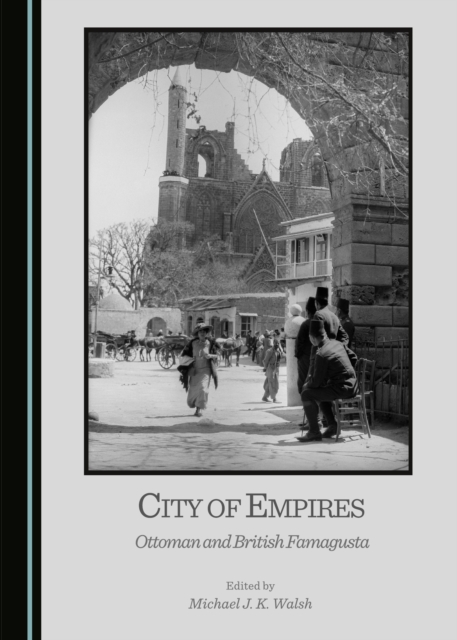
City of Empires
Despite its undoubted importance, there has never been a volume dedicated entirely to studies of the historic city of Famagusta in the years which followed the siege of 1571. City of Empires: Ottoman and British Famagusta takes an important first step in redressing this imbalance. The four centuries which followed the conflict, as the contributions gathered here demonstrate, are rich research seams for scholars of history, urban design, photography, art history, literature, drama, military history and the post-war mandates. City of Empires also places emphasis on the tangible heritage of Famagusta - twice listed as endangered by World Monuments Fund and now the recipient of an increasing number of international efforts to protect it.
eBook

Materia Magica
This exciting new study draws on objects excavated or discovered in the late nineteenth or early twentieth century at three Mediterranean sites. Through the three case studies,Materia Magicaidentifies specific forms of magic that may be otherwise unknown. It isolates the practitioners of magic and examines whether magic could be used as a form of countercultural resistance. Andrew T. Wilburn discovers magic in the objects of ancient daily life, suggesting that individuals frequently turned to magic, particularly in crises. Local forms of magic may have differed, and Wilburn proposes that the only way we can find small-town sorcerers is through careful examination of the archaeological evidence.
Studying the remains of spells enacted by practitioners, Wilburn's work unites the analysis of the words written on artifacts and the physical form of these objects. He situates these items within their contexts, to study how and why they were used.Materia Magicaapproaches magic as a material endeavor, in which spoken spells, ritual actions, and physical objects all played vital roles in the performance of a rite.
Materia Magicadevelops a new method for identifying and interpreting the material remains of magical practice by assessing artifacts within their archaeological contexts. Wilburn suggests that excavations undertaken in recent centuries can yield important lessons about the past, and he articulates the ways in which we can approach problematic data.
eBook

The first Neolithic boats in the Mediterranean: The settlement of La Marmotta (Anguillara Sabazia, Lazio, Italy)
Navigation in the Mediterranean in the Neolithic is studied here through the boats that were used, the degree of technical specialisation in their construction and, above all, their chronology. After a brief explanation of the exceptional site of La Marmotta, the characteristics and chronology of the five canoes found at the settlement and one of the nautical objects linked to Canoe 1 are discussed. This will allow a reflection on the capability of Neolithic societies for navigation owing to their high technological level. This technology was an essential part in the success of their expansion, bearing in mind that in a few millennia they occupied the whole Mediterranean from Cyprus to the Atlantic seaboard of the Iberian Peninsula.
Journal Article

“The Clash of Civilizations” in Cyprus: Religion, Nationalism, and Populism in the Discourses of ELAM and YDP
This study examines the political discourse and practices of the Greek Cypriot political party ELAM and the Turkish Cypriot political party YDP within the framework of populism. The findings of the study demonstrate that ELAM frames the Greek Cypriot community as part of “Judeo-Christian civilization” and portrays this civilization as being under threat from “Islamic civilization,” including Türkiye, Turkish Cypriots, and “illegal immigrants.” YDP, in turn, conceptualizes the Turkish Cypriot community as part of “Islamic civilization” and claims that “the West”—comprising actors such as Greek Cypriots, Greece, Israel, the EU, and the USA—is waging a comprehensive campaign against “Islamic civilization.” ELAM accuses the Greek Cypriot left of acting against the interests of “Western civilization” and Hellenic Orthodox values, while YDP similarly charges the Turkish Cypriot left with acting contrary to the interests and values of the Turkish-Islamic world. Moreover, while ELAM opposes Turkish Cypriots and “illegal immigrants” benefiting from the resources of the Republic of Cyprus, the right-wing government in which YDP is a coalition partner is frequently criticized for having contributed to the deterioration of the living standards of foreign workers. ELAM adopts a sharply oppositional stance toward the expansion of LGBTIQ+ rights, whereas YDP prefers not to foreground this issue. The study concludes that the discourses of both parties largely correspond to the concept of “civilizational populism.”
Journal Article