
Catalogue Search | MBRL


Are you sure you want to remove the book from the shelf?

{{itemTitle}}
29
result(s) for
"D1-2009"
Sort by:

Emotions in History – Lost and Found
Coming to terms with emotions and how they influence human behaviour, seems to be of the utmost importance to societies that are obsessed with everything “neuro.” On the other hand, emotions have become an object of constant individual and social manipulation since “emotional intelligence” emerged as a buzzword of our times. Reflecting on this burgeoning interest in human emotions makes one think of how this interest developed and what fuelled it. From a historian’s point of view, it can be traced back to classical antiquity. But it has undergone shifts and changes which can in turn shed light on social concepts of the self and its relation to other human beings (and nature). The volume focuses on the historicity of emotions and explores the processes that brought them to the fore of public interest and debate.
eBook

Russian Monarchy: Representation and Rule
This new volume from the author of Scenarios of Power explores the effect of the symbolic and mythical representations of the Russian imperial government on law, administrative practice, and concepts of national and imperial identities throughout centuries of monarchical rule. Richard Wortman demonstrates how the ideologies behind such representations shaped the thought patterns not only of the tsar and the imperial family but also of the Russian political and social elite. He characterizes the monarchy as an active agent in Russia’s political experience, one whose dominant role was resisting change until the inevitable collapse facing all absolute monarchies.
eBook

Measuring Time, Making History
Time is the crucial ingredient in history, and yet historians rarely talk about time as such. These essays offer new insight into the development of modern conceptions of time, from the Christian dating system (BC/AD or BCE/CE) to the idea of “modernity” as a new epoch in human history.
eBook

Visual Texts, Ceremonial Texts, Texts of Exploration: Collected Articles on the Representation of Russian Monarchy
Visual Texts, Ceremonial Texts, Texts of Exploration continues the work begun in Russian Monarchy: Representation and Rule, which analyzed the interplay between the symbolic representations of Russian monarchs and the legal and institutional instruments of their rule. The articles in this volume examine the texts that, through various media, revealed the myths and scenarios conveying the goals and ideals the monarchy sought to elevate before the elite of the empire and, later, the public at large. Russian monarchy inhabited a highly visual culture, comprising court ceremonials, parades, public festivities, and celebrations. It mobilized the arts through painting, prints, popular pictures (lubki), and even opera. This book examines that artistic culture, focusing on several aspects. Parts I and II analyze imagery and ceremony and their relation to the verbal texts that ascribed and defined their meanings. Part III details the way texts of exploration inspired the explorers who widened Russia’s engagement with the world. Parts IV and V address key texts of intellectual history and reflect on the scholarly and methodological influences on Wortman’s approach to history.
eBook

The Well-Being of Children
This volume explores the questions related to the theory, practice, and policy of the well-being and well-becoming of children. It does so in a truly interdisciplinary way with a focus on the social sciences and philosophy, giving therefore justice to the growing insight that studying and promoting the well-being of children has a strong ethical component. It is dependent on the questions of good life, its conditions and cannot be separated from the concept of social justice and moral entitlements of children and their families. In this book, philosophers and social scientists, in close dialogue, shed light on some of the most challenging matters involved.
eBook


The Codification of Jewish Law and an Introduction to the Jurisprudence of the Mishna Berura
The Mishna Berura is, without a doubt, Rabbi Israel Meir Kagan's greatest and most complex contribution to the canon of Orthodox Jewish Law; it is a singular work that synthesizes Jewish traditions, laws, and mores into a practical halakhic guide to daily religious life. For all of his traditionalism, Rabbi Kagan was an iconoclast, and the Mishna Berura broke from many of the traditional approaches of deciding halakhic directives. Instead, he favored studying, engaging, and asserting decisions in a nuanced, almost natural approach to how ethical people should live their daily lives consistent with Jewish law. Today, the Mishna Berura has gained widespread recognition and is considered authoritative by essentially all of contemporary Orthodox Jewry, a measure of greatness that few works of Halakha have attained. Michael J. Broyde and Ira Bedzow here investigate this seminal text and explore its background and decision-making process.
eBook
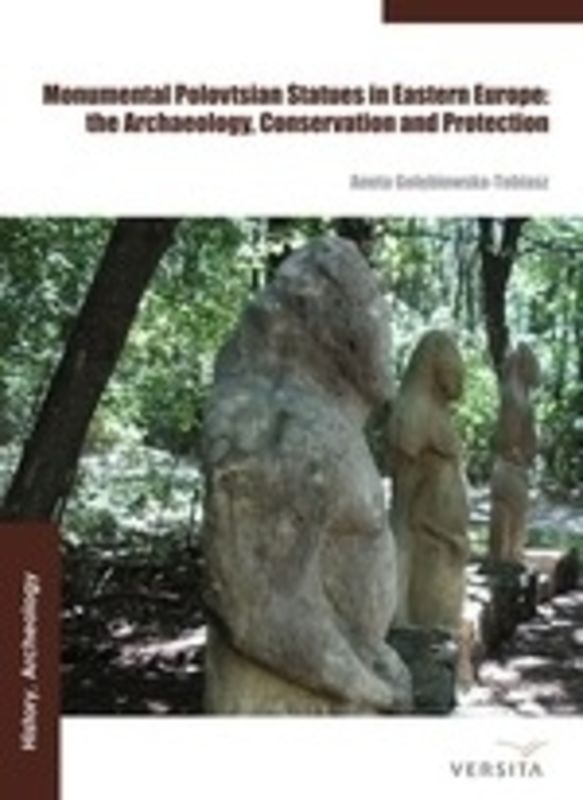
Monumental Polovtsian Statues in Eastern Europe
Stone statues, indigenous to the early Turks, appeared in the vast territory of the Asian steppes, from Southern Siberia to Central Asia and across the foothills of the Ural Mountains. The custom originated among Cumans in Eastern Europe. The skill of erecting anthropomorphic stelae required proficiency in processing different kinds of stone and wood, and was characterized by artistic value of representations, as well as by the timeless aesthetics of the canon. The author presents the results of her formative studies into the collection of the Cuman sculptures of the Veliko-Anadol Forest Museum, Ukraine. The book delves into the history of research on Cuman stone stelae, resulting in great reading for all archeologists and historians alike.
eBook

Building the New Man
Based on previously unexplored archival documentation, this book offers the first general overview of the history of Italian eugenics, not limited to the decades of Fascist regime, but instead ranging from the beginning of the 1900s to the first half of the 1970s. The Author discusses several fundamental themes of the comparative history of eugenics: the importance of the Latin eugenic model; the relationship between eugenics and fascism; the influence of Catholicism on the eugenic discourse...
eBook