
Catalogue Search | MBRL


Are you sure you want to remove the book from the shelf?

{{itemTitle}}
14,841
result(s) for
"DAS"
Sort by:

A guru's journey : pandit Chitresh Das and Indian classical dance in diaspora
\"An important modern exponent of Asian dance, Pandit Chitresh Das brought kathak to the United States in 1970. The North Indian classical dance has since become an important art form within the greater Indian diaspora. Yet its adoption outside of India raises questions about what happens to artistic practices when we separate them from the broader cultural contexts. 'A guru's journey' provides an ethnographic study of the dance form in the San Francisco Bay Area community formed by Das. Sarah Morelli, a kathak dancer and one of Das's former students, investigates topics in teaching, learning, and performance that developed around Das during his time in the United States. In modifying kathak's form and teaching for Western students, Das negotiated questions of Indianness and non-Indianness, gender, identity, and race. Morelli lays out these discussions for readers with the goal of deepening their knowledge of kathak aesthetics, techniques, and theory. She also shares the intricacies of footwork, facial expression in storytelling, and other aspects of kathak while tying them to the cultural issues that inform the dance\"--Back cover.
Book

Influence of Digital Accounting System Usage on SMEs Performance: The Moderating Effect of COVID-19
In the literature, studies have evidenced the efforts adopted by firms to develop digital technology with the hope of achieving sustainable decisions and competitive performance. However, studies have yet to provide an extensive explanation of the mechanisms used by firms in their digital technology adoption to impact and enhance value, particularly among small and medium enterprises (SMEs). In this regard, accounting information has served as a fundamental basis for business decision-making and the extensive use of digital technology has paved the way for the efficiency and effectiveness of accounting functions in modifying information relating to such functions. More specifically, a digital accounting system (DAS) enables the reporting and processing of large transaction amounts and generates the data required for analysis. However, despite these advantages, SMEs have been slow in their adoption and usage of DASs. Accordingly, this study drew upon resource-based view theory and the technology-organization-environment framework to propose an integrated model for examining the determinants and impact of using DAS among SMEs. The proposed model encapsulates the use and performance aspect of DAS. The study utilized a self-administered survey questionnaire as the primary data collection instrument. Data from 183 SMEs in Jordan were analyzed using partial least squares-structural equation modeling. The findings reveal that compatibility, organizational readiness, top management support and government support all had significant effects on DAS usage, which, in turn, had a positive and significant effect on DAS performance. With regard to the moderating effects, COVID-19 was found to have a moderating role on the DAS usage–DAS performance relationship. The study findings explain the way firms can enhance their DAS use to obtain optimum performance, thereby contributing to the literature on the antecedents and effects of using current information technology/information systems. The study recommends that the government of Jordan prepare and carry out a campaign concerning the importance of DASs for SMEs.
Journal Article


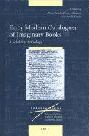
Early modern catalogues of imaginary books : a scholarly anthology
\"Book summary for this bilingual (English-French) anthology of early modern fictitious catalogues, selections were made from a multitude of texts, from the genre's beginnings (Rabelais's satirical catalogue of the Library of St.-Victor (1532)) to its French and Dutch specimens from around 1700. In thirteen chapters, written by specialists in the field, diverse texts containing fictitious booklists are presented and contextualized. Several of these texts are well known (by authors such as Fischart, Doni, and Le Noble), others - undeservedly - are less known, or even unrecorded. The anthology is preceded by a literary historical and theoretical introduction addressing the parodic and satirical aspects of the genre, and its relationship to other genres: theatre, novel, and pamphlet. Contributors include: Helwi Blom, Tobias Bulang, Raphaèel Cappellen, Ronnie Ferguson, Dirk Geirnaert, Jelle Koopmans, Marijke Meijer Drees, Claudine Nâedelec, Patrizia Pellizzari, Anne-Pascale Pouey-Mounou, Paul J. Smith, and Dirk Werle\"-- Provided by publisher.
Book

Scientific Applications of Distributed Acoustic Sensing: State-of-the-Art Review and Perspective
This work presents a detailed review of the development of distributed acoustic sensors (DAS) and their newest scientific applications. It covers most areas of human activities, such as the engineering, material, and humanitarian sciences, geophysics, culture, biology, and applied mechanics. It also provides the theoretical basis for most well-known DAS techniques and unveils the features that characterize each particular group of applications. After providing a summary of research achievements, the paper develops an initial perspective of the future work and determines the most promising DAS technologies that should be improved.
Journal Article


Sub‐Wavelength Seabed Stiffness Control of Seismic Amplitude Modulation in Seafloor DAS
Submarine distributed acoustic sensing cables record seafloor strain with striking spatial variability whose physical origin is not immediately obvious. By explicitly partitioning the recorded wavefield into ocean‐wave, Scholte‐wave, and teleseismic Rayleigh‐wave components, we show that these amplitude variations are not random but encode systematic modulation by seabed properties. Softer sediment intervals consistently amplify all wavefield components, whereas harder patches suppress them. Numerical simulations reproduce this behavior and reveal frequency‐ and mode‐dependent amplitude modulation controlled by surface‐wave sensitivity kernels confined to a shallow fraction of a wavelength. In this sense, the seabed acts as an elastic modulator governing how external energy, from ocean‐wave pressure to teleseismic arrivals, is converted into measurable strain on the cable. Amplitude information therefore provides a direct, spatially resolved proxy for near‐surface seabed stiffness. Additionally, undoing this seabed‐induced modulation is a necessary first step for quantitative analysis of other processes, such as wind forcing and microseism generation.
Journal Article

Doses of Neighborhood Nature
Experiences of nature provide many mental-health benefits, particularly for people living in urban areas. The natural characteristics of city residents’ neighborhoods are likely to be crucial determinants of the daily nature dose that they receive; however, which characteristics are important remains unclear. One possibility is that the greatest benefits are provided by characteristics that are most visible during the day and so most likely to be experienced by people. We demonstrate that of five neighborhood nature characteristics tested, vegetation cover and afternoon bird abundances were positively associated with a lower prevalence of depression, anxiety, and stress. Furthermore, dose–response modeling shows a threshold response at which the population prevalence of mental-health issues is significantly lower beyond minimum limits of neighborhood vegetation cover (depression more than 20% cover, anxiety more than 30% cover, stress more than 20% cover). Our findings demonstrate quantifiable associations of mental health with the characteristics of nearby nature that people actually experience.
Journal Article
MAEPD: A Foundation Model for Distributed Acoustic Sensing Signal Recognition via Masked Autoencoder Pre-Training and Adapter-Based Prompt Tuning
Artificial intelligence (AI) algorithms enhance distributed acoustic sensing (DAS) signal interpretation by leveraging large-scale acoustic data. However, heterogeneous deployment environments hinder model generalization ability and exacerbate label scarcity. To overcome these challenges, we propose MAEPD, a foundation model for DAS signal recognition trained via masked autoencoder pre-training on large-scale, unlabeled DAS data collected from diverse domains. The pre-trained model is subsequently adapted to downstream tasks using adapter-based prompt tuning (APT) with only minimal labeled samples. In the DAS gait identity recognition task, with only 240 image signals per class, APT achieves 94.75% accuracy, a 4.46% improvement over full fine-tuning while updating only 2.77% of parameters. Inference latency of 2.74 ms per image meets real-time requirements. Compared to pre-training with gait data only (35.6 k samples), MAEPD improves accuracy by 3.88%, demonstrating the advantage of diverse pre-training data. The method shows robust performance across water pipe leakage, perimeter security, and public datasets, with low sensitivity to labeled data quantity. Results demonstrate an efficient and scalable solution for DAS signal recognition.
Journal Article