
Catalogue Search | MBRL


Are you sure you want to remove the book from the shelf?

{{itemTitle}}
8,350
result(s) for
"DELAWARE"
Sort by:

Paris in America : a deaf Nanticoke shoemaker and his daughter
\"A memoir about a hearing daughter of a Deaf Nanticoke Indian, who grew up in Dover, Delaware's black community in the 1950s and 60s\"-- Provided by publisher.
Book

Lenape Country
In 1631, when the Dutch tried to develop plantation agriculture in the Delaware Valley, the Lenape Indians destroyed the colony of Swanendael and killed its residents. The Natives and Dutch quickly negotiated peace, avoiding an extended war through diplomacy and trade. The Lenapes preserved their political sovereignty for the next fifty years as Dutch, Swedish, Finnish, and English colonists settled the Delaware Valley. The European outposts did not approach the size and strength of those in Virginia, New England, and New Netherland. Even after thousands of Quakers arrived in West New Jersey and Pennsylvania in the late 1670s and '80s, the region successfully avoided war for another seventy-five years.
Lenape Countryis a sweeping narrative history of the multiethnic society of the Delaware Valley in the seventeenth and early eighteenth centuries. After Swanendael, the Natives, Swedes, and Finns avoided war by focusing on trade and forging strategic alliances in such events as the Dutch conquest, the Mercurius affair, the Long Swede conspiracy, and English attempts to seize land. Drawing on a wide range of sources, author Jean R. Soderlund demonstrates that the hallmarks of Delaware Valley societycommitment to personal freedom, religious liberty, peaceful resolution of conflict, and opposition to hierarchical governmentbegan in the Delaware Valley not with Quaker ideals or the leadership of William Penn but with the Lenape Indians, whose culture played a key role in shaping Delaware Valley society. The first comprehensive account of the Lenape Indians and their encounters with European settlers before Pennsylvania's founding,Lenape Countryplaces Native culture at the center of this part of North America.
eBook


Acorns and bitter roots : starch grain research in the prehistoric Eastern Woodlands
People regularly use plants for a wide range of utilitarian, spiritual, pharmacological, and dietary purposes throughout the world. Scholarly understanding of the nature of these uses in prehistory is particularly limited by the poor preservation of plant resources in the archaeological record. In the last two decades, researchers in the South Pacific and in Central and South America have developed microscopic starch grain analysis, a technique for overcoming the limitations of poorly preserved plant material. In Acorns and Bitter Roots , Timothy C. Messner establishes starch grain analysis in the temperate climates of eastern North America using the Delaware River Watershed as a case study for furthering scholarly understanding of the relationship between native people and their biophysical environment in the Woodland Period. Messner’s analysis is based on extensive reviews of the literature on early historic and prehistoric native plant use and the collation of all available archaeobotanical data, a review of which also guided the author in selecting contemporary botanical specimens to identify and in interpreting starch residues recovered from ancient plant-processing technologies. The evidence presented here sheds light on many local ecological and cultural developments as ancient people shifted their subsistence focus from estuarine to riverine settings. These archaeobotanical datasets, Messner argues, illuminate both the conscious and unintentional translocal movement of ideas and ecologies throughout the Eastern Woodlands.
eBook

Sunburn : a novel
A \"novel of psychological suspense about a pair of lovers with the best intentions and the worst luck: two people locked in a passionate yet uncompromising game of cat and mouse. But instead of rules, this game has dark secrets, forbidden desires, inevitable betrayals, and cold-blooded murder. One is playing a long game. But which one?\"--Jacket flap.
Book

A Nation of Women
A Nation of Womenchronicles changing ideas of gender and identity among the Delaware Indians from the mid-seventeenth through the eighteenth century, as they encountered various waves of migrating peoples in their homelands along the eastern coast of North America. In Delaware society at the beginning of this period, to be a woman meant to engage in the activities performed by women, including diplomacy, rather than to be defined by biological sex. Among the Delaware, being a \"woman\" was therefore a self-identification, employed by both women and men, that reflected the complementary roles of both sexes within Delaware society. For these reasons, the Delaware were known among Europeans and other Native American groups as \"a nation of women.\" Decades of interaction with these other cultures gradually eroded the positive connotations of being a nation of women as well as the importance of actual women in Delaware society. In Anglo-Indian politics, being depicted as a woman suggested weakness and evil. Exposed to such thinking, Delaware men struggled successfully to assume the formal speaking roles and political authority that women once held. To salvage some sense of gender complementarity in Delaware society, men and women redrew the lines of their duties more rigidly. As the era came to a close, even as some Delaware engaged in a renewal of Delaware identity as a masculine nation, others rejected involvement in Christian networks that threatened to disturb the already precarious gender balance in their social relations. Drawing on all available European accounts, including those in Swedish, German, and English, Fur establishes the centrality of gender in Delaware life and, in doing so, argues for a new understanding of how different notions of gender influenced all interactions in colonial North America.
eBook

The book of unknown Americans
\"After fifteen-year-old Maribel sustains a terrible injury, the only hope her family sees for her recovery lies in the United States. Leaving a comfortable life behind in Mexico, the Riveras risk everything to come north. It's not long after they settle that Mayor Toro, the son of one of their new neighbors, recognizes a kindred spirit in this beautiful, damaged outsider\"--Back cover.
Book

Many Identities, One Nation
The richly diverse population of the mid-Atlantic region distinguished it from the homogeneity of Puritan New England and the stark differences of the plantation South that still dominate our understanding of early America. InMany Identities, One Nation, Liam Riordan explores how the American Revolution politicized religious, racial, and ethnic identities among the diverse inhabitants of Pennsylvania, Delaware, and New Jersey. Attending to individual experiences through a close comparative analysis, Riordan explains the transformation from British subjects to U.S. citizens in a region that included Quakers, African Americans, and Pennsylvania Germans.
In the face of a gradually emerging sense of nationalism, varied forms of personal and group identities took on heightened public significance in the Revolutionary Delaware Valley. While Quakers in Burlington, New Jersey, remained suspect after the war because of their pacifism, newly freed slaves in New Castle, Delaware, demanded full inclusion, and bilingual Pennsylvania Germans in Easton, Pennsylvania, successfully struggled to create a central place for themselves in the new nation. By placing the public contest over the proper expression of group distinctiveness in the context of local life, Riordan offers a new understanding of how cultural identity structured the early Jacksonian society of the 1820s as a culmination of the American Revolution in this region.
This compelling story brings to life the popular culture of the Revolutionary Delaware Valley through analysis of wide-ranging evidence, from architecture, folk art, clothing, and music to personal papers, newspapers, and local church, tax, and census records. The study's multilayered local perspective allows us to see how the Revolutionary upheaval of the colonial status quo penetrated everyday life and stimulated new understandings of the importance of cultural diversity in the Revolutionary nation.
eBook

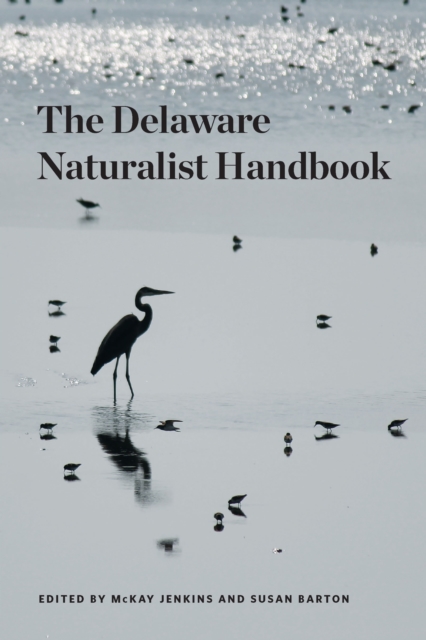
Delaware Naturalist Handbook
The Delaware Naturalist Handbook is the primary public face of a major university-led public educational outreach and community engagement initiative. This statewide master naturalist certification program is designed to train hundreds of citizen scientists, K–12 environmental educators, ecological restoration volunteers, and habitat managers each year. The initiative is conducted in collaboration with multiple disciplines at the University of Delaware, the University of Delaware Cooperative Extension, the Delaware Environmental Institute (DENIN), the state Department of Natural Resources and Environmental Conservation (DNREC), the state Division of Parks, the state Forest Service, the state Division of Fish and Wildlife, and local nonprofit educational institutions, including the Mount Cuba Center, the Delaware Nature Society and Ashland Nature Center, Delaware Wildlands, Northeast Climate Hub, Center for Inland Bays, and White Clay Creek State Park.
Published by University of Delaware Press. Distributed worldwide by Rutgers University Press.
eBook