
Catalogue Search | MBRL


Are you sure you want to remove the book from the shelf?

{{itemTitle}}
88,934
result(s) for
"DEMAND FOR ENERGY"
Sort by:

Potential Use of Industrial Biomass Waste as a Sustainable Energy Source in the Future
Aspects related to the growing pollution of the natural environment and depletion of conventional fossil fuels have become the motive for searching for ecofriendly, renewable, and sustainable alternative energy sources. Particular attention is paid to industrial waste, especially waste of biomass materials, which can be converted into biofuels and energy that meets the growing needs of humanity. The use of biomass for energy purposes is less damaging to the environment, the materials are low-cost, locally available in large quantities, and create employment opportunities for workers in suburban and rural areas around the world. This article discusses issues related to the use of waste biomass materials as renewable energy sources. The current energy situation in the world is analyzed in terms of production, consumption, and investments in green energy. Types of biomass and individual physicochemical and energy properties of waste plant materials obtained for energy purposes are described. Currently available methods of converting biomass into energy, including mechanical, thermal, and biochemical techniques are discussed. The conducted analysis indicates the possibility of using it as a competitive source of electricity and heat. Understanding the properties of biomass materials allows us to understand the right way to use them for energy and reduce the consumption of fossil fuels in the future.
Journal Article

Combination Forecasting of Energy Demand in the UK
In more deregulated markets such as the UK, demand forecasting is vital for the electric industry as it is used to set electricity generation and purchasing, establishing electricity prices, load switching and demand response. In this paper we produce improved short-term forecasts of the demand for energy produced from five different sources in the UK averaging from a set of 6 univariate and multivariate models. The forecasts are averaged using six different weighting functions including Simple Model Averaging (SMA), Granger-Ramanathan Model Averaging (GRMA), Bayesian Model Averaging (BMA), Smoothing Akaike (SAIC), Mallows Weights (MMA) and Jackknife (JMA). Our results show that model averaging gives always a lower Mean Square Forecast Error (MSFE) than the best/optimal models within each class however selected. For example, for Coal, Wind and Hydro generated Electricity forecasts generated with model averaging, we report a MSFE about 12% lower than that obtained using the best selected individual models. Among these, the best individual forecasting models are the Non-Linear Artificial Neural Networks and the Vector Autoregression and that models selected by the Jackknife have often superior performance. However, MMA averaged forecasts almost always beat the predictions obtained from any of the individual models however selected, and those generated by other model averaging techniques.
Journal Article

Restoring balance : Bangladesh's rural energy realities
Bangladesh is one of the world's poorest countries. Nearly 80 percent of the nation's 140 million people reside in rural areas; of these, 20 percent live in extreme poverty. Geographically, many low-lying areas are vulnerable to severe flooding, while other regions are prone to drought, erosion, and soil salinity. Such an unfavorable agricultural landscape, combined with mismanagement of natural resources and increasing population pressure, is pushing many of the rural poor to the brink. Because Bangladesh is such a poor country, it also is one of the world's lowest energy producers. Total annual energy supply is only about 150 liters of oil equivalent per capita (International Energy Agency, or IEA 2003); in rural areas, conditions are even worse. Compared to other developing countries, Bangladesh uses little modern energy. Despite its successful rural electrification program, close to two-thirds of households remain without electricity and, with the exception of kerosene, commercial fuels are beyond reach for many. Moreover, biomass fuels are becoming increasingly scarce. Collected mainly from the local environment as recently as two decades ago, bio-fuels are fast becoming a marketed commodity as access to local biomass continues to shrink. This study, the first to concentrate on Bangladesh's energy systems and their effects on the lives of rural people, drew on these background studies, as well as other World Bank-financed research on indoor air pollution (IAP) and rural infrastructure, to present a rural energy strategy for the country. Much of this study's analytical underpinning was based on several background studies. This study also reanalyzed data from earlier research to better understand the benefits of modern energy use for rural households, farm activities, and small businesses.
eBook
Tajikistan's winter energy crisis
Tajikistan's electricity system is in a state of crisis. Approximately 70 percent of the Tajik people suffer from extensive shortages of electricity during the winter. These shortages, estimated at about 2,700 GWh, about a quarter of winter electricity demand, impose economic losses estimated at over United States (US) 200 million dollars per annum or 3 percent of Gross Domestic Product (GDP). The electricity shortages have not been addressed because investments have not been made in new electricity supply capacity and maintenance of existing assets has not improved. The financial incentive for electricity consumers to reduce their consumption is inadequate as electricity prices are among the lowest in the world. Without prompt action to remedy the causes of Tajikistan's electricity crisis and with growing demand, the shortages could increase to about 4,500 GWh by 2016 (over a third of winter electricity demand) or worse. The World Bank undertook this study to assist the Government of Tajikistan (GoT) in finding ways to overcome the current electricity shortages and establish a sound basis for meeting the growing electricity demand in Tajikistan. The study focuses on the investments and policy reforms needed between now and 2020 to strengthen the financial, technical and institutional capacity of the Tajik power sector and prepare the GoT for undertaking a major expansion of power supply capacity. The study excludes large hydropower plants with storage, given their complexity and global experience that such projects are subject to delays. The winter electricity shortages are caused by a combination of low hydropower output during winter when river flows are low and high demand driven by heating needs. The GoT should focus its immediate attention on three ways to eliminate the current winter power shortages: 1) ambitious energy efficiency plans to reduce uneconomic power usage; 2) new dual-fired thermal power supply to complement the existing hydropower supply during winter; and 3) increased energy imports to leverage surplus electricity supply in neighboring countries.
eBook
Revisiting public-private partnerships in the power sector
As the world demand for energy continues to grow, a big question is where will all the energy come from and what will the price tag be. With such enormous sums needed, public-private partnerships (PPPs) could play a big role. But the financial crisis has raised worries about funding, and much is still not known about how best to attract PPPs. This report reviews the evidence to date with sectoral reforms and considers different approaches in varying circumstances to help outline the potential role of the private and public sector in: 1) strengthening the corporate governance of private and public utilities; 2) helping governments to establish legal, regulatory, contractual, and fiscal frameworks; and 3) improved market governance to attract private investment. Chapter one reviews the impact of the recent financial crisis on PPP investment compared with what happened in earlier financial crises. It also looks out the latest projections for additional power sector investment needed because of climate change and the possible sources of financing. Chapter two examines how PPP investment in the power sector has fared. It also gives the results of an econometric study that explores which types of incentives and variables matter most to PPPs when they are weighing entering the power sector, especially in renewables, and what influences the ongoing level of investment. The idea is to provide a powerful benchmarking tool at the sector and country levels against which governments and policy makers can evaluate progress on this issue. Chapter three examines four case studies-in China, Brazil, Peru, and Mexico-to identify, disseminate, and promote best practices on alternative ways to attract PPPs.
eBook

Energy Efficiency Finance
This evaluation assesses the performance of International Finance Corporations (IFC's) energy efficiency finance program in China aimed at stimulating energy efficiency investments through bank guarantees and technical assistance. The program's significance is underpinned by the fact that China's size, rapid economic growth, and inefficiencies in energy use make it one of the world's largest emitters of carbon dioxide (CO2.). The utilization of IFC's program has been rapid compared with other similar programs. The difference made by the program is traced along the chain of interventions: (i) at the level of banks, the program is narrowly based on one of the two partner banks, which, with the help of the program, expanded its energy efficiency lending as a new business line; (ii) at the level of energy management companies, the program's technical assistance improved the program participants' access to finance; and (iii) at the end-user level, it promoted the use of energy efficiency investments that achieved reduction of greenhouse gas emissions. The evaluation recommends areas of improvement to realize greater impact. First, the program needs to emphasize areas where the potential additionality is high, such as small enterprises. Second, the program needs to concentrate more on activities that have the potential to reduce emissions significantly, such as energy efficiency for buildings. Third, the program's subsidy elements need to be reoriented to the areas of market failure, with IFC increasing its coverage of first loss from its own resources.
Book
Urban Residential Energy Demand and Rebound Effect in China
The energy rebound effect is a potential threat to energy-saving targets based on energy efficiency improvements. This paper employs a stochastic energy demand frontier model to analyze the energy demand and rebound effect in China’s urban residential sector. Using a panel data set of 30 Chinese provincial-level regions over the period 2001–2014, for the first time, we investigate the degrees and determinants of China’s urban residential energy demand and energy rebound effect. The results show that residents’ income level, energy price, temperature deviation, population scale, household size, and district heating system are significant influencing factors of residential energy consumption. Regarding the energy rebound effect, we find that energy price is negatively correlated with the rebound effect, and an inverted U-shaped relationship between residents’ income level and rebound-effect size exists. The magnitude of the rebound effect varies across regions, with an average of 65.4%. The main policy implication generated by this study is that it should be in urgent need of energy pricing reform to mitigate the rebound effect in China.
Journal Article

Wind Energy in Colombia
The purpose of this report is to provide decision makers in Colombia (and by extension other countries or regions), who are considering the deployment or consolidation of wind power, with a set of options to promote its use. The options presented are the result of an analysis of the Colombian market; this analysis included simulations and modeling of the country's power sector, and extensive consultations with operators, managers, and agents. More information on the analysis and simulations is presented in the appendixes. Wind was chosen to exemplify the range of renewable energy alternatives available to complement traditional power sector technologies on the basis of its technical maturity, its relatively low cost compared to other options, the country's experience, and its wind power potential. This report constitutes the second phase of a barrier analysis to wind energy in Colombia.
Book
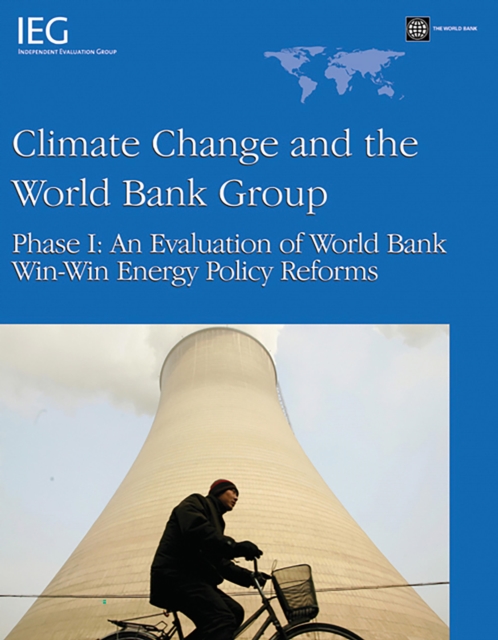
Climate change and the World Bank Group
Climate change threatens to derail development, even as development pumps ever-greater quantities of carbon dioxide into an atmosphere already polluted with two centuries of Western emissions.
eBook

Mainstreaming building energy efficiency codes in developing countries : global experiences and lessons from early adopters
This report summarizes the findings of an extensive literature survey of the experiences of implementing BEECs in developed countries. It also includes case studies of four developing countries- China, Egypt, India, and Mexico and the state of California in the United States of America. It aims to inform both the World Bank Group and its client countries about global best practices and emerging lessons from developing countries in the design and implementation of BEECs. The report also serves as a primer on the basic features of BEECs and the commonly adopted compliance and enforcement approaches. The key challenges to improving compliance enforcement in developing countries include the level of government commitment to energy efficiency, the effectiveness of government oversight of the construction sector, the compliance capacity of domestic/local building supply chain, and the financing constraints. These challenges are surmountable in countries where economic growth is sustained and energy efficiency is pursued as a key element of national energy strategy.
eBook