
Catalogue Search | MBRL


Are you sure you want to remove the book from the shelf?

{{itemTitle}}
10,670
result(s) for
"DEMOCRATIC POLITICS"
Sort by:

Congo's violent peace : conflict and struggle since the Great African War
Despite a massive investment of international diplomacy and money in recent years, the Democratic Republic of Congo remains a conflict-ridden and volatile country, its present situation the result of a series of rebellions, international interventions and unworkable peace agreements. In Congo's Violent Peace, leading DRC expert Kris Berwouts provides the most comprehensive and in-depth account to date of developments since the so-called 'Congo Wars' - from Rwanda's destructive impact on security in Eastern Congo to the controversial elections of 2006 and 2011; the M23 uprising to Joseph Kabila's increasingly desperate attempts to cling to power.
Book
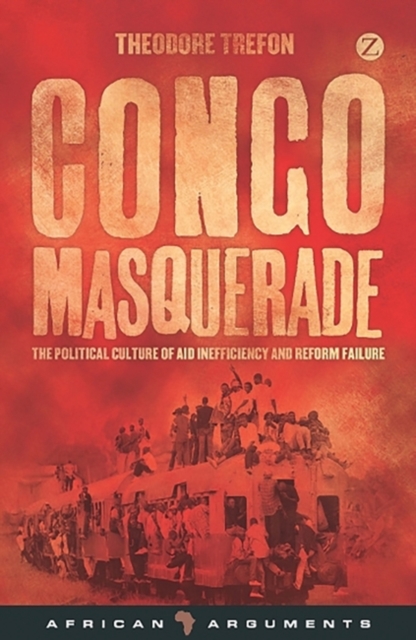
Congo masquerade
Congo Masquerade is about mismanagement, hypocrisy and powerlessness in what has proved to be one of Africa's most troublesome and volatile states.In this scathing study of catastrophic aid inefficiency, Trefon argues that whilst others have examined war and plunder in the Great Lakes region, none have yet evaluated the imported 'template format'.
eBook

Anti-Refugee Violence and African Politics
Using comparative cases from Guinea, Uganda, and the Democratic Republic of Congo, this study explains why some refugee-hosting communities launch large-scale attacks on civilian refugees whereas others refrain from such attacks even when encouraged to do so by state officials. Ato Kwamena Onoma argues that such outbreaks only happen when states instigate them because of links between a few refugees and opposition groups. Locals embrace these attacks when refugees are settled in areas that privilege residence over indigeneity in the distribution of rights, ensuring that they live autonomously of local elites. The resulting opacity of their lives leads locals to buy into their demonization by the state. Locals do not buy into state denunciation of refugees in areas that privilege indigeneity over residence in the distribution of rights because refugees in such areas are subjugated to locals who come to know them very well. Onoma reorients the study of refugees back to a focus on the disempowered civilian refugees that constitute the majority of refugees even in cases of severe refugee militarization.
eBook


America, the UN and Decolonisation
This book examines the role of the UN in conflict resolution in Africa in the 1960s and its relation to the Cold War.
Focussing on the Congo, this book shows how the preservation of the existing economic and social order in the Congo was a key element in the decolonisation process and the fighting of the Cold War. It links the international aspects of British, Belgian, Angolan and Central African Federation involvement with the roles of the US and UN in order to understand how supplies to and profits from the Congo were producing growing African problems. This large Central African country played a vital, if not fully understood role, in the Cold War and proved to be a fascinating example of complex African problems of decolonisation interacting with international forces, in ways that revealed a great deal about the problems inherent in colonialism and its end.
This book will be of much interest to students of US foreign policy, the UN, Cold War history and international history in general.
'Anglophone historians in the last two decades have done little to place the crises that beset the Democratic Republic of Congo between independence in 1960 and 1964 in the contexts of Cold War diplomatic history. This new book is an important corrective to this negligence. By using US and British diplomatic archives that were closed to researchers in the 1960s, Kent (international relations, London School of Economics) uncovers the extremely complex negotiations between various Congolese actors, US officials, the UN, and the divided Belgian political establishment. [...] An excellent book on African decolonization, the Congo, and 1960s Cold War diplomatic history. Summing Up: Highly recommended. Upper-division undergraduates and above.' -- J. M. Rich , Middle Tennessee State University
John Kent is Reader in International Relations at the London School of Economics.
Introduction 1. The Independence Disaster 1958 - Sept 1960 2. The Dismissal and Murder of Lumumba and the Establishment of the Adoula Government September 1960 - August 1961 3. The Adoula Government and Kitona: the Conflict and Dilemmas Created by US and UN Policy August - December 1961 4. Too Little Too Late January - July 1962 5. The Last Adoula Government of a Divided Congo July – December 1962 6. The End of Secession and the Beginning of the End for the Congo December 1962 - January 1963 7. Unified Nation Building and No Unity to Build On January- Oct 1963 8. The Emerging Chaos and the Forces of Disintegration Bring Tshombe’s Return October 1963 -July 1964. Conclusion
eBook


Formal Peace and Informal War
Northern interventions into African countries at war are dominated by security concerns, bolstered by claims of shared returns and reinforcing processes of development and security. As global security and human security became prominent in development policy, Congo was wracked by violent rule, pillage, internal fighting, and invasion. In 2002, the Global and All-Inclusive Peace was promoted by northern donors, placing a formal peace on the mass of informalised wars.
Formal Peace and Informal War: Security and Development in Congo examines how the security interests of the Congolese population have interacted with those of northern donors. It explores Congo's contemporary wars and the peace agreed on in 2002 from a security perspective and challenges the asserted commonality of the liberal interventions made by northern donors. It finds that the peace framed the multiple conflicts in Congo as a civil war and engineered a power-sharing agreement between elite belligerents. The book argues that the population were politically and economically excluded from the peace and have been subjected to control and containment when their security rests with power and freedom.
eBook

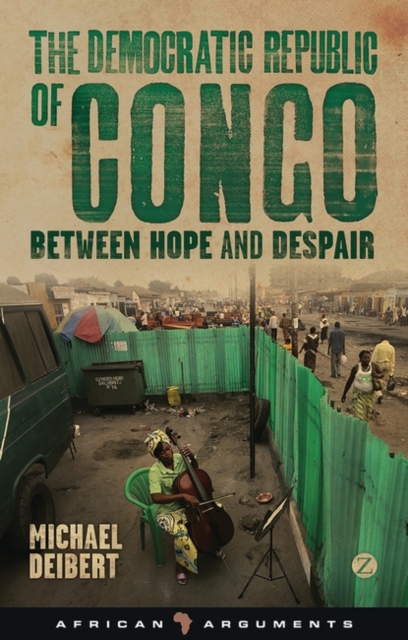
The democratic republic of congo
The Democratic Republic of Congo has been home to the deadliest conflicts of the postwar era and hosts the largest United Nations peacekeeping mission in the world. In this compelling book, acclaimed journalist Michael Deibert paints a picture of a nation in flux, inching towards peace but at the same time solidifying into another era of authoritarian rule under its enigmatic president, Joseph Kabila. Featuring a wealth of first-hand interviews, the narrative travels from war-torn villages in the country's east to the pulsing capital of Kinshasa in order to bring us the voices of the Congolese and explore the complicated political, ethnic and economic geography of this tattered land. A must-read for anyone interested in contemporary Africa, The Democratic Republic of Congo: Between, Hope and Despair sheds new light on this sprawling and often misunderstood country that has become iconic both for its great potential and dashed hopes.
eBook