
Catalogue Search | MBRL


Are you sure you want to remove the book from the shelf?

{{itemTitle}}
19,468
result(s) for
"DEMOGRAPHIC CHANGES"
Sort by:

On the Precipice of a \Majority-Minority\ America: Perceived Status Threat From the Racial Demographic Shift Affects White Americans' Political Ideology
The U.S. Census Bureau projects that racial minority groups will make up a majority of the U.S. national population in 2042, effectively creating a so-called majority-minority nation. In four experiments, we explored how salience of such racial demographic shifts affects White Americans' political-party leanings and expressed political ideology. Study 1 revealed that making California's majority-minority shift salient led politically unaffiliated White Americans to lean more toward the Republican Party and express greater political conservatism. Studies 2, 3a, and 3b revealed that making the changing national racial demographics salient led White Americans (regardless of political affiliation) to endorse conservative policy positions more strongly. Moreover, the results implicate group-status threat as the mechanism underlying these effects. Taken together, this work suggests that the increasing diversity of the nation may engender a widening partisan divide.
Journal Article

Natural Hazards, Disasters, and Demographic Change
Natural hazards and disasters distress populations and inflict damage on the built environment, but existing studies yielded mixed results regarding their lasting demographic implications. I leverage variation across three decades of block group exposure to an exogenous and acute natural hazard—severe tornadoes—to focus conceptually on social vulnerability and to empirically assess local net demographic change. Using matching techniques and a difference-in-difference estimator, I find that severe tornadoes result in no net change in local population size but lead to compositional changes, whereby affected neighborhoods become more White and socioeconomically advantaged. Moderation models show that the effects are exacerbated for wealthier communities and that a federal disaster declaration does not mitigate the effects. I interpret the empirical findings as evidence of a displacement process by which economically disadvantaged residents are forcibly mobile, and economically advantaged and White locals rebuild rather than relocate. To make sense of demographic change after natural hazards, I advance an unequal replacement of social vulnerability framework that considers hazard attributes, geographic scale, and impacted local context. I conclude that the natural environment is consequential for the sociospatial organization of communities and that a disaster declaration has little impact on mitigating this driver of neighborhood inequality.
Journal Article
Enhancing Compactness, Connectivity and Accessibility in Korea
Korea’s population reached its peak in 2020 and is projected to decline by approximately 15 million by 2070, representing nearly one-third of the current population. Towns and villages, particularly those distant from major urban centres, are expected to experience the most significant population decline, while the population share of the Seoul Metropolitan Area is likely to continue growing. Over the same period, the working-age population is forecasted to decrease from 71% to 46%, placing mounting pressure on public services. This report explores how Korea can respond to these demographic challenges through more balanced regional development. Drawing on detailed population and service data, it highlights disparities in demographic trends and access to essential services. It also introduces an innovative methodology to identify and assess 37 regional hubs that already function as key access points for a broad range of services. The report emphasises the importance of compact and connected urban strategies — promoting high-density, mixed-use communities supported by efficient public transport in the context of demographic change. It reviews Korea’s existing policy framework, identifies critical implementation challenges, and draws on international experience to offer practical insights to promote transit-oriented development.
Journal Article
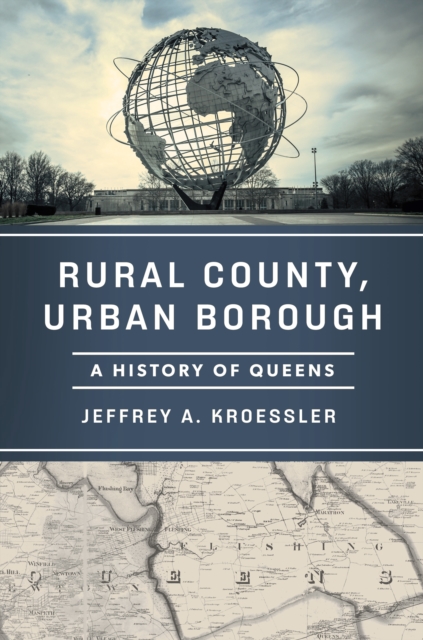
Rural County, Urban Borough
Once wetlands, Queens today is a crowded cityscape of dense urban neighborhoods and suburban sprawl. The largest of New York City's five boroughs by area, it has a larger population than every American city except Chicago, Los Angeles, and New York City itself. It possesses the most culturally, ethnically, linguistically, and religiously diverse population in the United States and possibly the world. This is the story of Queens, \"the world's borough,\" and how it transformed, in less than one hundred years, from an agricultural hinterland to a vital urban corridor. Rural County, Urban Borough is a history of place, charting the rapid transformation of the Queens landscape. It identifies what drove the borough's development, from public infrastructure, architecture, and transportation to technological innovation and urban planning. New York historian Jeffrey A. Kroessler takes us inside the backrooms and boardrooms where local powerbrokers shaped the borough's future, chronicling how its relationship with the city has evolved. He also shows the steps Queens residents from all backgrounds took to care for their neighborhoods and build their communities. Richly illustrated, this book underscores why Queens is integral to New York City and the wider world and reveals how, in its evolution, we see the whole arc of American urban history.
eBook

The rise of the Kuki chin army: how demographic shifts and human security crisis fueled insurgency in the Chittagong hill tracts
Human security crisis and demographic changes are intertwined and affect the socio-political, economic, and environmental stability of a region. These dynamics have been instrumental in the conflict in the Chittagong Hill Tracts (CHT) of Bangladesh, especially in the case of the Kuki Chin Army insurgency. This paper seeks to explore the emergence of the Kuki Chin Army, with particular reference to the fact that demographic changes and the intensification of the human security crisis have been the major causes of insurgency in the area. State policies, such as the forced resettlement of ethnic groups to make way for the Kaptai Hydro Dam and the organized transmigration of Bengali population have transformed the demographic landscape of the region radically. These demographic shifts have increased competition over resources, caused land conflicts, and have destabilized the socio-political equilibrium in the CHT, further marginalizing the ethnic minorities. The situation in the region has also been worsened by the human security crisis that was caused by the demographic changes. Because of these tensions, groups such as the Kuki Chin Army have emerged, which have taken the form of an insurgent force to meet the unmet needs of ethnic groups. The emergence of the Kuki Chin Army can be attributed to the state’s failure to mitigate the adverse effects of demographic change and the human security threats that have persistently defined the region. Although state-sponsored politics of factionalism have contributed to the creation of divisions among the ethnic groups, this paper has pointed out that demographic changes and human security issues are the fundamental issues that have led to the insurgency. This paper highlights the necessity of sustainable reforms through an examination of the demographic changes and the human security crisis.
Journal Article

Housing policy and demographic changes: the case of Iran
Purpose
Housing is an essential element in the dynamics of urbanization. One of the main reasons for urbanization is population growth. As the population grows, the need for housing also increases. Therefore, the purpose of this study is to examine the links between housing policies and plans and demographic issues in Iran.
Design/methodology/approach
The research has been conducted using the qualitative method. First, 14 main indicators of the population that occurred over the past 40 years have been extracted. To investigate the role of demographic indicators in seven main housing plans and policies in Iran, 30 indigenous housing experts have been interviewed. A criteria-based sampling method has been used in this research.
Findings
The results of this study show that demographic developments have been neglected in the formulation of Iranian housing policies and plans. It is also worth noting that the lack of attention to demographic issues a main reason for the failure of housing policies in Iran.
Practical implications
As an important implication, the present paper revealed that the mere submission of planning to the economists has been associated with an unpleasant consequence in Iran, and now, it is time to use various expertise and sciences in this important process, as well. Certainly, the use of other sciences such as urban planners contribute greatly to the housing promotion of plans.
Originality/value
In the present research, the relationship between housing and population changes has been investigated because of the significance of the housing sector in Iran besides the problems in the implementation of housing plans.
Journal Article

Exploration of the impact of demographic changes on life insurance consumption: empirical analysis based on Shanghai Cooperation Organization
Based on the panel data of eight member states of Shanghai Cooperation Organization (SCO) from 1996 to 2019, this study explores the impact of demographic changes on life insurance consumption in SCO member countries under the framework of static panel model and dynamic panel model. And the study analyzes the heterogeneity of religious division and different aging degrees. The empirical results show that both old-age dependency ratio and teenager dependency ratio have positive impacts on life insurance consumption in the SCO countries. Besides, the current consumption of ordinary life insurance significantly stimulates the future consumption of ordinary life insurance. Furthermore, demographic changes have heterogeneous impacts on life insurance consumption in terms of different religions and different degrees of aging. Our findings provide managerial implications for insurance companies that carry out life insurance business in SCO member states. Insurance companies should consider the policyholders' life insurance consumption in accordance with demographic changes of both old-age dependency ratio and teenager dependency ratio, and also take differentiated life insurance sales strategies according to different degrees of aging and whether the residents believe in Islam.
Journal Article

Demographic changes and savings behavior: the experience of a developing country
PurposeThis paper aims to disclose the savings behavior of Iran's economy in the context of demographic transition.Design/methodology/approachEmploying a version of Ramsey-Cass-Koopmans growth model, this paper benefits from a broad range of data and variables which are mainly taken from the Central Bank of Iran's database. The study uses actual and calculated data to produce analogous simulated data. The data cover the 1970–2015 period. This long period provides an opportunity to simulate more valid time series. It is worth noting that due to the severe economic sanctions imposed on the Iran's economy, particularly after 2017, some most recent data have been obliterated from the sample.FindingsThe results, stemming from the simulated model, hint that; firstly, the population variable is a notable determinant of the savings rate. Secondly, the effects of a slump in the population growth rate would attenuate the savings level significantly. Thirdly, other pragmatic steps could be taken to redress the fallout of the demographic changes.Research limitations/implicationsThere are some limitations in providing broad data related to economic sectors in Iran. The savings data, for instance, are available as an aggregated time series, and if the authors had wide data of household level, they would have been able to build more detail-based model. Similar to this issue of lack of households’ income-based data, some measures such as high or low levels as well as detailed demographic data could be helpful in sophisticated household level resulting. In addition, the complex relationship between the government and social security (pension) funds, in terms of financing part of government's budget deficit by these funds, thwarts a typical researcher in using comprehensive and transparent government expenditure data in their research. In other words, the possible positive or negative role of the funds, as a related issue to the demographic changes, cannot simply be determined in the model. It might be possible after necessary corrections are carried out in the mentioned relations.Originality/valueIn fact, the problem statement in this paper is to discern how the population aging can impact the saving rates on the one hand, and to what extent its repercussion can be modified by the other theoretical-based determinants on the other. In fact, the underlying argument of the present research arises from the stylized facts concerning prognosticates of the future evolutions of the world's population. To that end, the study will use Iran's economic and demographic data.
Journal Article

The Second Demographic Transition Theory: A Review and Appraisal
References to the second demographic transition (SDT) have increased dramatically in the past two decades. The SDT predicts unilinear change toward very low fertility and a diversity of union and family types. The primary driver of these changes is a powerful, inevitable, and irreversible shift in attitudes and norms in the direction of greater individual freedom and self-actualization. First, we describe the origin of this framework and its evolution over time. Second, we review the empirical fit of the framework to major changes in demographic and family behavior in the United States, the West, and beyond. As has been the case for other unilinear, developmental theories of demographic or family change, the SDT failed to predict many contemporary patterns of change and difference. Finally, we review previous critiques and identify fundamental weaknesses of this perspective, and we provide brief comparisons to selected alternative approaches.
Journal Article

Demographics and Automation
We argue theoretically and document empirically that aging leads to greater (industrial) automation, because it creates a shortage of middle-aged workers specializing in manual production tasks. We show that demographic change is associated with greater adoption of robots and other automation technologies across countries and with more robotics-related activities across U.S. commuting zones. We also document more automation innovation in countries undergoing faster aging. Our directed technological change model predicts that the response of automation technologies to aging should be more pronounced in industries that rely more on middle-aged workers and those that present greater opportunities for automation and that productivity should improve and the labor share should decline relatively in industries that are more amenable to automation. The evidence supports all four of these predictions.
Journal Article