
Catalogue Search | MBRL


Are you sure you want to remove the book from the shelf?

{{itemTitle}}
102,343
result(s) for
"DEVELOPMENT PROJECT"
Sort by:

Scrum for dummies
\"Scrum is an agile project management framework that allows for flexibility and collaboration to be a part of your workflow. Primarily used by software developers, scrum can be used across many job functions and industries. Scrum can also be used in your personal life to help you plan for retirement, a trip, or even a wedding or other big event. Scrum provides a small set of rules that create just enough structure for teams to be able to focus their innovation on solving what might otherwise be an insurmountable challenge. Scrum For Dummies shows you how to assemble a scrum taskforce and use it to implement this popular Agile methodology to make projects in your professional and personal life run more smoothly--from start to finish...No matter your career path or job title, the principles of scrum are designed to make your life easier. Why not give it a try?\"--Amazon.com.
Book

The world bank group and the global food crisis
The unanticipated spike in international food prices in 2007-08 hit many developing countries hard. International prices for food and other agricultural products increased by more than 100 percent between early 2007 and mid-2008. Prices for food cereals more than doubled; and those for rice doubled in the space of just a few months. The food price increases were particularly hard on the poor and near-poor in developing countries, many of whom spend a large share of their income on food and have limited means to cope with price shocks. An estimated 1.29 billion people in 2008 lived on less than $1.25 a day, equivalent to 22.4 percent of the developing world population. In addition, the Food and Agriculture Organization estimated that 923 million people were undernourished in 2007. Simulation models suggested that poverty rose by 100-200 million people and the undernourished increased by 63 million in 2008. The World Bank organized rapidly for short-term support in the crisis, launching a fast-track program of loans and grants, the Global Food Crisis Response Program (GFRP). The GFRP mainly targeted low-income countries, and provided detailed policy advice to governments and its own staff on how to respond to the crisis. The Bank also scaled up lending for agriculture and social protection to support the building of medium-term resilience to future food price shocks. The International Finance Corporation responded by sharply increasing access to liquidity for agribusinesses and agricultural traders in the short and medium term, as well as new programs to improve incentives for agricultural market participants. This evaluation assesses the effectiveness of the World Bank Group response in addressing the short-term impacts of the food price crisis and in enhancing the resilience of countries to future shocks.
eBook

Current issues in project analysis for development
This major work brings together authors with experience of both academic and operational project work to focus on issues such as the shadow exchange rate, the shadow wage, the discount rate and assessment of poverty impact and risk, as well as problems relating to specific sectors covering environmental projects, transport, education and health. There are also general chapters on the experience of semi-input--output-based estimation of shadow prices and the relevance of shadow pricing techniques to the context of developed economies in the EU. An overview by the editors sets out the evolution of the literature and highlights current issues. The general conclusion is that project analysis techniques remain relevant, albeit within a very different development context to that in which they were originally envisaged to be applied.
Book
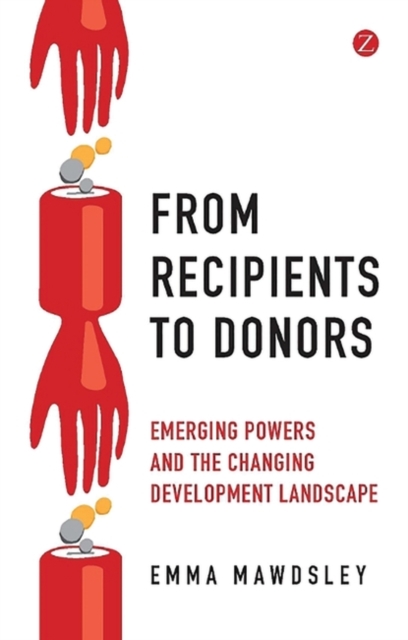
From recipients to donors
Examines the emergence, or re-emergence, of a large number of nations as partners and donors in international development, from global powers such as Brazil, China and India, to Gulf states such as Saudi Arabia, to former socialist states such as Poland and Russia.
eBook

Working with coders : a guide to software development for the perplexed non-techie
\"Aimed at a non-technical audience, this book aims to de-obfuscate the jargon, explain the various activities that coders undertake, and analyze the specific pressures, priorities, and preoccupations that developers are prone to. In each case it offers pragmatic advice on how to use this knowledge to make effective business decisions and work productively with software teams\"--Page 4 of cover.
Book

Making a Difference?
Social assessment for projects in China is an important emerging field. This collection of essays - from authors whose formative work has influenced the policies that shape practice in development-affected communities - locates recent Chinese experience of the development of social assessment practices (including in displacement and resettlement) in a historical and comparative perspective. Contributors - social scientists employed by international development banks, national government agencies, and sub-contracting groups - examine projects from a practitioner's perspective. Real-life experiences are presented as case-specific praxis, theoretically informed insight, and pragmatic lessons-learned, grounded in the history of this field of development practice. They reflect on work where economic determinism reigns supreme, yet project failure or success often hinges upon sociopolitical and cultural factors.
eBook


World Bank assistance to agriculture in Sub-Saharan Africa : an IEG review
A critical analysis of World Bank's agricultural assistance in Sub-Saharan Africa.This study assesses the development effectiveness of World Bank assistance in addressing constraints to agricultural development in Africa over the period of fiscal 1991-2006.This region faces a variety of constraints that make its development a complex challenge.
eBook


The forest people without a forest
Examines how the Baka, who live in Eastern Cameroon, assert forms of belonging in order to participate in development interventions. Investigates how community life is shaped and reshaped through these interventions.
eBook