
Catalogue Search | MBRL


Are you sure you want to remove the book from the shelf?

{{itemTitle}}
6,145
result(s) for
"DIGESTIVE DISORDERS"
Sort by:
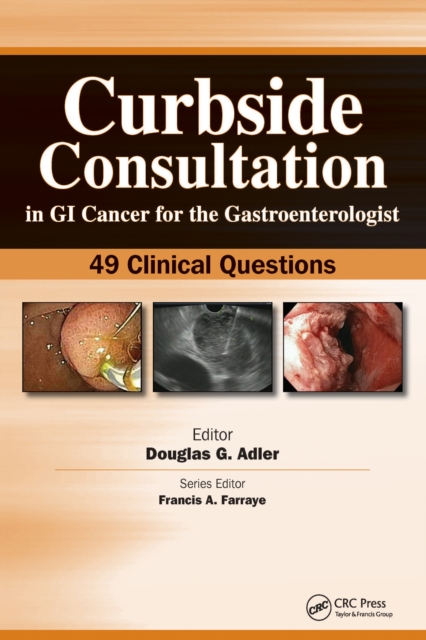
Curbside Consultation in GI Cancer for the Gastroenterologist
Are you looking for concise, practical answers to questions that are often left unanswered by traditional cancer references that are not designed for gastroenterologists? Are you seeking brief, evidence-based advice for complicated cases or patients with complications that need management? Curbside Consultation in GI Cancer for the Gastroenterologist: 49 Clinical Questions provides quick and direct answers to the thorny questions commonly posed during a \"curbside consultation\" between colleagues.
Dr. Douglas G. Adler has designed this unique reference, which offers expert advice, preferences, and opinions on tough clinical questions commonly associated with GI cancer. The unique Q&A format provides quick access to current information related to GI cancer with the simplicity of a conversation between two colleagues. Numerous images, diagrams, and references are included to enhance the text and to illustrate the treatment of GI cancer patients.
Curbside Consultation in GI Cancer for the Gastroenterologist: 49 Clinical Questions provides information basic enough for residents while also incorporating expert advice that even high-volume clinicians will appreciate. Gastroenterologists, fellows and residents in training, surgical attendings, and surgical residents will benefit from the user-friendly and casual format and the expert advice contained within.
Some of the questions that are answered:
An 81-year-old man is found to have unresectable esophageal cancer and malignant dysphagia. Should he have a stent? A nasogastric feeding tube? A PEG tube?
How is tumor-related bleeding from gastric cancers best approached?
Do patients with pancreatic cancer and jaundice need to have an ERCP preoperatively?
What is the role of ERCP and EUS in patients with suspected cholangiocarcinoma?
Why are rectal cancers so different from colon cancers with regards to medical and surgical management?
Curbside Consultation in GI Cancer for the Gastroenterologist: 49 Clinical Questions illustrates how patients at different points in their treatment may go back and forth between specialists to receive coordination of care, and incorporates input from gastroenterologists, surgeons, radiologists, and oncologists. While providing up-to-date information, this book will help gastroenterologists to manage complex cancer-related issues and guide physicians through the maze of cancer-related treatments available.
Ideal for practicing gastroenterologists, gastroenterology fellows, surgeons, oncologists, residents, and medical students, Curbside Consultation in GI Cancer for the Gastroenterologist: 49 Clinical Questions is sure to benefit anyone caring for patients with gastrointestinal cancers.
eBook
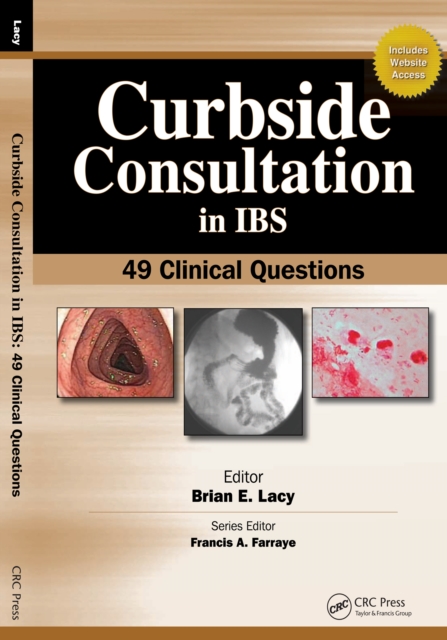
Curbside Consultation in IBS
Are you looking for concise, practical answers to questions that are often left unanswered by traditional IBS references that are not designed for gastroenterologists? Are you seeking brief, evidence-based advice for complicated cases or patients with complications that need management?
Curbside Consultation in IBS: 49 Clinical Questions
provides quick and direct answers to the thorny questions commonly posed during a \"curbside consultation\" between colleagues.
Dr. Brian E. Lacy has designed this unique reference, which offers expert advice, preferences, and opinions on tough clinical questions commonly associated with IBS. The unique Q&A format provides quick access to current information related to IBS with the simplicity of a conversation between two colleagues. Numerous images, diagrams, and references are included to enhance the text and to illustrate the treatment of IBS patients.
Some of the questions that are answered:
How can you safely and effectively diagnose IBS? Are diagnostic tests required, and if so, what are they?
What should I tell my patient about the natural history of IBS? What other disorders are commonly found in IBS patients?
What dietary interventions will help my patient?
What is the role of probiotics in my patient? Why do they work and are they all the same?
Are there new therapies for IBS? What about antibiotics? What is linaclotide and why might it help my patient?
Curbside Consultation in IBS: 49 Clinical Questions
provides information basic enough for residents while also incorporating expert advice that even high-volume clinicians will appreciate. Gastroenterologists, fellows and residents in training, surgical attendings, and surgical residents will benefi t from the user-friendly and casual format and the expert advice contained within.
Bonus Material: With each new book purchase, gain full access to a
fully searchable
website for 3 months. At the website you will be able to:
Access all 49 questions and answers from the book
Access additional questions added each month
Access video clips to supplement the material presented in the book and online
Submit your own suggested questions and/or questions and answers
Suggest alternate answers to the 49 questions
Submit your own images and video content
eBook

Colorectal Surgery
Using a case-based approach, Colorectal Surgery: Clinical Care and Management provides practical, clinical and expert guidance to illustrate the best care and clinical management of patients requiring colorectal surgery for colorectal disease. Real-life cases illustrate the entire syllabus of GI/colorectal surgery, being specially selected to highlight topical or controversial aspects of colorectal care. Cases have a consistent approach throughout and as well as outlining the actual management of each individual case, also offer an honest appraisal of the chosen management route, its successes and areas that could have been managed differently. Pedagogic features such as learning and decision points boxes aid rapid understanding/learning, enabling the reader to improve their patient management. In full colour and containing over 100 outstanding clinical photos and slides to support the cases, each section also covers recent developments/ landmark papers/ scoring systems and a thorough discussion of clinical management based on the major society guidelines from NICE, ASCRS and ECCO. Reliable, well-written and perfect for consultation in the clinical setting, Colorectal Surgery: Modern Clinical Care and Management is the perfect tool for all members of the multi-disciplinary team managing patients suffering from colorectal disease, specifically GI surgeons, gastroenterologists, oncologists and general surgeons.
eBook

Adverse childhood experiences and sources of childhood resilience: a retrospective study of their combined relationships with child health and educational attendance
Background
Adverse childhood experiences (ACEs) including maltreatment and exposure to household stressors can impact the health of children. Community factors that provide support, friendship and opportunities for development may build children’s resilience and protect them against some harmful impacts of ACEs. We examine if a history of ACEs is associated with poor childhood health and school attendance and the extent to which such outcomes are counteracted by community resilience assets.
Methods
A national (Wales) cross-sectional retrospective survey (
n
= 2452) using a stratified random probability sampling methodology and including a boost sample (
n
= 471) of Welsh speakers. Data collection used face-to-face interviews at participants’ places of residence. Outcome measures were self-reported poor childhood health, specific conditions (asthma, allergies, headaches, digestive disorders) and school absenteeism.
Results
Prevalence of each common childhood condition, poor childhood health and school absenteeism increased with number of ACEs reported. Childhood community resilience assets (being treated fairly, supportive childhood friends, being given opportunities to use your abilities, access to a trusted adult and having someone to look up to) were independently linked to better outcomes. In those with ≥4 ACEs the presence of all significant resilience assets (vs none) reduced adjusted prevalence of poor childhood health from 59.8 to 21.3%.
Conclusions
Better prevention of ACEs through the combined actions of public services may reduce levels of common childhood conditions, improve school attendance and help alleviate pressures on public services. Whilst the eradication of ACEs remains unlikely, actions to strengthen community resilience assets may partially offset their immediate harms.
Journal Article
GI and Liver Disease During Pregnancy
GI and Liver Disease During Pregnancy: A Practical Approach by Drs. Kim Isaacs and Millie D. Long is a unique handbook focusing on common gastrointestinal symptoms and diseases seen in pregnant patients. Each chapter addresses the diseases or symptoms and focuses on key questions to ask the patient and key points regarding diagnosis and management.
This handbook is organized to have each chapter focus on a common complaint or discrete disease, making it easy to find exact information in a ready reference. Also provided are tables of drug safety during pregnancy and breast feeding. Unique features also include a section on alternative therapies and a chapter on care in post bariatric surgery patients.
Each Chapter Covers:
Epidemiology
Pathology
Presentation and Evaluation
Management
Summary
Key Points
Pocket-sized and easy to read, GI and Liver Disease During Pregnancy: A Practical Approach is a convenient and accessible reference for gastroenterology fellows, OB/GYN fellows and residents, and practicing gastroenterologists.
eBook
Pocket Guide to IBD Second Edition
Pocket Guide to IBD, Second Edition is designed to provide quick clinical information for gastroenterologists, primary care physicians, physician assistants, and nurse practitioners who need to review symptoms, medications, and disease management, in order to decide effective diagnoses and treatments for their patients with IBD. Some of the topics covered are: Special populations, including pregnancy and children Vaccinations in the patient with IBD Treatment of the infliximab refractory patient Diagnosis and treatment of perianal disease Care of the post operative patient Dr. Marla Dubinsky and Dr. Sonia Friedman have created this go-to reference for one of the most popular topics among practicing gastroenterologists and other GI and primary care providers. Features: Comprehensive chapters in quick reference format Symptom-based guide for diagnosis and treatment Tables highlighting the full array of IBD medications Charts and figures detailing complete treatment algorithms The Pocket Guide to IBD, Second Edition is unique in its size, accessibility of information, thoroughness, and clarity of content. This clinical guide will be the quick reference to turn to when treating patients with IBD.
eBook
Clinical Dilemmas in Inflammatory Bowel Disease
The second edition of Clinical Dilemmas in Inflammatory Bowel Disease: New Challenges, is a practical, up-to-date handbook providing expert guidance on specific clinical dilemmas and areas of difficulty that the gastroenterologist regularly faces in day-to-day practice. In this new edition, 75% of the \"dilemmas\" are brand new dilemmas facing the IBD specialist concerning emerging treatment therapies, such as the use of cannabinoids and Viagra for Crohn's disease. The remaining 25% of the dilemmas are fully updated from the previous edition, incorporating the latest clinical thinking. Each of the 57 evidence-based chapters contains clear learning points, addresses different topics, and provides sound guidance on subjects ranging from optimizing current management through to special management problems and novel treatments. This book is suitable for all medical professionals involved in the care of patients with IBD: established and trainee gastroenterologists, colorectal surgeons, pathologists, radiologists, specialist nurses, pharmacists, dieticians and counselors.
eBook
Gut Instincts
Gut Instincts: A Clinician's Handbook of Digestive and Liver Diseases is a practical handbook that focuses on the diagnosis and management of the most commonly encountered digestive diseases.
Gut Instincts: A Clinician's Handbook of Digestive and Liver Diseases is portable enough to keep in a lab coat or briefcase, yet informative enough for day-to-day patient care. Written and edited by Dr. Esrailian and over 50 contributing experts, the language throughout is clear and concise enough for application at the office, or at the bedside. Gut Instincts combines knowledge, experience, and evidence, helping providers of all levels to deliver the highest quality patient care. However, the chapters are concise and designed to be used as quick reference even during patient visits.
Unique Benefits and Features Include:
A \"Gut Instincts\" sidebar in each chapter with important clinical pearls for patient care
Addresses the most frequently encountered clinical problems in digestive diseases
Focuses primarily on diagnosis and management
More than 50 algorithms, tables, and figures throughout the book
Uses a coherent format while distributing high-yield information
Some Chapter Topics Include:
Barrett's esophagus
Pancreatic diseases
Colon polyps
Non alcoholic fatty liver disease
Complications of portal hypertension
Gut Instincts combines knowledge, experience, and evidence and is the ideal resource for practicing gastroenterologists and fellows, residents and medical students, nurse practitioners and physician assistants, and all primary care providers and trainees on the \"front line\" of patient care.
eBook

Conceptual Study On Grahani And It’s Pathya Apathya
In ayurvedic grahani dosha is one among the mahagadas. grahani roga include into digestive disorders. Grahani roga prevalence is about 72 percentage in current time because of faulty dietary habits. depression, stress and side effects of allopathy drugs this couses leads to any digestive diseases organs grahani is the seat of jatharagni. The ancient text of Ayurveda describe that indigestion (ajirna), digestion, Absorbation of aahararasa is regulate by Grahani.The pathogenesis of Grahani roga works around Agnidosha which associated with impaired digestives function of digestive fire.Ayurveda described management of Grahani roga such as ise of herba and formulation. Grahani is one of the major illness of gastrointestinaltrack. Included in ashto mahagada by vaghabhat. Keywords - Jatharagni, Dosha, Aahara, Vagabhat, etc.
Journal Article

Digestive Neurobiology in Autism: From Enteric and Central Nervous System Interactions to Shared Genetic Pathways
Social communication difficulties characterize autism spectrum disorders (ASD). Gastrointestinal (GI) symptoms are more common in ASD than in the general population. The identification of GI problems in individuals with ASD is challenging due to their altered pain perception and irregular behaviors. Importantly, GI symptoms and ASD can potentially aggravate each other. However, it is unclear if GI problems cause ASD symptoms or vice versa. A crosstalk between the digestive system, gut microbiota, and the central and enteric nervous systems (CNS and ENS, respectively) has been repeatedly reported. The ENS regulates the GI tract with the CNS and the autonomic nervous system (ANS), as well as independently through specific neural circuits. Several mechanisms contribute to GI problems in ASD, including genetic mutations that affect the ENS, dysregulation of the ANS, alterations in gut microbiota, unhealthy dietary preferences, and changes in metabolomic profiles. Furthermore, studies have shown molecular and cellular differences in the GI biopsy of children with and without ASD. These findings highlight the unique nature of GI issues in ASD, underscoring the importance of further investigating the changes that occur in the digestive system and ENS in ASD models.
Journal Article