
Catalogue Search | MBRL


Are you sure you want to remove the book from the shelf?

{{itemTitle}}
96,693
result(s) for
"DISPUTE SETTLEMENT"
Sort by:


The 1713 Peace of Utrecht and Its Enduring Effects
The 1713 Peace of Utrecht and its Enduring Effects, edited by Alfred H.A. Soons, presents an interdisciplinary collection of contributions marking the occasion of the tercentenary of the Peace of Utrecht.
eBook

Enduring Territorial Disputes
Of all the issues in international relations, disputes over territory are the most salient and most likely to lead to armed conflict. Understanding their endurance is of paramount importance. Although many states have settled their disagreements over territory, seventy-one disputes involving nearly 40 percent of all sovereign states remain unresolved. In this study, Krista E. Wiegand examines why some states are willing and able to settle territorial disputes while others are not. She argues that states may purposely maintain disputes over territory in order to use them as bargaining leverage in negotiations over other important unresolved issues. This dual strategy of issue linkage and coercive diplomacy allows the challenger state to benefit from its territorial claim. Under such conditions, it has strong incentive to pursue diplomatic and militarized threats and very little incentive to settle the dispute over territory. Wiegand tests her theory in four case studies, three representing the major types of territorial disputes: uninhabited islands and territorial waters, as seen in tensions between China and Japan over the Senkaku and Diaoyu Islands; inhabited tracts of territory, such as the North African enclaves of Ceuta and Melilla affecting Morocco and Spain; and border areas, like the Shebaa Farms dispute between Lebanon and Israel. A fourth case study of a dispute between China and Russia represents a combination of all three types; settled in 2008, it serves as a negative example. All these disputes involve areas that have key strategic and economic importance both regionally and globally.
eBook

The moral imagination : the art and soul of building peace
This book poses the question, “How do we transcend the cycles of violence that bewitch our human community while still living in them?” Peacebuilding, in the view of this book, is both a learned skill and an art. Finding this art, this book says, requires a worldview shift. Conflict professionals must envision their work as a creative act — an exercise of what the book terms the “moral imagination.” This imagination must, however, emerge from and speak to the hard realities of human affairs. The peacebuilder must have one foot in what is and one foot beyond what exists. The book is organized around four guiding stories that point to the moral imagination but are incomplete. The book seeks to understand what happened in these individual cases and how they are relevant to large-scale change. The purpose is not to propose a grand new theory; instead it wishes to stay close to the “messiness” of real processes and change, and to recognize the serendipitous nature of the discoveries and insights that emerge along the way. Like most professional peacemakers, the author of this book sees his work as a religious vocation.
eBook

Making War and Building Peace
Making War and Building Peace examines how well United Nations peacekeeping missions work after civil war. Statistically analyzing all civil wars since 1945, the book compares peace processes that had UN involvement to those that didn't. Michael Doyle and Nicholas Sambanis argue that each mission must be designed to fit the conflict, with the right authority and adequate resources. UN missions can be effective by supporting new actors committed to the peace, building governing institutions, and monitoring and policing implementation of peace settlements. But the UN is not good at intervening in ongoing wars. If the conflict is controlled by spoilers or if the parties are not ready to make peace, the UN cannot play an effective enforcement role. It can, however, offer its technical expertise in multidimensional peacekeeping operations that follow enforcement missions undertaken by states or regional organizations such as NATO. Finding that UN missions are most effective in the first few years after the end of war, and that economic development is the best way to decrease the risk of new fighting in the long run, the authors also argue that the UN's role in launching development projects after civil war should be expanded.
eBook

The United Nations, peace and security : from collective security to the responsibility to protect
A leading authority examines the changing role and structure of the UN, from avoiding inter-state wars to managing humanitarian emergencies. Topics examined include the use of force, the gap between legality and legitimacy, UN-US relations, the North-South divide, the international rule of law, and prospects for UN reform.
eBook

Justice and Violence
Originally published in 2003. Justice and Violence brings together a fascinating and varied volume that focuses on the ethics of both political violence and pacifism. Incorporating historical, geopolitical and cultural case studies, it takes a unique look at comparative analyses of these two phenomena and contending world views.
eBook

The Contentious and Advisory Jurisdiction of the International Tribunal for the Law of the Sea
In The Contentious and Advisory Jurisdiction of the International Tribunal for the Law of the Sea, Miguel García García-Revillo offers an in depth examination of both the contentious and advisory jurisdiction of this major international judicial institution.
eBook
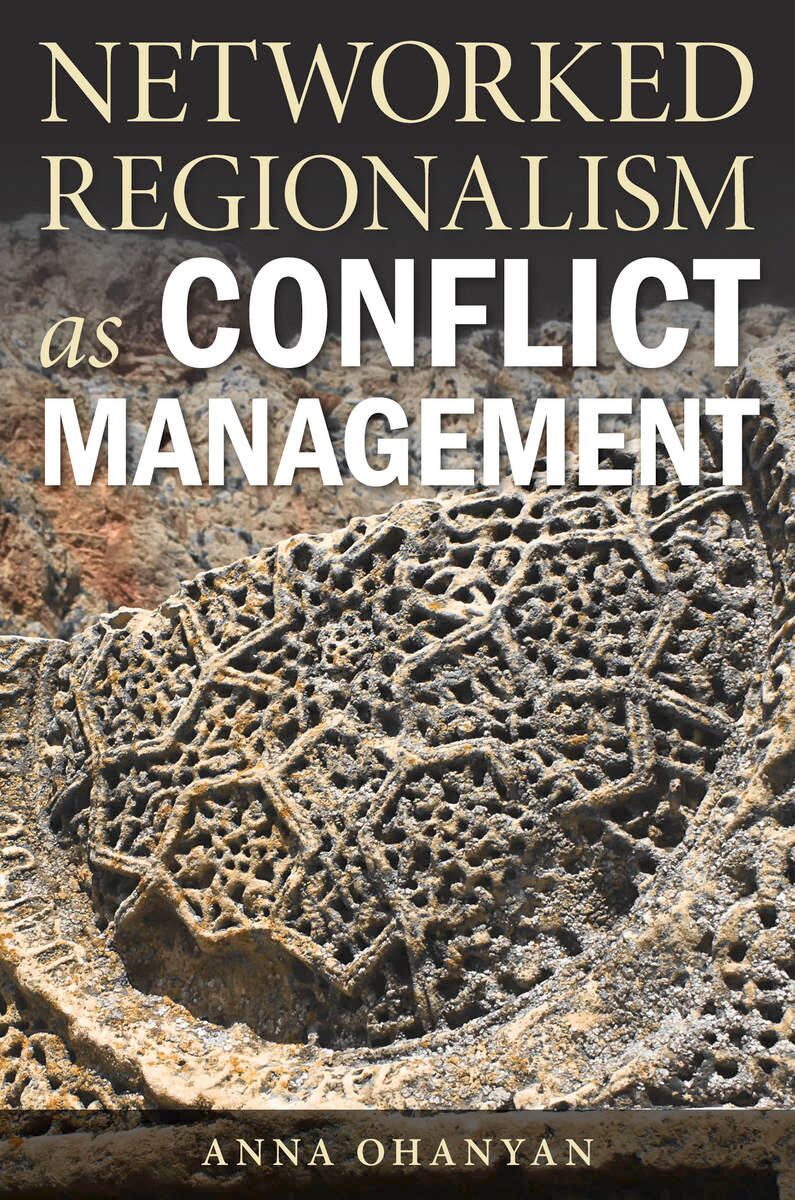
Networked regionalism as conflict management
Most regions of the world are plagued by conflicts that are made insoluble by a confluence of complex threads from history, geography, politics, and culture. These \"frozen conflicts\" defy conflict management interventions by both internal and external agents and institutions. Worse, they constantly threaten to extend beyond their local geographies, as in the terrorist bombings in Boston by ethnic Chechens, or to escalate from skirmishes to full-scale war, as in Nagorno-Karabakh. Consequently, such conflicts cry out for alternative approaches to the classic, state-focused, and sovereignty-based conflict management models that are practiced in traditional diplomacy—which most often produce rather short-term, ad hoc, fragmented interventions and outcomes. Drawing upon the cases of the South Caucasus, the Western Balkans, Central America, South East Asia, and Northern Ireland, Networked Regionalism as Conflict Management offers a theoretical and practical solution to this impasse by arguing for regional collective interventions that involve a long-term reengineering of existing conflict management infrastructure on the ground. Such approaches have been attracting the attention of scholars and practitioners alike yet, thus far, these concepts have rarely involved more than simple prescriptions for regional cooperation between grassroots actors and traditional diplomacy. Specifically, says Anna Ohanyan, only the cultivation and establishment of regional peace systems can provide an effective path toward conflict management in these standoffs in such intractably divided regions.
eBook

Nested Security
Why does soft power conflict management meet with variable success over the course of a single mediation? In Nested Security, Erin K. Jenne asserts that international conflict management is almost never a straightforward case of success or failure. Instead, external mediators may reduce communal tensions at one point but utterly fail at another point, even if the incentives for conflict remain unchanged. Jenne explains this puzzle using a \"nested security\" model of conflict management, which holds that protracted ethnic or ideological conflicts are rarely internal affairs, but rather are embedded in wider regional and/or great power disputes. Internal conflict is nested within a regional environment, which in turn is nested in a global environment. Efforts to reduce conflict on the ground are therefore unlikely to succeed without first containing or resolving inter-state or trans-state conflict processes.Nested security is neither irreversible nor static: ethnic relations may easily go from nested security to nested insecurity when the regional or geopolitical structures that support them are destabilized through some exogenous pressure or shocks, including kin state intervention, transborder ethnic ties, refugee flows, or other factors related to regional conflict processes. Jenne argues that regional security regimes are ideally suited to the management of internal conflicts, because neighbors that have a strong incentive to work for stability provide critical hard-power backing to soft-power missions. Jenne tests her theory against two regional security regimes in Central and Eastern Europe: the interwar minorities regime under the League of Nations (German minorities in Central Europe, Hungarian minorities in the Carpathian Basin, and disputes over the Åland Islands, Memel, and Danzig), and the ad hoc security regime of the post–Cold War period (focusing on Russian-speaking minorities in the Baltic States and Albanian minorities in Montenegro, Macedonia, and northern Kosovo).
eBook