
Catalogue Search | MBRL


Are you sure you want to remove the book from the shelf?

{{itemTitle}}
829,379
result(s) for
"DIVERSITY"
Sort by:
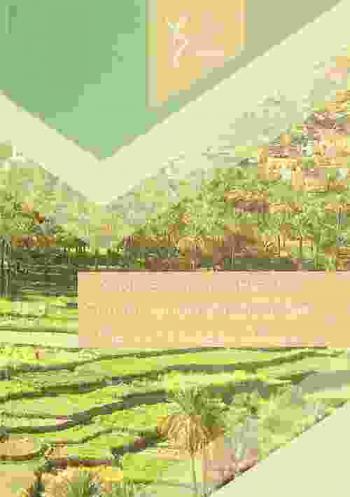
Socioeconomic plants conservation strategy for the Sultanate of Oman
The Socioeconomic Plant Conservation Strategy for the Sultanate of Oman aims to provide a blueprint for the conservation of the genetic diversity of our plant genetic resources. It emphasizes in particular crop landraces, crop wild relatives, medicinal plants and wild harvested species that are of socioeconomic importance at national and regional level.
Book

Unifying Species Diversity, Phylogenetic Diversity, Functional Diversity, and Related Similarity and Differentiation Measures Through Hill Numbers
Hill numbers or the effective number of species are increasingly used to quantify species diversity of an assemblage. Hill numbers were recently extended to phylogenetic diversity, which incorporates species evolutionary history, as well as to functional diversity, which considers the differences among species traits. We review these extensions and integrate them into a framework of attribute diversity (the effective number of entities or total attribute value) based on Hill numbers of taxonomic entities (species), phylogenetic entities (branches of unit-length), or functional entities (species-pairs with unit-distance between species). This framework unifies ecologists' measures of species diversity, phylogenetic diversity, and distance-based functional diversity. It also provides a unified method of decomposing these diversities and constructing normalized taxonomic, phylogenetic, and functional similarity and differentiation measures, including
N
-assemblage phylogenetic or functional generalizations of the classic Jaccard, Sørensen, Horn, and Morisita-Horn indexes. A real example shows how this framework extracts ecological meaning from complex data.
Journal Article


mFD: an R package to compute and illustrate the multiple facets of functional diversity
Functional diversity (FD), the diversity of organism attributes that relates to their interactions with the abiotic and biotic environment, has been increasingly used for the last two decades in ecology, biogeography and conservation. Yet, FD has many facets and their estimations are not standardized nor embedded in a single tool. mFD (multifaceted functional diversity) is an R package that uses matrices of species assemblages and species trait values as building blocks to compute most FD indices. mFD is firstly based on two functions allowing the user to summarize trait and assemblage data. Then it calculates trait-based distances between species pairs, informs the user whether species have to be clustered into functional entities and finally computes multidimensional functional space. To let the user choose the most appropriate functional space for computing multidimensional functional diversity indices, two mFD functions allow assessing and illustrating the quality of each functional space. Next, mFD provides 6 core functions to calculate 16 existing FD indices based on trait-based distances, functional entities or species position in a functional space. The mFD package also provides graphical functions based on the ggplot library to illustrate FD values through customizable and high-resolution plots of species distribution among functional entities or in a multidimensional space. All functions include internal validation processes to check for errors in data formatting which return detailed error messages. To facilitate the use of mFD framework, we built an associated website hosting five tutorials illustrating the use of all the functions step by step.
Journal Article


Functional diversity in cover crop polycultures increases multifunctionality of an agricultural system
1. Ecological studies identifying a positive relationship between biodiversity and ecosystem services motivate projections that higher plant diversity will increase services from agroecosystems. While this idea is compelling, evidence of generalizable relationships between biodiversity and ecosystem services that could be broadly applied in agricultural systems is lacking. 2. Cover crops grown in rotation with cash crops are a realistic strategy to increase agroecosystem diversity. We evaluated the prediction that further increasing diversity with cover crop polycultures would enhance ecosystem services and multifunctionality in a 2-year study of eighteen cover crop treatments ranging in diversity from one to eight species. Five ecosystem services were measured in each cover crop system and regression analysis used to explore the relationship between multifunctionality and several diversity indices. 3. As expected, there was a positive relationship between species richness and multifunctionality, but it only explained a small fraction of variance in ecosystem services (marginal R² = 0-05). In contrast, indices of functional diversity, particularly the distribution of trait abundances, were stronger predictors of multifunctionality (marginal R² = 0-15-0-38). 4. Synthesis and application. In a corn production system, simply increasing cover crop species richness will have a small impact on agroecosystem services, but designing polycultures that maximize functional diversity may lead to agroecosystems with greater multifunctionality.
Journal Article

Science vs. animal extinction
Examines the importance of biodiversity, discussing animals in crisis and ways science is fighting to counteract the impact mankind has had on the environment and endangered species.
Book

Ghost Stories for Darwin
In a stimulating interchange between feminist studies and biology, Banu Subramaniam explores how her dissertation on flower color variation in morning glories launched her on an intellectual odyssey that engaged the feminist studies of sciences in the experimental practices of science by tracing the central and critical idea of variation in biology. As she shows, the histories of eugenics and genetics and their impact on the metaphorical understandings of difference and diversity that permeate common understandings of differences among people exist in contexts that seem distant from the so-called objective hard sciences. Journeying into areas that range from the social history of plants to speculative fiction, Subramaniam uncovers key relationships between the life sciences, women's studies, evolutionary and invasive biology, and the history of ecology, and how ideas of diversity and difference emerged and persist in each field.
eBook

The impacts of climate change and disturbance on spatio-temporal trajectories of biodiversity in a temperate forest landscape
1. The ongoing changes to climate challenge the conservation of forest biodiversity. Yet, in thermally limited systems, such as temperate forests, not all species groups might be affected negatively. Furthermore, simultaneous changes in the disturbance regime have the potential to mitigate climate-related impacts on forest species. Here, we (i) investigated the potential long-term effect of climate change on biodiversity in a mountain forest landscape, (ii) assessed the effects of different disturbance frequencies, severities and sizes and (iii) identified biodiversity hotspots at the landscape scale to facilitate conservation management. 2. We employed the model iLand to dynamically simulate the tree vegetation on 13 865 ha of the Kalkalpen National Park in Austria over 1000 years, and investigated 36 unique combinations of different disturbance and climate scenarios. We used simulated changes in tree cover and composition as well as projected temperature and precipitation to predict changes in the diversity of Araneae, Carabidae, ground vegetation, Hemiptera, Hymenoptera, Mollusca, saproxylic beetles, Symphyta and Syrphidae, using empirical response functions. 3. Our findings revealed widely varying responses of biodiversity indicators to climate change. Five indicators showed overall negative effects, with Carabidae, saproxylic beetles and tree species diversity projected to decrease by more than 33%. Six indicators responded positively to climate change, with Hymenoptera, Mollusca and Syrphidae diversity projected to increase more than twofold. 4. Disturbances were generally beneficial for the studied indicators of biodiversity. Our results indicated that increasing disturbance frequency and severity have a positive effect on biodiversity, while increasing disturbance size has a moderately negative effect. Spatial hotspots of biodiversity were currently found in low- to mid-elevation areas of the mountainous study landscape, but shifted to higher-elevation zones under changing climate conditions. 5. Synthesis and applications. Our results highlight that intensifying disturbance regimes may alleviate some of the impacts of climate change on forest biodiversity. However, the projected shift in biodiversity hotspots is a challenge for static conservation areas. In this regard, overlapping hotspots under current and expected future conditions highlight priority areas for robust conservation management.
Journal Article