
Catalogue Search | MBRL


Are you sure you want to remove the book from the shelf?

{{itemTitle}}
169
result(s) for
"DOSTOYEVSKY, FYODOR (1821-1881)"
Sort by:


A Dostoevskii Companion
The powerful, impassioned, and often frenetic prose of Fedor
Dostoevskii continues to fascinate readers in the twenty-first
century, even though we are far removed from Dostoevskii's Russia.
A Dostoevskii Companion: Texts and Contexts aims to help
students and readers navigate the writer's fiction and his world,
to better understand the cultural and sociopolitical milieu in
which Dostoevskii lived and wrote. Rather than offer a single
definitive view of the author, the book contains a collection of
documents from Dostoevskii's own time (excerpts from his letters,
his journalism, and what his contemporaries wrote about him), as
well as extracts from the major critical studies of Dostoevskii
from the contemporary academy. The volume equips readers with a
deeper understanding of Dostoevskii's world and his writing,
offering new paths and directions for interpreting his writing.
eBook


Dostoyevsky Reads Hegel in Siberia and Bursts into Tears
An exemplary collection of work from one of the world's leading scholars of intellectual history László F. Földényi is a writer who is learned in reference, taste, and judgment, and entertaining in style. Taking a place in the long tradition of public intellectual and cultural criticism, his work resonates with that of Montaigne, Rilke, and Mann in its deep insight into aspects of culture that have been suppressed, yet still remain in the depth of our conscious. In this new collection of essays, Földényi considers the fallout from the end of religion and how the traditions of the Enlightenment have failed to replace neither the metaphysical completeness nor the comforting purpose of the previously held mythologies. Combining beautiful writing with empathy, imagination, fascination, and a fierce sense of justice, Földényi covers a wide range of topics that include a meditation on the metaphysical unity of a sculpture group and an analysis of fear as a window into our relationship with time.
eBook

Dostoevsky the thinker
For all his distance from philosophy, Dostoyevsky was one of the most philosophical of writers. Drawing on his novels, essays, letters and notebooks, this volume examines Dostoyevsky's philosophical thought.
Book
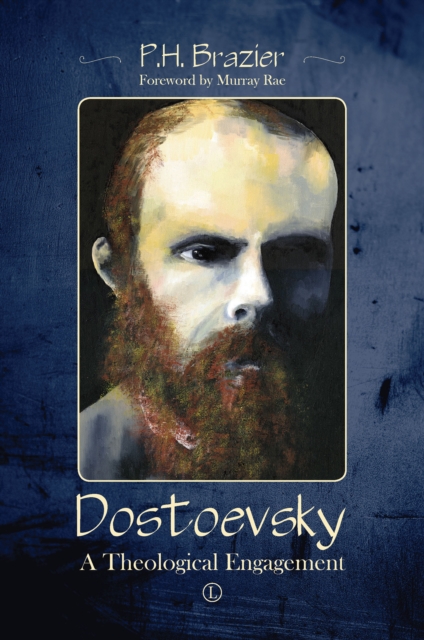
Dostoevsky
As a writer and prophet Dostoevsky was no academic theologian, yet his writings are deeply theological: his life, beliefs, even his epilepsy, all had a role in generating histheology and eschatology. Dostoevsky’s novels are riven with paradoxes, are deeply dialectical, and represent a criticism of religion, offered in the service of the gospel. In this task he presented a profound understanding and portrait of humanity. Dostoevsky’s novels chart the movement of the human into death: either the movement through paradox and Christlikeness into Christ’s cross (a soteriology often characterized by the apophatic negation and self-denial; what we may term ‘the Mark of Abel’) leading to salvation and resurrection; or, conversely, the movement of those who refuse Christ’s invitation to be redeemed, and continue to fall into a self-willed death and a selfgenerated hell (‘the Mark of Cain’). This eschatology becomes a theological axiom which he unceasingly warned people of in his mature works. Startlingly original, stripped of all religious pretence, Dostoevsky as a prophet forewarned of the politicized humanistic delusions of the twentieth century: a prophet crying out through the wilderness.
eBook


Western Law, Russian Justice
Gary Rosenshield offers a new interpretation of Dostoevsky's greatest novel,
The Brothers Karamazov . He explores Dostoevsky's critique and exploitation of the jury trial for his own ideological agenda, both in his journalism and his fiction, contextualizing his portrayal of trials and trial participants (lawyers, jurors, defendants, judges) in the political, social, and ideological milieu of his time. Further, the author presents Dostoevsky's critique in terms of the main notions of the critical legal studies movement in the United States, showing how, over one hundred and twenty years ago, Dostoevsky explicitly dealt with the same problems that the law-and-literature movement has been confronting over the past two decades. This book should appeal to anyone with an interest in Russian literature, Russian history and culture, legal studies, law and literature, narratology, or metafiction and literary theory.
eBook


Heroine Abuse
Fyodor Dostoevsky's first novel, Netochka Nezvanova, written in 1849, remains the least studied and understood of the writer's long fiction, but it was a seedbed for many topics and themes that became hallmarks of his major works. Specifically, Netochka Nezvanova was the first in Dostoevsky's corpus to focus on the psychology of children and the first to feature a woman in a leading and narrative role. It was also the first work in Russian literature to deal with problems of the family. In Heroine Abuse, Thomas Marullo contends that Netochka Nezvanova also provides a striking example of what psychologists today call codependency: the ways—often deviant and destructive—in which individuals bond with people, places, and things, as well as with images and ideas, to cope with the vicissitudes of life. Marullo shows how, at age twenty-eight, Dostoevsky intuited and illustrated the workings of \"relationship addiction\" almost a century and a half before it became the scholarly focus of practitioners of mental health. The moral monsters, \"infernal\" women, children-adults, and adult-children who populate Netochka Nezvanova seek codependence in people, places, and things, and in images, ideas, and ideals to satiate cravings for love, dominance, and control, as well as to indulge in narcissism, sexual perversion, and other aberrant or alternative behaviors. (Indeed, in no other work would Dostoevsky examine such phenomena as pedophilia and lesbianism with such abandon.) Racing from tie to tie, bond to bond, and caught in a debilitating loop that they claim to detest, but sadomasochistically enjoy, the characters in Netochka Nezvanova wreak havoc on themselves and the world. They do so, moreover, with impunity, their addictions moving them from momentary exultation as self-styled extraordinary men and women, through prolonged darkness and despair, and once again, to old and new addictions for physical and emotional release. Readers of Heroine Abuse will see Netochka Nezvanova as a timeless model in depicting codependency in the world of the twenty-first century as it did in St. Petersburg in 1849. Marullo's original work will appeal to scholars and students of Russian and comparative fiction; to doctors, psychologists, and therapists; to laymen and women interested in relationship addiction; and, finally, to codependents and relationship addicts of all types.
eBook