
Catalogue Search | MBRL


Are you sure you want to remove the book from the shelf?

{{itemTitle}}
201
result(s) for
"DRAMA / Continental European."
Sort by:
Le Misanthrope
Comedie de mA urs en cinq actes date de 1666, Le Misanthrope est ainsi decrit par l'auteur dans sa preface : \"Alceste, homme honnete et vertueux, mais exagerant l'honnetete et la probite [...] est epris de Celimene, jeune veuve de 20 ans, coquette et medisante.\"
eBook

Medea, Magic, and Modernity in France
Bringing together the previously disparate fields of historical witchcraft, reception history, poetics, and psychoanalysis, this innovative study shows how the glamour of the historical witch, a spell that she cast, was set on a course, over a span of three hundred years from the sixteenth to the eighteenth centuries, to become a generally broadcast glamour of appearance. Something that a woman does, that is, became something that she has. The antique heroine Medea, witch and barbarian, infamous poisoner, infanticide, regicide, scourge of philanderers, and indefatigable traveller, serves as the vehicle of this development. Revived on the stage of modernity by La Péruse in the sixteenth century, Corneille in the seventeenth, and the operatic composer Cherubini in the eighteenth, her stagecraft and her witchcraft combine, author Amy Wygant argues, to stun her audience into identifying with her magic and making it their own. In contrast to previous studies which have relied upon contemporary printed sources in order to gauge audience participation in and reaction to early modern theater, Wygant argues that psychoanalytic thought about the behavior of groups can be brought to bear on the question of \"what happened\" when the early modern witch was staged. This cross-disciplinary study reveals the surprising early modern trajectory of our contemporary obsession with magic. Medea figures the movement of culture in history, and in the mirror of the witch on the stage, a mirror both appealing and appalling, our own cultural performances are reflected. It concludes with an analysis of Diderot's claim that the historical process itself is magical, and with the moment in Revolutionary France when the slight and fragile body of the golden-throated singer, Julie-Angélique Scio, became a Medea for modernity: not a witch or a child-murderess, but, as all the press reviews insist, a woman.
eBook
Dramas of Distinction: A Study of Plays by Golden Age Women
Now in Dramas of Distinction, Teresa Scott Soufas offers the first book-length critical study of five important women playwrights: Angela de Azevedo, Ana Caro Mallen de Soto, Leonor de la Cueva y Silva, Feliciana Enriquez de Guzman, and Marfa de Zayas y Sotomayor.
eBook
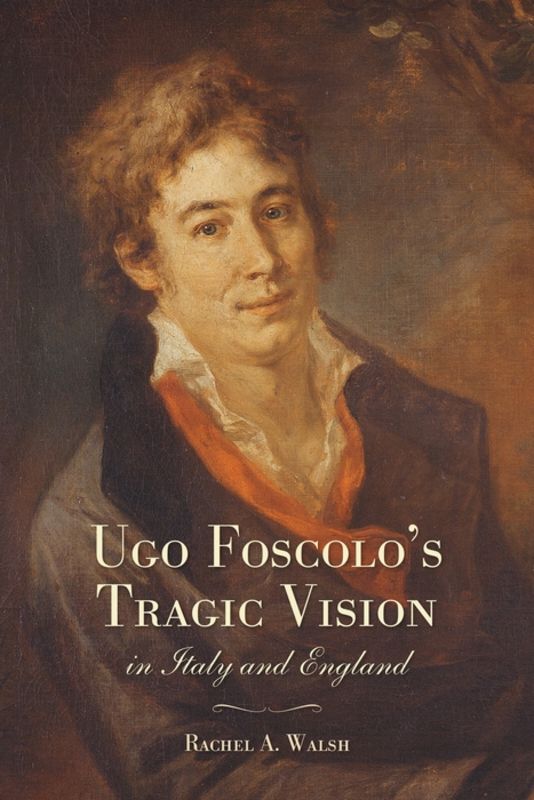
Ugo Foscolo's Tragic Vision in Italy and England
One of the most celebrated Italian writers of the early Romantic period, Ugo Foscolo (1778-1827) was known primarily as a novelist, a poet, and a nationalist. Following the Napoleonic Wars, he lived in self-exile in England during the last decade of his life. There he wrote numerous critical essays and collaborated with Lord Byron and other well-known members of English literary circles.Ugo Foscolo's Tragic Vision in Italy and England examines an underexplored aspect of Foscolo's literary career: his tragic plays and critical essays on that genre. Rachel A. Walsh argues that for Foscolo tragedy was more than another genre in which to exercise his literary ambitions. It was the medium for an elaborate life-long process of self-examination and engagement with political and literary conflict. By analysing Foscolo's tragic struggles on and off the stage, Walsh sheds new light on his career and how it reflects on the important literary and political trends of the time.
eBook
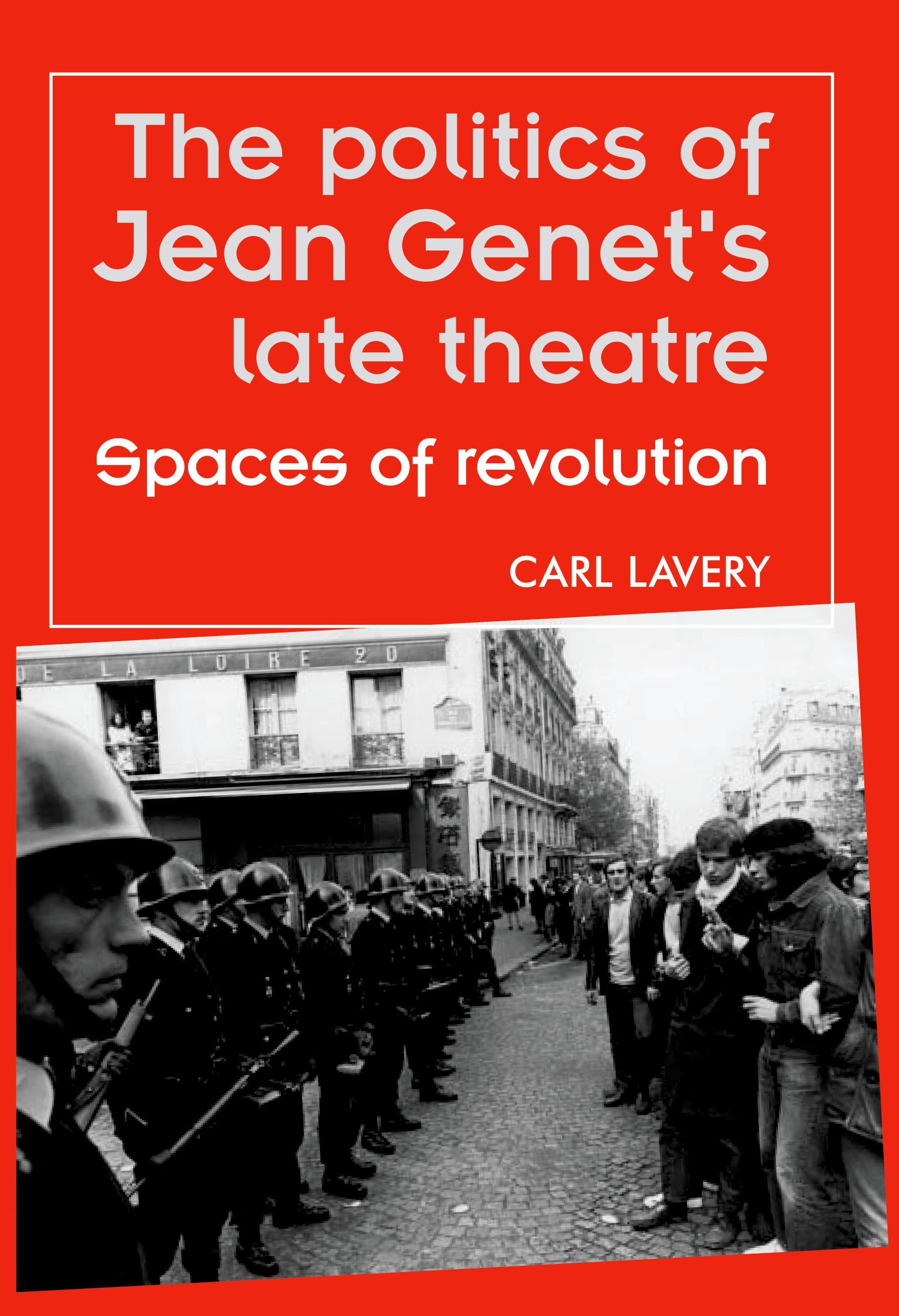
The politics of Jean Genet's late theatre
Jean Genet and the politics of theatre is the first publication to situate the politics of Genet's theatre within the social, spatial and political contexts of France in the 1950s and 1960s. The book's innovative approach departs significantly from existing scholarship on Genet. Where scholars have tended to bracket Genet as either an absurdist, ritualistic or, more recently, a resistant playwright, this study argues that his theory and practice of political theatre have more in common with the affirmative ideas of thinkers such as Henri Lefebvre, Jacques Rancière and Alain Badiou. By doing so, the monograph positions Genet as a revolutionary playwright, interested in producing progressive forms of democracy. This original and interdisciplinary reading of Genet’s late work will be of interest to students and practitioners of Theatre, as well as those interested in French and History.
eBook

The Would-Be Author
This book is the first full-length study to examine Molière’s evolving (and at times contradictory) authorial strategies, as evidenced both by his portrayal of authors and publication within the plays and by his own interactions with the seventeenth-century Parisian publishing industry. Historians of the book have described the time period that coincides with Molière’s theatrical activity as centrally important to the development of authors’ rights and to the professionalization of the literary field. A seventeenth-century author, however, was not so much born as negotiated through often acrimonious relations in a world of new and dizzying possibilities.The learning curve was at times steep and unpleasant, as Molière discovered when his first Parisian play was stolen by a rogue publisher. Nevertheless, the dramatist proved to be a quick learner; from his first published play in 1660 until his death in 1673, Molière changed from a reluctant and victimized author to an innovator (or, according to his enemies, even a swindler) who aggressively secured the rights to his plays, stealing them back when necessary. Through such shrewdness, he acquired for himself publication privileges and conditions relatively unknown in an era before copyright. As Molière himself wrote, making people laugh was “une étrange entreprise” (La Critique de L’École des femmes, 1663). To an even greater degree, comedic authorship for the playwright was a constant work in progress, and in this sense, “Molière,” the stage name that became a pen name, represents the most carefully elaborated of Jean-Baptiste Poquelin’s invented characters.
eBook

German Expressionism and the Messianism of a Generation
This book reads messianic expectation as the defining characteristic of German culture in the first decades of the twentieth century. It has long been accepted that the Expressionist movement in Germany was infused with a thoroughly messianic strain. Here, with unprecedented detail and focus, that strain is traced through the work of four important Expressionist playwrights: Ernst Barlach, Georg Kaiser, Ernst Toller and Franz Werfel. Moreover, these dramatists are brought into new and sustained dialogues with the theorists and philosophers of messianism who were their contemporaries: Walter Benjamin, Ernst Bloch, Martin Buber, Hermann Cohen, Gershom Scholem. In arguing, for example, that concepts like Bloch's utopian self-encounter (Selbstbegegnung) and Benjamin's messianic now-time (Jetztzeit) reappear as the framework for Expressionism's staging of collective redemption in a new age, Anderson forges a previously underappreciated link in the study of Central European thought in the early twentieth century.
eBook
Golden age drama in contemporary Spain
This jargon-free book on Spanish classical theatre is the first monograph to examine this rich dramatic tradition in terms of modern-day performance.
eBook
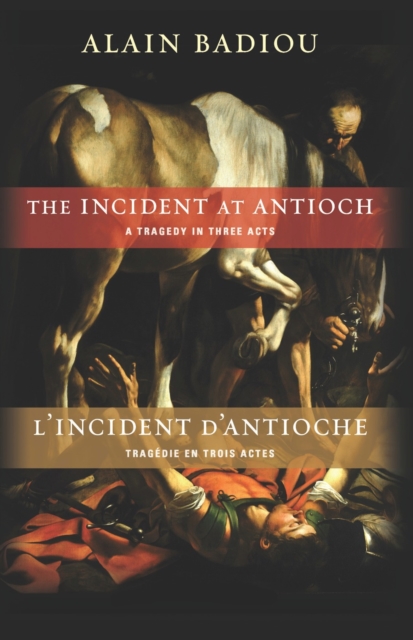
The Incident at Antioch: a tragedy in three acts = L'incident d'Antioche : tragedie en trois actes
Widely translated and considered to be the most important philosopher of our time, Alain Badiou is also a novelist and the author of four celebrated comedies and two tragedies. 'The Incident at Antioch' is the last of his plays to be published in French and the first to be published in English, introducing a side of Badiou the Anglophone world has never encountered before.
eBook
Le Bourgeois Gentilhomme
Extrait : \"MONSIEUR JOURDAIN : Et comme l'on parle qu'est-ce que c'est donc que cela ? MAITRE DE PHILOSOPHIE : De la prose. MONSIEUR JOURDAIN : Quoi ? quand je dis: \"Nicole, apportez-moi mes pantoufles, et me donnez mon bonnet de nuit\", c'est de la prose ? MAITRE DE PHILOSOPHIE : Oui, Monsieur. MONSIEUR JOURDAIN : Par ma foi ! il y a plus de quarante ans que je dis de la prose sans que j'en susse rien, et je vous suis le plus oblige du monde de m'avoir appris cela.\"
eBook