
Catalogue Search | MBRL


Are you sure you want to remove the book from the shelf?

{{itemTitle}}
100
result(s) for
"DRAMA / Middle Eastern."
Sort by:
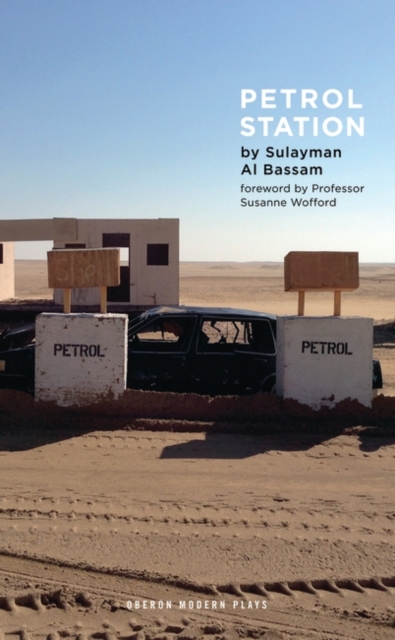
Petrol Station
A remote petrol station lying fallow on the periphery of an unnamed country in the Arabian Gulf provides the background for a familial standoff in which the crimes, secrets, and broken loves of one generation make violent claims on the lives of the next. In this iconic setting, the brooding tensions between two half brothers are set alight by the arrival of a beautiful and dangerous woman on the run from the grips of a vicious civil war. Identity, ambition and betrayal play out in the contexts of war, oil and global migrancy.
eBook

The Prequel: Setting the Analytic Stage
Outside the disciplines of communication and cultural studies, scholarly interest in television programming, especially scripted entertainment, has been overshadowed by attention to digital media, reality TV, and smart phone connectivity. A 2017 University of Maryland conference offered a reconsideration of popular Middle East-produced television dramas and their surprising impacts on national and transnational politics and culture. As conference papers showed, social and historical themes resonated in unexpected ways inside and outside national borders, with state authorities responding, not just with the usual censoring, but with investment in social and historical dramas of their own.
Journal Article

\Al-Halqa\ in Arabic Theatre: An Emerging Site of Hybridity
Traditional Western scholarship on Arabic theatre has borne a strong colonialist imprint, interpreting such theatre almost entirely as a form borrowed from Europe and essentially developed according to European practice. In the later twentieth century, however, more attention has been paid both by Arab scholars and dramatists to performance techniques and practices from their own culture. Of particular importance has been the circular space, the \"halqa\", widely utilized in popular performance, where the audience gathers around and interacts with performers at their center. This essay provides a brief history of the use and symbolism of the \"halqa\", and then discusses its utilization by a number of leading modern dramatists and directors from across the Arab world-from Tayeb Saddiki in Morocco and Abdelkader Alloula in Algeria, to Sa'dallah Wannus in Syria. Major works of each of these dramatists are analyzed to show how each has employed the traditional \"halqa\" as a means to explore liminality, hybridity, and postcolonial agency. In order to retrieve this performance tradition, theatre in the Arab world has become more and more improvisational and self-reflexive, even though such retrieval is still negotiated within the paradoxical parameters of appropriating and dis-appropriating the Western models. This modern effort started with the call for an original/autochthonous Egyptian/Arabic theatre by Yusif Idris, whose masterpiece, al-Farafir (The Flipflops), is still considered a central reference, with a strong aura of authority all over the Arab world. Idris's challenge, in turn, has led some to the \"worship of ancestors\" and to a ceaseless quest for purity in the name of \"authentic\" Arabic theatre. The reality, however, is that even so-called indigenous performing traditions such as that of the \"halqa\" are cultural constructs undergoing continual change.
Journal Article
Performance Review: Thousand Nights
Thousand Nights was the first Modern Arab Drama Festival in held in Jaffa in Tel Aviv, Israel, in May 2006. Al-Saraya Theatre of Jaffa produced the seven-day festival that included nine plays by Syrian, Egyptian, and Palestinian authors. Ranging from staged readings to full-scale productions, the event included works by Tawfiq al-Hakim, Mahmoud Taymour, Hussein Barghouti, Lenin El-Ramly, Mahmoud 'Adwan, Moeen Bseiso, and others.
Journal Article
Book Review: \Dissident Syria: Making Oppositional Arts Official\
\"Dissident Syria: Making Oppositional Arts Official,\" by Miriam Cooke, is reviewed (Duke University Press, 2007). The book describes meeting, and recounts conversations with, Syrian political artists and intellectuals during Cooke's residence in Damascus between autumn 1995 and spring 1996. These memories serve as the launching ground for analysis of oppositional films, plays, poetry, novels, and sculpture produced between 1989 and 1996 - the first date marking the end of the Soviet system, and the second marking the point of her direct contact with artists as well as the rise of communication technologies that would undermine Ba'ath control of cultural production.
Book Review

Three romances of Eastern conquest
This volume brings together three little-known works by key playwrights from the late sixteenth-century golden age of English drama. All three convey the public theatre’s fascination with travel and adventure through the popular genre of heroic romance, while reflecting the contemporaries’ wide range of responses to cross-cultural contacts with the Muslim East and the Mediterranean challenges posed by the Ottoman empire.The volume presents the first modern-spelling editions of the three plays, with extensive annotations catering for specialised scholars while also making the texts accessible to students and theatregoers. A detailed introduction discusses issues of authorship, dates and sources, and sets the plays in their historical and cultural contexts, offering exciting insights on Elizabethan performance strategies, printing practices, and the circulation of knowledge and stereotypes related to ethnic and religious difference.
eBook

Contemporary british drama
This book offers an extended analysis of writers and theatre companies in Britain since 1995, and explores them alongside recent cultural, social and political developments. Referencing well-known practitioners from modern theatre, this book is an excellent introduction to how contemporary drama is made and analysed.
eBook

The Unmaking of the Arab Intellectual
In this book Zeina G. Halabi examines the figure of the intellectual as prophet, national icon, and exile in contemporary Arabic literature and film. Staging a comparative dialogue with writers and critics such as Elias Khoury, Edward Said, Jurji Zaidan, and Mahmoud Darwish, Halabi focuses on new articulations of loss, displacement, and memory in works by Rabee Jaber, Elia Suleiman, Rawi Hage, Rashid al-Daif, and Seba al-Herz. She argues that the ambivalence and disillusionment with the role of the intellectual in contemporary representations operate as a productive reclaiming of the ‘political’ in an allegedly apolitical context. The Unmaking of the Arab Intellectual offers the critical tools to understand the evolving relations between the intellectual and power, and the author and the text in the hitherto uncharted contemporary era.
eBook
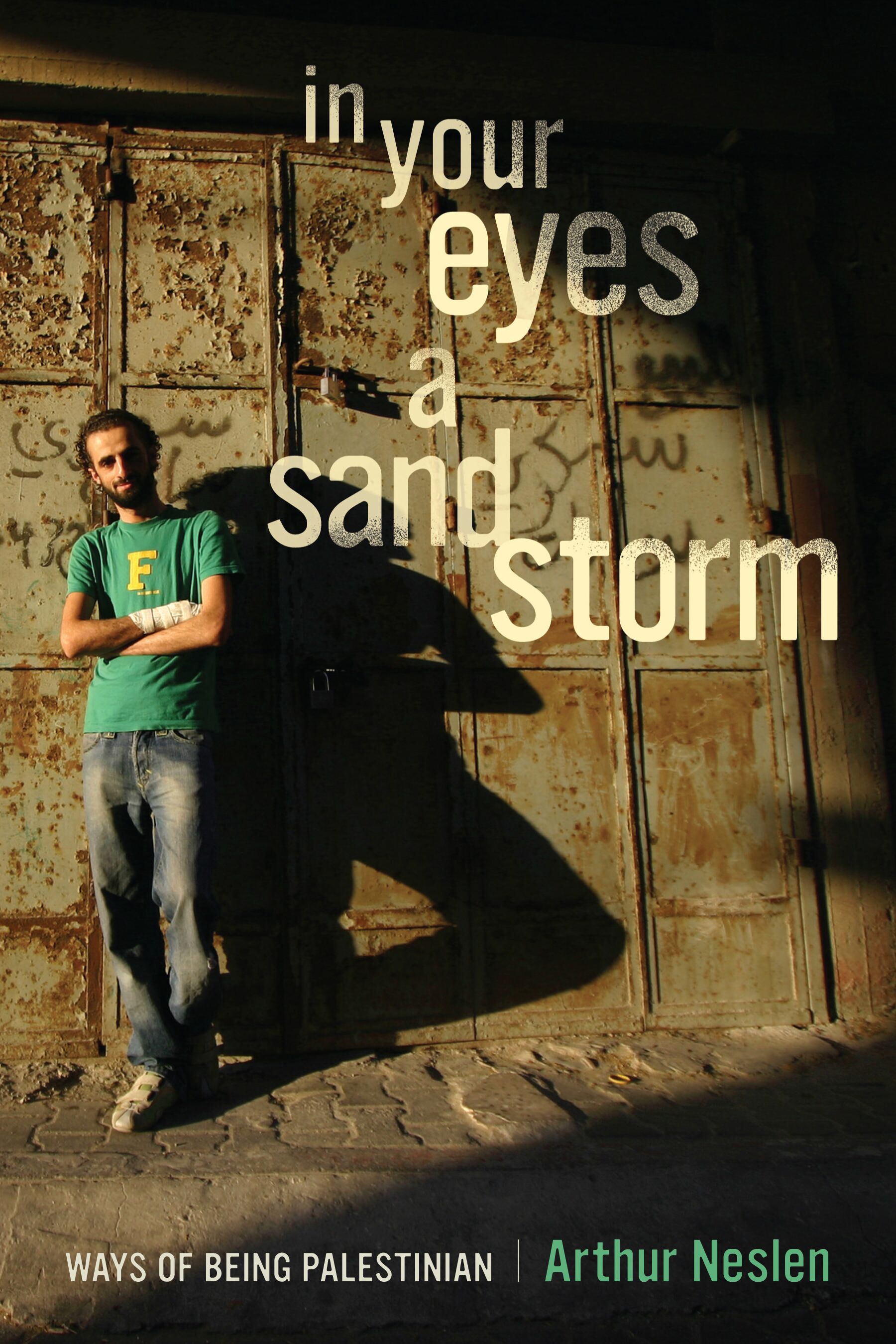
In Your Eyes a Sandstorm
Who are the Palestinians? In this compelling book of interviews, Arthur Neslen reaches beyond journalistic clichés to let a wide variety of Palestinians answer the question for themselves. Beginning in the present with Bisan and Abud, two traumatized children from Jenin’s refugee camp, the book’s narrative arcs backwards through the generations to come full circle with two elderly refugees from villages that the children were named after. Along the way, Neslen recounts a history of land, resistance, exile, and trauma that begins to explain Abud’s wish to become a martyr and Bisan’s dream of a Palestine empty of Jews. Senior Fatah and Hamas figures relate key events of the Palestinian experience—the Second Intifada, Oslo Process, First Intifada, Thawra, 1967 War, the Naqba, and the Great Arab Revolt of 1936—in their own words. The extraordinary voices of women, children, farmers, fighters, drug dealers, policeman, doctors, and others, spanning the political divide from Salafi Jihadists to Israeli soldiers, bring the Palestinian story to life even as their words sow seeds of hope in the scorched Palestinian earth.
eBook

The Immigrant Critic as a Writer: Spirituality in Mikhail Nu’ayma’s Ayoub (1967)
In the early twentieth century, many Arab American writers who were recent immigrants to the United States considered themselves pioneers with a global vision. Many of them were suffering from feelings of alienation because they came from poor backgrounds and escaped to find that capitalism governs everyday living. Therefore, the main interest of the leading writers was promoting more spirituality in their literary works, especially by those who were writing primarily in Arabic. Nu'ayma who wrote in Arabic wanted to emphasize the importance of following a spiritual path in life in modern-day living in his play Ayoub. As a writer and a critic, Nu’ayma believed in the mystical aspects of literature, the power of language, and the importance of literary works in imparting spirituality in society. Living in the United States, he knew many Arab American, Russian, and American critics and writers with whom he shared literary interests and critical thoughts. In Nu’ayma’s book The Ghirbal, he put forth critical ideas that he believed should govern literary composition. His mystical play, Ayoub (1967), was constructed as a literary model that illustrated the importance of rejuvenation in the Arabic language, the significance of mysticism in drama, and the role of literature in transforming society. The following paper traces Mikhail Nu’ayma’s critical views in his play, Ayoub (1967) and discusses the theme of alienation in relations to Nu’ayma’s spiritual outlook.
Journal Article