
Catalogue Search | MBRL


Are you sure you want to remove the book from the shelf?

{{itemTitle}}
339,093
result(s) for
"DRUG CONTROL"
Sort by:

The Other Side of Cannabis
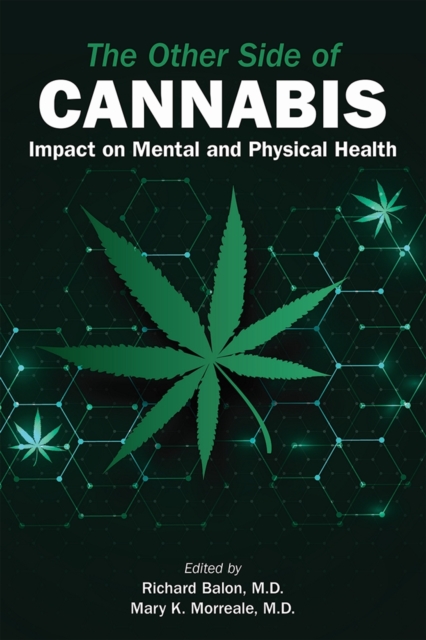
Although federal law in the United States still prohibits the use, possession, and sale of cannabis containing more than 0.3% THC, 24 states, the District of Columbia, and three U.S. territories have legalized the recreational use of marijuana. This trend is also seen in other countries, including Canada, South Africa, and Uruguay. Studies show that the prevalence of cannabis use disorder among people who use cannabis is relatively high. As the business of cannabis—both legal and illicit—and its use continue to grow, mental health and medical professionals must be prepared to address the effects of cannabis on the mind and body. Equipping providers with the relevant information is the intention of The Other Side of Cannabis. Relying on the insights of experts from around the world, this volume examines, among many other topics: • The frequency of use and deleterious effects of cannabis on adolescents, adults, and older adults• The link between cannabis and psychosis• The relationship between cannabis and posttraumatic stress disorder and anxiety disorders• The effects of cannabis on fertility—both male and female• The mechanisms and efficacy of cannabinoids on treating chronic pain Extensively referenced, this guide is rich in figures and tables for ease of reference. Key points at the end of each chapter aid in the retention and recall of the most important information. Readers will come away with a comprehensive understanding of the detrimental impact of cannabis use and be better positioned to educate patients, the public, and policymakers.
eBook


Drug War Mexico
In this controversial book, Watt and Zepeda contend that the failing 'war on drugs' in Mexico, launched by president Felipe Calerón and funded by US military aid, is in fact a pretext for a US-backed strategy to bolster unpopular neoliberal policies, a weak yet authoritarian government, and a radically unfair status quo.
eBook


Shooting Up: Counterinsurgency and the War on Drugs
Most policymakers see counterinsurgency and counternarcotics policy as two sides of the same coin. Stop the flow of drug money, the logic goes, and the insurgency will wither away. But the conventional wisdom is dangerously wrongheaded, as Vanda Felbab-Brown argues in Shooting Up.
eBook

The war on drugs in the Americas
\"The War on Drugs in the Americas brings together the history of the War on Drugs in the US and Latin America to reveal how, since 1914, when the US first criminalized the non-medical use of narcotics, the trade and violence associated with drugs has developed throughout the hemisphere. This concise and accessible book provides an overview of geographic, historical, economic, and social dimensions of the War on Drugs throughout the past century. Notable figures, popular drugs, competing theories, and significant historical events take center stage, as the story moves between macro analysis and micro details. Aside from infamous cartel leaders like Colombia's Pablo Escobar and Mexico's El Chapo Guzman, the reader learns about equally-important but lesser-known Latin American and US traffickers. In addition to counter-narcotics giants, readers learn about the Law Enforcement Against Prohibition (LEAP), DEA agents working to fight pharmaceutical companies and distributors, cutting-edge researchers and politicians that have pushed for and against the war. The War on Drugs in the Americas is essential reading for students studying Latin American History, International Studies or Politics through its clear and objective narrative of the origins, impact, and debates behind the War on Drugs in the US and Latin America\"-- Provided by publisher.
Book

Prescription Drug Monitoring and Dispensing of Prescription Opioids
Objective. In the United States, per-capita opioid dispensing has increased concurrently with analgesic-related mortality and morbidity since the 1990s. To deter diversion and abuse of controlled substances, most states have implemented electronic prescription drug monitoring programs (PDMPs). We evaluated the impact of state PDMPs on opioid dispensing. Methods. We acquired data on opioids dispensed in a given quarter of the year for each state and the District of Columbia from 1999 to 2008 from the Automation of Reports and Consolidated Orders System and converted them to morphine milligram equivalents (MMEs). We used multivariable linear regression modeling with generalized estimating equations to assess the effect of state PDMPs on per-capita dispensing of MMEs. Results. The annual MMEs dispensed per capita increased progressively until 2007 before stabilizing. Adjusting for temporal trends and demographic characteristics, implementation of state PDMPs was associated with a 3% decrease in MMEs dispensed per capita (p= 0.68). The impact of PDMPs on MMEs dispensed per capita varied markedly by state, from a 66% decrease in Colorado to a 61% increase in Connecticut. Conclusions. Implementation of state PDMPs up to 2008 did not show a significant impact on per-capita opioids dispensed. To control the diversion and abuse of prescription drugs, state PDMPs may need to improve their usability, implement requirements for committee oversight of the PDMP, and increase data sharing with neighboring states.
Journal Article


Opium’s Orphans
Opium's Orphans is the first full history of drug prohibition and the 'war on drugs'. A no-holds-barred but balanced account, it shows that drug suppression was born of historical accident, not rational design. The war on drugs did not originate in Europe or the USA, and even less with President Nixon, but in China. Two Opium Wars, followed by Western attempts to atone for them, gave birth to an anti-narcotics order that has come to span the globe. But has the war on drugs succeeded? As opioid deaths and cartel violence run rampant, contestation becomes more vocal and marijuana is slated for legalization in many places, Opium's Orphans proposes that it is time to go back to the drawing board.
eBook