
Catalogue Search | MBRL


Are you sure you want to remove the book from the shelf?

{{itemTitle}}
2,265
result(s) for
"Dairying - methods"
Sort by:
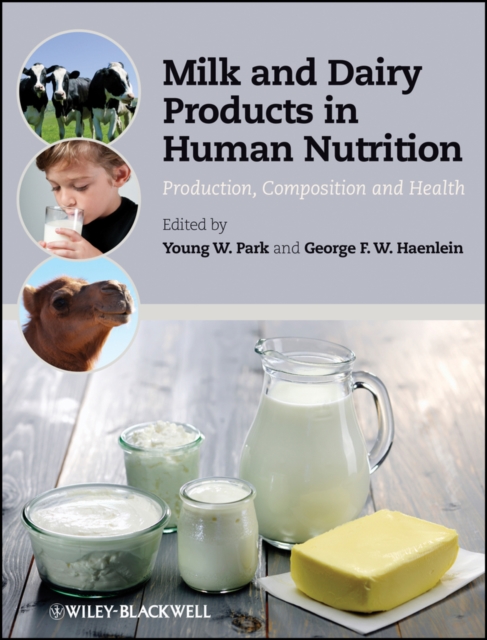
Milk and dairy products in human nutrition : production, composition and health
Milk is nature's most complete food, and dairy products are considered to be the most nutritious foods of all.The traditional view of the role of milk has been greatly expanded in recent years beyond the horizon of nutritional subsistence of infants: it is now recognized to be more than a source of nutrients for the healthy growth of children and.
eBook


Estimation of spatial and temporal variability of pasture growth and digestibility in grazing rotations coupling unmanned aerial vehicle (UAV) with crop simulation models
Systematic monitoring of pasture quantity and quality is important to match the herd forage demand (pasture removal by grazing or harvest) to the supply of forage with adequate nutritive value. The aim of this research was to monitor, assess and manage changes in pasture growth, morphology and digestibility by integrating information from an Unmanned Aerial Vehicle (UAV) and two process-based models. The first model, Systems Approach to Land Use Sustainability (SALUS), is a process-based crop growth model used to predict pasture regrowth based on soil, climate, and management data. The second model, Morphogenetic and Digestibility of Pasture (MDP), uses paddock-scale values of herbage mass as input to predict leaf morphogenesis and forage nutritive value. Two field experiments were carried out on tall fescue- and ryegrass-based pastures under rotational grazing with lactating dairy cattle. The first experiment was conducted at plot scale and was used to calibrate the UAV and to test models. The second experiment was conducted at field scale and was used to test the UAV's ability to predict pasture biomass under grazing rotation. The Normalized Difference Vegetation Index (NDVI) calculated from the UAV's multispectral reflectance (n = 72) was strongly correlated (p < 0.001) to plot measurements of pasture biomass (R2 = 0.80) within the range of ~226 and 4208 kg DM ha-1. Moreover, there was no difference (root mean square error, RMSE < 500 kg DM ha-1) between biomass estimations by the UAV (1971±350 kg ha-1) and two conventional methods used as control, the C-Dax proximal sensor (2073±636 kg ha-1) and ruler (2017±530 kg ha-1). The UAV approach was capable of mapping at high resolution (6 cm) the spatial variability of pasture (16 ha). The integrated UAV-modeling approach properly predicted spatial and temporal changes in pasture biomass (RMSE = 509 kg DM ha-1, CCC = 0.94), leaf length (RMSE = 6.2 cm, CCC = 0.62), leaf stage (RMSE = 0.7 leaves, CCC = 0.65), neutral detergent fiber (RMSE = 3%, CCC = 0.71), digestibility of neutral detergent fiber (RMSE = 8%, CCC = 0.92) and digestibility of dry matter (RMSE = 5%, CCC = 0.93) with reasonable precision and accuracy. These findings therefore suggest potential for the present UAV-modeling approach for use as decision support tool to allocate animals based on spatially and temporally explicit predictions of pasture biomass and nutritive value.
Journal Article


Hot topic: A unified approach to utilize phenotypic, full pedigree, and genomic information for genetic evaluation of Holstein final score
The first national single-step, full-information (phenotype, pedigree, and marker genotype) genetic evaluation was developed for final score of US Holsteins. Data included final scores recorded from 1955 to 2009 for 6,232,548 Holsteins cows. BovineSNP50 (Illumina, San Diego, CA) genotypes from the Cooperative Dairy DNA Repository (Beltsville, MD) were available for 6,508 bulls. Three analyses used a repeatability animal model as currently used for the national US evaluation. The first 2 analyses used final scores recorded up to 2004. The first analysis used only a pedigree-based relationship matrix. The second analysis used a relationship matrix based on both pedigree and genomic information (single-step approach). The third analysis used the complete data set and only the pedigree-based relationship matrix. The fourth analysis used predictions from the first analysis (final scores up to 2004 and only a pedigree-based relationship matrix) and prediction using a genomic based matrix to obtain genetic evaluation (multiple-step approach). Different allele frequencies were tested in construction of the genomic relationship matrix. Coefficients of determination between predictions of young bulls from parent average, single-step, and multiple-step approaches and their 2009 daughter deviations were 0.24, 0.37 to 0.41, and 0.40, respectively. The highest coefficient of determination for a single-step approach was observed when using a genomic relationship matrix with assumed allele frequencies of 0.5. Coefficients for regression of 2009 daughter deviations on parent-average, single-step, and multiple-step predictions were 0.76, 0.68 to 0.79, and 0.86, respectively, which indicated some inflation of predictions. The single-step regression coefficient could be increased up to 0.92 by scaling differences between the genomic and pedigree-based relationship matrices with little loss in accuracy of prediction. One complete evaluation took about 2h of computing time and 2.7 gigabytes of memory. Computing times for single-step analyses were slightly longer (2%) than for pedigree-based analysis. A national single-step genetic evaluation with the pedigree relationship matrix augmented with genomic information provided genomic predictions with accuracy and bias comparable to multiple-step procedures and could account for any population or data structure. Advantages of single-step evaluations should increase in the future when animals are pre-selected on genotypes.
Journal Article

environmental impact of dairy production: 1944 compared with 2007
A common perception is that pasture-based, low-input dairy systems characteristic of the 1940s were more conducive to environmental stewardship than modern milk production systems. The objective of this study was to compare the environmental impact of modern (2007) US dairy production with historical production practices as exemplified by the US dairy system in 1944. A deterministic model based on the metabolism and nutrient requirements of the dairy herd was used to estimate resource inputs and waste outputs per billion kg of milk. Both the modern and historical production systems were modeled using characteristic management practices, herd population dynamics, and production data from US dairy farms. Modern dairy practices require considerably fewer resources than dairying in 1944 with 21% of animals, 23% of feedstuffs, 35% of the water, and only 10% of the land required to produce the same 1 billion kg of milk. Waste outputs were similarly reduced, with modern dairy systems producing 24% of the manure, 43% of CH₄, and 56% of N₂O per billion kg of milk compared with equivalent milk from historical dairying. The carbon footprint per billion kilograms of milk produced in 2007 was 37% of equivalent milk production in 1944. To fulfill the increasing requirements of the US population for dairy products, it is essential to adopt management practices and technologies that improve productive efficiency, allowing milk production to be increased while reducing resource use and mitigating environmental impact.
Journal Article

AI-enhanced real-time cattle identification system through tracking across various environments
Video-based monitoring is essential nowadays in cattle farm management systems for automated evaluation of cow health, encompassing body condition scores, lameness detection, calving events, and other factors. In order to efficiently monitor the well-being of each individual animal, it is vital to automatically identify them
in real
time. Although there are various techniques available for cattle identification, a significant number of them depend on radio frequency or visible ear tags, which are prone to being lost or damaged. This can result in financial difficulties for farmers. Therefore, this paper presents a novel method for tracking and identifying the cattle with an RGB image-based camera. As a first step, to detect the cattle in the video, we employ the YOLOv8 (You Only Look Once) model. The sample data contains the raw video that was recorded with the cameras that were installed at above from the designated lane used by cattle after the milk production process and above from the rotating milking parlor. As a second step, the detected cattle are continuously tracked and assigned unique local IDs. The tracked images of each individual cattle are then stored in individual folders according to their respective IDs, facilitating the identification process. The images of each folder will be the features which are extracted using a feature extractor called VGG (Visual Geometry Group). After feature extraction task, as a final step, the SVM (Support Vector Machine) identifier for cattle identification will be used to get the identified ID of the cattle. The final ID of a cattle is determined based on the maximum identified output ID from the tracked images of that particular animal. The outcomes of this paper will act as proof of the concept for the use of combining VGG features with SVM is an effective and promising approach for an automatic cattle identification system
Journal Article
Invited review: Body condition score and its association with dairy cow productivity, health, and welfare
The body condition score (BCS) of a dairy cow is an assessment of the proportion of body fat that it possesses, and it is recognized by animal scientists and producers as being an important factor in dairy cattle management. The scale used to measure BCS differs between countries, but low values always reflect emaciation and high values equate to obesity. The intercalving profile of BCS is a mirror image of the milk lactation profile. Cows lose condition for 50 to 100 d postcalving, because of homeorhetic changes that occur in the somatotropic axis and the sensitivity of peripheral tissues to insulin, and the upregulation of lipolytic pathways in adipose tissue. Management and feeding have little effect on early postcalving BCS loss (wk 1 to 4 postcalving) until the natural period of insulin resistance has passed and the somatotropic axis has recoupled. There is evidence, however, that management and diet can influence the timing of recoupling of the somatotropic axis and the sensitivity of peripheral tissues to insulin, and gene expression differences in adipose tissue 30 d in milk confirm an effect of energy intake on lipogenic enzymes. The BCS in which a cow calves, nadir BCS, and the amount of BCS she loses postcalving are associated with milk production, reproduction, and health. Body condition score may also be a valid indicator of animal welfare, but further research is required to determine the effect of BCS and BCS change on how a cow “feels.” Although the actual strength of the association may vary, there is relative consistency in the associations among calving and nadir BCS, and BCS change on milk production, postpartum anestrous, the likelihood of a successful pregnancy and days open, the risk of uterine infection, and the risk of metabolic disorders. For many production and health variables, the association with BCS is nonlinear, with an optimum calving BCS of 3.0 to 3.25 (5-point scale); lower calving BCS is associated with reduced production and reproduction, whereas calving BCS ≥3.5 (5-point scale) is associated with a reduction in early lactation dry matter intake and milk production and an increased risk of metabolic disorders. Ongoing research into the automation of body condition scoring suggests that it is a likely candidate to be incorporated into decision support systems in the near future to aid producers in making operational and tactical decisions.
Journal Article
Automated monitoring of brush use in dairy cattle
Access to brushes allows for natural scratching behaviors in cattle, especially in confined indoor settings. Cattle are motivated to use brushes, but brush use varies with multiple factors including social hierarchy and health. Brush use might serve an indicator of cow health or welfare, but practical application of these measures requires accurate and automated monitoring tools. This study describes a machine learning approach to monitor brush use by dairy cattle. We aimed to capture the daily brush use by integrating data on the rotation of a mechanical brush with data on cow identify derived from either 1) low-frequency radio frequency identification or 2) a computer vision system using fiducial markers. We found that the computer vision system outperformed the RFID system in accuracy, and that the machine learning algorithms enhanced the precision of the brush use estimates. This study presents the first description of a fiducial marker-based computer vision system for monitoring individual cattle behavior in a group setting; this approach could be applied to develop automated measures of other behaviors with the potential to better assess welfare and improve the care for farm animals.
Journal Article

Evaluation of Different Sensor Systems for Classifying the Behavior of Dairy Cows on Pasture
Monitoring animal behavior using sensor technologies requires prior testing under varying conditions because behaviors can differ significantly, such as between grazing and confined cows. This study aimed to validate several sensor systems for classifying rumination and lying behaviors in cows on pasture under different environmental conditions, compare the sensors’ performance at different time resolutions, and evaluate a correction algorithm for rumination data. Ten Simmental dairy cows were monitored on pasture, each simultaneously equipped with an ear-tag accelerometer (ET), two different leg-mounted accelerometers (LMs), and a noseband sensor (NB). Indirect visual observations using drone-recorded video footage served as the gold standard for validation. The concordance correlation coefficient (CCC) for rumination time was very high for both the ET and NB (0.91–0.96) at a 10 min time resolution. Applying the correction algorithm to 1 min data improved the CCC for the NB from 0.68 to 0.89. For lying time, the CCC was moderate for the ET (0.55) but nearly perfect for both LMs (0.99). In conclusion, both sensors evaluated for classifying rumination are suitable for cows on pasture. We recommend using a correction algorithm for 1 min NB data. For the measurement of lying time, the LMs significantly outperformed the ET.
Journal Article