
Catalogue Search | MBRL


Are you sure you want to remove the book from the shelf?

{{itemTitle}}
3,440
result(s) for
"Dance -- Philosophy"
Sort by:


The Dancing Body in Renaissance Choreography
Renaissance dance treatises claim that the dance is a language but do not explain how or what dancing communicates. Since the body is the instrument of this hypothetical language, The Dancing Body in Renaissance Choreography problematizes the absence of the dancing body in treatises in order to reconstruct it through a series of intertextual readings triggered by Thoinot Arbeau’s definition of dance as a mute rhetoric in Orchésographie . This book shows that the oratorical model for Arbeau’s definition of the dance is epideictic and that although one cannot equate dance and oratorical action, the ends of oratorical action are those of dance: persuasion through charm and emotion.
eBook


Platons tanzende Stadt : Moralpsychologie und Chortanz in den Nomoi
Dieses Buch deckt die Hauptgründe für die auffallende Prominenz des Chortanzes in Platons Nomoi auf und bietet eine innovative Deutung der komplexen Komposition des Dialogs. This book uncovers the principal reasons for the striking prominence of choral dance in Plato's Laws and offers a highly innovative account of the dialogue's complex composition.
eBook

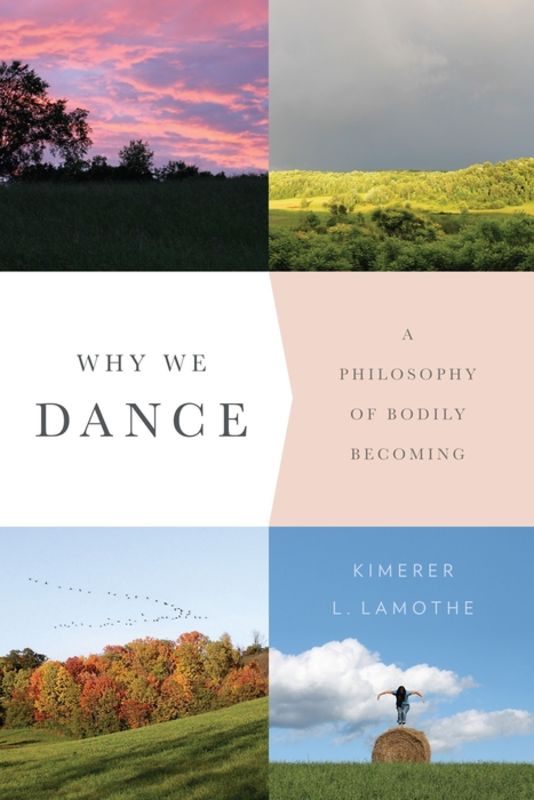
Why we dance
Within intellectual paradigms that privilege mind over matter, dance has long appeared as a marginal, derivative, or primitive art. Drawing support from theorists and artists who embrace matter as dynamic and agential, this book offers a visionary definition of dance that illuminates its constitutive work in the ongoing evolution of human persons. Why We Dance introduces a philosophy of bodily becoming that posits bodily movement as the source and telos of human life. Within this philosophy, dance appears as an activity that humans evolved to do as the enabling condition of their best bodily becoming. Weaving theoretical reflection with accounts of lived experience, this book positions dance as a catalyst in the development of human consciousness, compassion, ritual proclivity, and ecological adaptability. Aligning with trends in new materialism, affect theory, and feminist philosophy, as well as advances in dance and religious studies, this work reveals the vital role dance can play in reversing the trajectory of ecological self-destruction along which human civilization is racing.
eBook

The Body Is a Clear Place
The Body is a Clear Place is a collection of ten intelligent, lyrical essays that serve as a testament to Erick Hawkins' long career in dance. The last two essays were written especially for this volume while the first eight essays were collected from speeches, statements and articles Hawkins has written. The essays are framed by a foreword written by Alan Kriegsman.
Essay titles are: The Rite in Theatre; Theatre Structure for a New Dance Poetry; Modern Dance as a Voyage of Discovery; Questions and Answers; The Body is a Clear Place; My Love Affair with Music; Inmost Heaven, or The Normative Ideal; Dance as a Metaphor of Existence; The Principle of a Thing; Art in Its Second Function.
Accompanying the text is a photo section illuminating Hawkins' work as a dancer and choreographer from his early years on. He has created an aesthetic of movement based on the notions that art can exist both for its own sake and as a means towards deeper enlightenment; that dance is a metaphor for existence; that all body movement contributes to the moment-to-moment wonder of living.
Philosopher, experienced performer and pithy observer of the American modern dance scene, this elder spokesman for modern dance-who Anna Kisselgoff calls \"the poet of modern dance\"-challenges us to revolutionize our responses to movement and dance. Includes 12 illustrations.
eBook

Drawing the surface of dance : a biography in charts
\"Soloing on the page, choreographer Annie-B Parson rethinks choreography as dance on paper. Parson draws her dances into new graphic structures calling attention to the visual facts of each dance work she has made. These drawings serve as both maps of her pieces in the aftermath of performance, and as a consideration of the elements of dance itself. Within the duality of form and content, this book explores the meanings that form itself holds. Parson's charts of choreaographic ideas inspire new thinking around the shared elements underneath all art making\"-- Provided by publisher.
Book
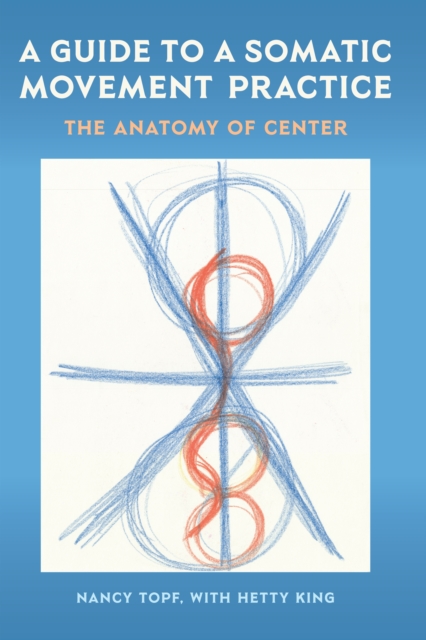
A Guide to a Somatic Movement Practice
An introduction to embodied movement through the work of
a dance education pioneer
In this introduction to the work of somatic dance education
pioneer Nancy Topf (1942-1998), readers are ushered on a journey to
explore the movement of the body through a close awareness of
anatomical form and function. Making available the full text of
Topf's The Anatomy of Center for the first time in print,
this guide helps professionals, teachers, and students of all
levels integrate embodied, somatic practices within contexts of
dance, physical education and therapy, health, and mental
well-being.
Hetty King, a movement educator certified in the Topf Technique®,
explains how the ideas in this work grew out of Topf's involvement
in developing Anatomical Release Technique-an important concept in
contemporary dance-and the influence of earlier innovators Barbara
Clark and Mabel Elsworth Todd, founder of the approach to movement
known as \"ideokinesis.\" Featuring lessons written as a dialogue
between teacher, student, and elements of the body, Topf's material
is accompanied by twenty-one activities that allow readers to use
the book as a self-guided manual. A Guide to a Somatic Movement
Practice is a widely applicable entry point into the tradition
of experiential anatomy and its mindful centering of the living,
breathing body.
eBook