
Catalogue Search | MBRL


Are you sure you want to remove the book from the shelf?

{{itemTitle}}
655
result(s) for
"Dance Humor."
Sort by:

And then we danced : a voyage into the groove
\"Tackling a wide range of forms (including ballet, hip-hop, jazz, ballroom, tap, contact improvisation, Zumba, swing), this grand tour takes us through the works and careers of luminaries ranging from Bob Fosse to George Balanchine, Twyla Tharp to Arthur Murray. Rich in insight and humor, Alford mines both personal experience and fascinating cultural history to offer a witty and ultimately moving portrait of how dance can express all things human\"-- Provided by publisher.
Book

Humour and Irony in Dutch Post-war Fiction Film
If Dutch cinema is examined in academic studies, the focus is usually on pre-war films or on documentaries, but the post-war fiction film has been sporadically addressed. Many popular box-office successes have been steeped in jokes on parochial conflicts, vulgar behavior and/or on sexual display, towards which Dutch people have often felt ambivalent. At the same time, something like a 'Hollandse school', a term first coined in the 1980s, has manifested itself more firmly, with the work of Alex van Warmerdam, pervaded in deadpan irony as its biggest eye-catcher. Using seminal theories of humor and irony as an angle, this study scrutinizes a great number of Dutch films on the basis of categories such as low-class comedies; neurotic romances; deliberate camp; cosmic irony, or grotesque satire. Hence, Humour and Irony in Dutch Post-war Fiction Film makes surprising connections between films from various decades: Flodder and New Kids Turbo; Spetters and Simon; Rent a Friend and Ober;
eBook

The role of leader humor and employee innovative behavior: Dancing with job stressors
Building on the transactional stress model, this study examined the moderating effect of leader humor and employee coping humor on the stressor-appraisal relationship, and the role of cognitive appraisal in predicting innovative behavior. We collected data from 353 members of
43 teams in Mainland China. The findings indicated that leader humor and employee coping humor predicted the stressor-appraisal relationship. Specifically, leader affiliative humor and employee coping humor strengthened the challenge stressors???challenge appraisal relationship. The
hindrance stressor-hindrance appraisal relationship was strengthened by leader aggressive humor but weakened by leader affiliative humor and employee coping humor. Challenge appraisal mediated the positive relationship between challenge stressors and innovative behavior, while hindrance
appraisal mediated the negative relationship between hindrance stressors and innovative behavior. We have extended the literature by investigating the mediating role of cognitive appraisal in the relationship between job stressors and employee innovation.
Journal Article
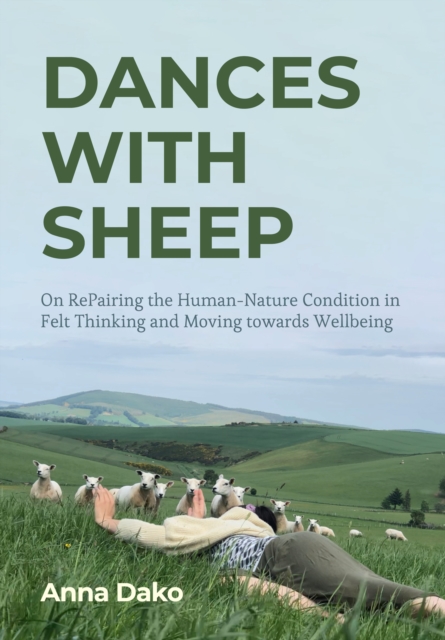
Dances with Sheep
Dances with Sheep presents the methodology of Felt Thinking in Movement as an eco-somatic practice inspired by re-thinking nature of being human, as well as contextualises it within wider frameworks of cultural, philosophical and therapeutic viewpoints on wellbeing. Felt Thinking is a self-inquiry practice grounded in somatic movement experience that originates in site-specific and embodied dialoguing between what is felt and what shapes as a responsive thought, as creative movement itself, and which paths ways for ecologically inclusive care for being well with self and other. The book elaborates on creative processes in and with the natural environment in relation to the movers' overall wellbeing and covers creative journeys of opening up to the living agency of Nature itself through the emergent three phases of experiential relatedness in embodied experience of the self. The book presents its original contribution to eco-phenomenology with its ontological principle of embodied relationality in towards and away from movement as a primal gateway to wellbeing and its creative inter-constitution. An intriguing and inspiring resource for students, practitioners, educators, self-learners, therapists and researchers. Foreword by Sondra Fraleigh.
eBook

Taking Humor Seriously on TikTok
Humor and play are at the center of TikTok culture. Through the platform’s unique functionalities such as the “Use this Sound” and “Duet” features, people use and repurpose sounds in combination with dance and other performative “challenges” that invite imitation and transformation in novel and creative ways. Users have found on TikTok an ideal site to engage in memetic culture for a wide variety of prosocial aims: from calling out China’s treatment of Uighurs to “memeing” politicians for their poor commitments to matters of concern like climate change. All too often, though, users on TikTok also participate in practices that can advertently and inadvertently be harmful, such as viral trends trivializing police brutality and domestic violence and racist parodies. In a moment where various countries are discussing new regulations to push platforms to address, consistently and transparently, illegal and lawful harmful content and conduct, this commentary argues that humor should be taken seriously for online safety.
Journal Article
Playful Trauma: TikTok Creators and the Use of the Platformed Body in Times of War
Amid the Russian invasion of Ukraine, TikTok has emerged as a pivotal platform, where creators utilize its compressed video formats to mediate the harsh realities of war zones. In this article, we examine 97 videos produced by 12 Ukrainian and Russian TikTok creators in response to the 2022 war in Ukraine. We focus on the playful embodiment of trauma using digital ethnography, analyzing creators’ practices and their interconnected memetic communication on TikTok. We identified the use of play through three dynamic practices where platforms, bodies, and trauma converge: (1) the utilization of POV (point-of-view) aesthetic in shareable templates to convey the realities of war from engaging first-person perspectives; (2) the incorporation of dance as a means of embodied creative expression and amplification of trauma; and (3) the harnessing of platform features to facilitate whimsical dialogues with followers about life under war. We argue that playfulness is entrenched in and enacted through platform vernacular modes, driving creators to forge communal ties during adversities and shape the ongoing representation of trauma and its accelerated visibility in digital spaces. We present the concept of playful trauma as a framework for understanding the structural dissonance that arises when creators utilize their bodies alongside platform-specific humorous, ironic, or subversive dialects to perform and amplify the gravity of trauma. This tension provides a unique space for creators to convert their shared experiences of grief and resilience into participatory coping mechanisms. In doing so, they subject and harness their playful platformed body as both the medium and the message, documenting injustices, bearing witness, and galvanizing crowds into action during times of war.
Journal Article

Between the Dance that Registers and the Library that Dances, Dimenti turns Memory into History
Created in 1998, the Dimenti Group from Salvador (BA) produces artistic works that blur the lines between scenic languages and modes of production, until finally becoming Dimenti Produções Culturais, a creative environment that today encompasses audiovisual, editorial and phonographic productions, events and festivals, among others. In this article the focus is on Tombé (2001) and Biblioteca de dança (2017) dance performances, as examples of this diversified production. The aim is to point out, from the perspective of its members, the authorial traits that persist in Dimenti’s creative trajectory, such as comicality, non-linearity and the incorporation of an ideological discourse of otherness.
Journal Article

Dancing Plague: Archives of Celebration and Care in Bill T. Jones and Arnie Zane's Secret Pastures
Following the cancellation of influential contemporary choreographer Bill T. Jones's highly anticipated return to the stage in spring 2020, Jones reflected that COVID-19 was his \"second plague.\" In referencing the AIDS epidemic that upended his career and personal life, Jones located methods of enduring not in the \"unprecedented\" present, but in the past. This essay considers the irreverent and buoyant Secret Pastures (1984), a work that reemerged as streaming media during the pandemic, as part of Jones's AIDS repertory. I describe how Secret Pastures' artistic and social archives, and the collaboration and friendship among Jones, Arnie Zane, Keith Haring, Peter Gordon, and Willi Smith documented therein, contain crucial practices of queer survival, particularly that of \"alongsidedness.\" The essay argues that contexts for endurance can be found in the allegedly frivolous, glamorous, playful, humorous, and excessive aesthetics of Secret Pastures as much as they can be identified in, and more typically are ascribed to, more formalist, austere, and tonally serious works like D-Man in the Waters (1989) and Still/Here (1994). Modeling a toolkit of perseverance and flourishing, Secret Pastures reorients popular and academic views of minoritarian, particularly Black, and queer art and life as structured through trauma and scarcity. Secret Pastures shows how the onstage performance serves as a context for offstage friendships. Amid the ongoing hostilities of government abandonment, homophobia, white supremacy, and viral attack, art-making functions as a laboratory for modes of relationality that can endure.
Journal Article

The transhistorical, transcultural life of sausages: From medieval morescas to New Mexican Matachines with Aby Warburg
New Mexican Matachines dances have long been discussed as descendent dances of medieval morescas. This article explores this ‘ancestral relation’, beginning on New Year’s Day in 1896 at the colonial outpost of Cubero, New Mexico. There, the German art historian Aby Warburg met a local shepherd who endeavoured to explain the pantomimic killing of a bull in the dance drama by saying the blood was ‘good for making sausages.’ Accordingly, this article investigates Warburg’s lifelong exploration of Matachines antecedents in the margins of his research on early Italian Renaissance images of medieval festive drama, and ‘headhuntress’ figures, such as Judith and Salome. Warburg’s thoughts on New Mexican Matachines meandered over the course of his life from Aztec sacrifice to medieval morescas, to the Mithras cult. Through these explorations, Warburg pursued a cultural evolutionary theory that would situate New Mexican Matachines as a descendent of antique pagan blood ceremony.
Journal Article

Embracing Aporia: Exploring Arts-Based Methods, Pain, “Playfulness,” and Improvisation in Research on Gender and Social Violence
This article explores the role of play and playfulness—as both methodological and analytical tools—in research on social violence. While play may seem antithetical to both discussions on methods and to studying social violence, we found that actually paying attention to such elements was in fact very productive. This article draws on a series of participatory workshops that engaged theater, dance, and comedy, which were held in Sierra Leone in 2021 that explored various social dimensions of sexual and gender-based violence in rural communities. The “fun” components that are so frequently dismissed in favor of more flat and binary research helped us better understand the complex, and often painful, emotions of women in these communities. We pay particular attention to how singing, which was not originally part of the research plan, became critical to engaging these women on discussions of social violence. We argue that researchers should be more aware and open to the prospects that “play,” “fun,” and improvisation have to offer in research processes, and how such components can themselves be absolutely critical to how we conduct and analyze research, as well as engage with participants, even in relation to sensitive subject matter.
Journal Article