
Catalogue Search | MBRL


Are you sure you want to remove the book from the shelf?

{{itemTitle}}
797
result(s) for
"Dance in motion pictures, television, etc."
Sort by:


Dance and the Hollywood Latina
Dance and the Hollywood Latinaasks why every Latina star in Hollywood history, from Dolores Del Rio in the 1920s to Jennifer Lopez in the 2000s, began as a dancer or danced onscreen. While cinematic depictions of women and minorities have seemingly improved, a century of representing brown women as natural dancers has popularized the notion that Latinas are inherently passionate and promiscuous. Yet some Latina actresses became stars by embracing and manipulating these stereotypical fantasies.Introducing the concepts of \"inbetween-ness\" and \"racial mobility\" to further illuminate how racialized sexuality and the dancing female body operate in film, Priscilla Peña Ovalle focuses on the careers of Dolores Del Rio, Rita Hayworth, Carmen Miranda, Rita Moreno, and Jennifer Lopez.Dance and the Hollywood Latinahelps readers better understand how the United States grapples with race, gender, and sexuality through dancing bodies on screen.
eBook

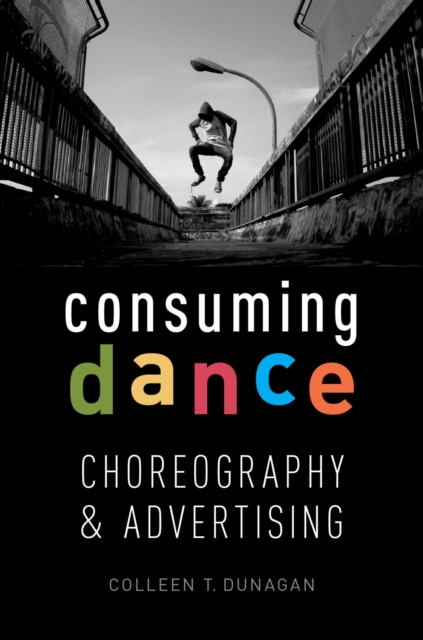
Consuming dance : choreography and advertising
Consuming Dance examines dance in television and online advertising as both cultural product and cultural meaning-maker. The text interweaves semiotics, choreographic analysis, cultural studies, media studies, and critical theory to place contemporary dance-in-advertising in dialogue with other dance media. Grounding contemporary advertising within media and cultural history, the work both analyzes examples from early television and performs semiotic readings of historical references within later ads. Analysis of individual commercials and campaigns reveals how commercials act as rhizomatic assemblages of cultural history as traditional advertising positioning strategies engage with content, conventions, and discourses from other disciplines and cultural forms. The text explores the power of dance in advertising, examining how it generates affect and spectacle in service of both brand identity and the construction of the commodity-sign. This analysis of dance’s power, in turn, reveals advertising’s intertextuality and its contributions to social identity and the construction of the neoliberal subject. Ultimately, the text highlights advertising’s contradictions, exposing how its appropriation of dance functions as a response simultaneously to marketing needs, shifting ideologies, and growing cultural diversity all while continuing to serve the needs of neoliberal capitalism.
eBook


Celluloid classicism : early Tamil cinema and the making of modern Bharatanهaٍtyam
\"This book investigates how two of the most prominent cultural forms of modern South India, Tamil cinema and Bharatanهaٍtyam dance, share complex and deeply intertwined histories. Celluloid classicism is about the entangled emergence of these two modern art forms from the 1930s to the late 1950s, decades that were marked by distinctly new, interocular modes of cultural production in cosmopolitan Madras. This book unsettles received histories of modern Bharatanهaٍtyam by arguing that cinema, in all its technological, moral, and visual complexities, bears heavily and irrevocably upon iterations of this 'classical' dance. Bringing over a decade of archival research into conversations with choreographic analysis and ethnography, this work addresses key questions around the fluid and reciprocal exchange of knowledge between screen and stage versions of Bharatanهaٍtyam in the early decades of the 20th century\"--Back cover
Book
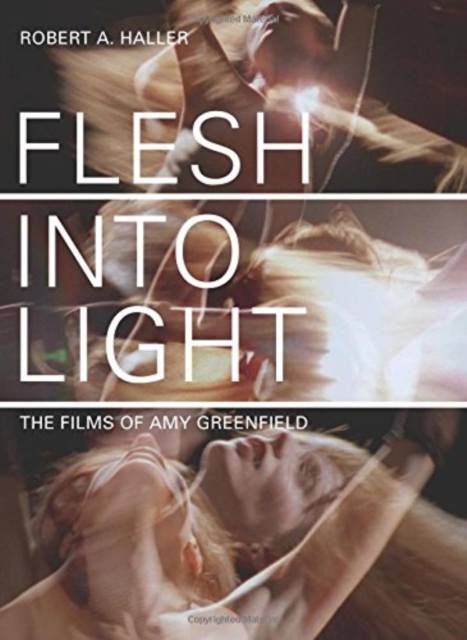
Flesh into light
Over her more than four-decade career, New York-based filmmaker, performer and writer Amy Greenfield has achieved widespread critical acclaim for her genre-bending films which cross the boundaries of experimental film, video art and multimedia performance - from her feature film, Antigone/Rites Of Passion, to her major new live multimedia work, Spirit in the Flesh. Exploring the dynamism of movement and the resilience of the human spirit, Greenfield creates a new visual and kinetic language of cinema. An innovative exploration of an artist whom Cineaste called 'the most important practitioner of experimental film-dance,' Flesh Into Light covers Greenfield's entire career and draws attention to the more than thirty films, holographic sculptures and video installations of this important American artist.
eBook


The Time of Our Lives
A low-budget independent film made by a now defunct video company in the late 1980s, Dirty Dancing became a sleeper hit with a huge, primarily young audience. Even twenty-five years on, the film has found millions of devoted fans around the world through TV, video, and DVD releases. In The Time of Our Lives: Dirty Dancing and Popular Culture editors Yannis Tzioumakis and Siân Lincoln bring together leading scholars of film, media, music, culture, theater, dance, and sociology to examine for the first time the global cultural phenomenon of Dirty Dancing. Tzioumakis and Lincoln begin by assessing Dirty Dancing's cultural impact in the decades since its release and introduce contributors in four sections. Essays in \"Dirty Dancing in Context\" look at the film from several perspectives, including its production and distribution history, its blending of genres, its treatment of race, and its place in the political and visual culture of the 1980s. In \"Questions of Reception, \" contributors examine the many ways that the film has been received since its release, while those in \"The Production of Nostalgia\" focus on the film's often critiqued production of an idealized past. Finally, contributors in \"Beyond the Film\" examine the celebrated synergies that the film achieved in the \"high concept\" film environment of the 1980s, and the final two essays deal with the successful adaptation of the film for the stage. With the enormous cultural impact it has made over the years, Dirty Dancing offers many opportunities for thought-provoking analysis. Fans of the movie and students and scholars of cultural, performance, and film history will appreciate the insight in The Time of Our Lives.
eBook