
Catalogue Search | MBRL


Are you sure you want to remove the book from the shelf?

{{itemTitle}}
889
result(s) for
"Danish language"
Sort by:
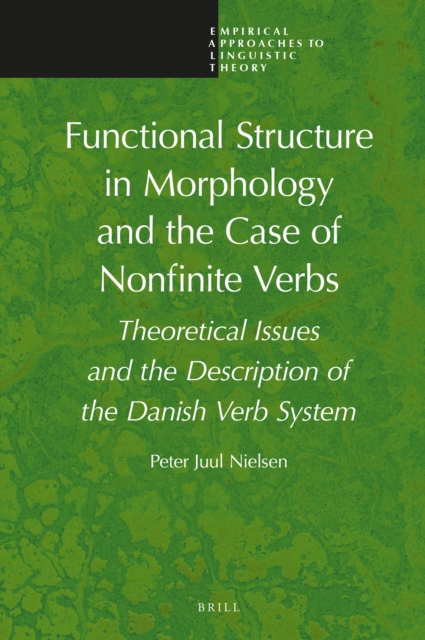
Functional Structure in Morphology and the Case of Nonfinite Verbs
In this book Peter Juul Nielsen examines the foundations of morphological theory from a structural-functional perspective on language as a sign system with the empirical challenge of describing the nonfinite verb forms in Danish as his point of departure.
eBook


Scandinavian song
Scandinavian art songs are a unique expression of the cultures of Sweden, Norway, and Denmark. Although these three countries are distinct from one another, their languages and cultures share many similarities. Common themes found in art and literature include a love of nature, especially of the sea, feelings of longing and melancholy, the contrast between light and dark, the extremes of the northern climate, and lively folk traditions. These shared sensibilities are reflected and expressed in a tangible way through music.
Scandinavian art song has faced several challenges over the years in North America (even in the American Midwest, where descendants of Scandinavian immigrants are concentrated). But matters have changed recently with the recent expansion of diction curricula to cover languages other than English, French, German, and Italian. The primary obstacle remains practical resources for the study of art songs and lyric diction of Sweden, Norway, and Denmark. This guide remedies this problem.
Scandinavian Song is a practical guide to the art songs of Sweden, Norway, and Denmark. Unlike other sources that give at best a cursory overview of lyric diction in the Scandinavian languages, this guide provides practical information, enabling teachers and students to render transcriptions of Swedish, Norwegian, and Danish texts into the International Phonetic Alphabet (IPA)—an absolute necessity for any study of repertoire. An extensive survey of available music, sample IPA transcriptions and translations, as well as a website link with native speakers reciting selected song texts, make this book an invaluable resource for students and professors in North American college, university, and conservatory voice programs.
eBook

Scandinavian song : a guide to Swedish, Norwegian, and Danish repertoire and diction
\"Scandinavian art songs are a unique expression of the cultures of Sweden, Norway, and Denmark. Although these three countries are distinct from one another, their languages and cultures share many similarities. Common themes found in art and literature include a love of nature, especially of the sea, feelings of longing and melancholy, the contrast between light and dark, the extremes of the northern climate, and lively folk traditions. These shared sensibilities are reflected and expressed in a tangible way through music. Scandinavian art song has faced several challenges over the years in North America, but matters have changed with the recent expansion of diction curricula to cover languages other than English, French, German, and Italian. The primary obstacle remains a lack of practical resources for the study of art songs and lyric diction of Sweden, Norway, and Denmark. Scandinavian Song: A Guide to Swedish, Norwegian, and Danish Repertoire and Diction remedies this problem. Unlike other sources that give at best a cursory overview of lyric diction in the Scandinavian languages, this book provides practical information, enabling teachers and students to render transcriptions of text written in these languages into the International Phonetic Alphabet (IPA) -- an absolute necessity for any study of repertoire. An extensive survey of available music and sample IRA transcriptions and translations, as well as a companion website with native speakers reciting selected song texts, make this book an invaluable resource for students and professors in college, university, and conservatory voice programs.\"--Back cover.
Book

Exploring Danish Sign Language in the Late 1970s
Engberg-Pedersen discusses her personal experience and involvement in studying Danish Sign Language (DTS) in the late 1970s.
Journal Article
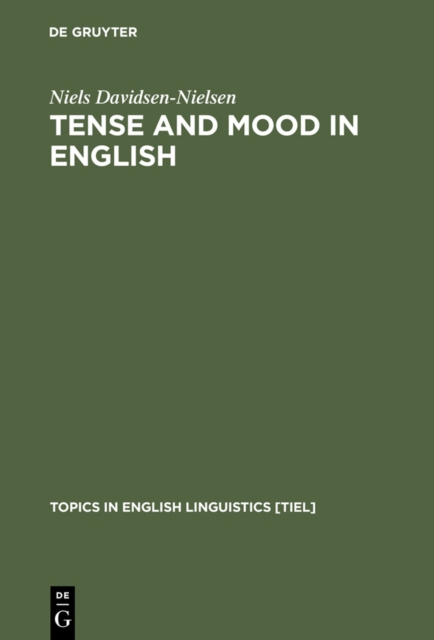
Tense and mood in English : a comparison with Danish
No detailed description available for \"Tense and Mood in English\".
eBook

Children's Consonant Acquisition in 27 Languages: A Cross-Linguistic Review
The aim of this study was to provide a cross-linguistic review of acquisition of consonant phonemes to inform speech-language pathologists' expectations of children's developmental capacity by (a) identifying characteristics of studies of consonant acquisition, (b) describing general principles of consonant acquisition, and (c) providing case studies for English, Japanese, Korean, and Spanish.
A cross-linguistic review was undertaken of 60 articles describing 64 studies of consonant acquisition by 26,007 children from 31 countries in 27 languages: Afrikaans, Arabic, Cantonese, Danish, Dutch, English, French, German, Greek, Haitian Creole, Hebrew, Hungarian, Icelandic, Italian, Jamaican Creole, Japanese, Korean, Malay, Maltese, Mandarin (Putonghua), Portuguese, Setswana (Tswana), Slovenian, Spanish, Swahili, Turkish, and Xhosa.
Most studies were cross-sectional and examined single word production. Combining data from 27 languages, most of the world's consonants were acquired by 5;0 years;months old. By 5;0, children produced at least 93% of consonants correctly. Plosives, nasals, and nonpulmonic consonants (e.g., clicks) were acquired earlier than trills, flaps, fricatives, and affricates. Most labial, pharyngeal, and posterior lingual consonants were acquired earlier than consonants with anterior tongue placement. However, there was an interaction between place and manner where plosives and nasals produced with anterior tongue placement were acquired earlier than anterior trills, fricatives, and affricates.
Children across the world acquire consonants at a young age. Five-year-old children have acquired most consonants within their ambient language; however, individual variability should be considered.
https://doi.org/10.23641/asha.6972857.
Journal Article