
Catalogue Search | MBRL


Are you sure you want to remove the book from the shelf?

{{itemTitle}}
102,361
result(s) for
"Data safety"
Sort by:

Hazard analysis techniques for system safety
\"This book explains, in detail, how to perform the most commonly used hazard analysis techniques employed by the system safety engineering discipline. The book also explains when and why to use each technique. The goal of this book is to explain each technique with sufficient detail and examples that the techniques can be easily understood and performed by the reader. The book is not overly technical, and can be easily understood by readers with a minimal amount of technical background. This book gathers the techniques safety analysts can apply into one reference source and describes them in a way that benefits both new and seasoned safety analysts. In addition, this book describes the three components that comprise a hazard, and how to use these components to recognized hazards during an analysis. It includes detailed examples that apply the methodology to everyday problems, making the concepts easier for the reader to grasp. The new edition updates the chapters with the latest information and includes new chapters on Concepts of Hazard Recognition, as well as chapters that address new techniques added in MIL-STD-882E and techniques that are becoming popular in different industries such as: Environmental Hazard Analysis, Process Hazard Analysis, Test Hazard Analysis, Job Hazard Analysis, and System of Systems Hazard Analysis\"-- Provided by publisher.
Book

Do safety data sheets (SDS) provide specific information pertaining to environmentally safe disposal methods for chemical wastes? A preliminary viewpoint with special reference to highly toxic and genotoxic chemicals used in biomedical laboratories
Safety data sheets (SDS) of chemicals are not only a key component of hazard/s communication in workplaces, but also furnish information on safe disposal of the waste chemicals. However, the question is do SDS furnish specific information regarding environmentally safe disposal of wastes? Therefore, this paper provides an appraisal on specific in-situ pre-treatment (where applicable) and environmentally acceptable disposal practices described in the SDS of selected toxic and genotoxic chemicals used in biomedical laboratories. A total of 21 SDS were reviewed, but only 19% of the SDS recommended high-temperature incineration of the waste chemicals after dissolution in a combustible solvent. None of the SDS described disposal options available for contaminated packaging. There is a necessity for chemical manufacturers to provide specific and reliable details on disposal options in the SDS and users need to be cautious when consulting SDS to formulate hazardous waste management plans.
Journal Article

Online privacy
Teaches computer users of all ages how they can protect themselves and their personal information online, and provides suggestions about better, safer Internet habits.
Book

Evaluating Ambulatory Practice Safety
BACKGROUND:Ambulatory practices deliver most health care services and contribute to malpractice risk. Yet, policymakers and practitioners often lack information about safety and malpractice risk needed to guide improvement.
OBJECTIVE:To assess staff and administrator perceptions of safety and malpractice risk in ambulatory settings.
RESEARCH DESIGN:We administered surveys in small-sized to medium-sized primary care practices in Massachusetts as part of a randomized controlled trial to reduce ambulatory malpractice risk.
SUBJECTS:Twenty-five office practice managers/administrators and 482 staff, including [physicians, physician assistants, and nurse practitioners (MD/PA/NPs)], nurses, other clinicians, managers, and administrators.
MEASURES:Surveys included structured questions about 3 high-risk clinical domainsreferral, test result, and medication management, plus communication with patients and among staff. The 30-item administrator survey evaluated the presence of organizational safety structures and processes; the 63-item staff survey queried safety and communication concerns.
RESULTS:Twenty-two administrators (88%) and 292 staff (61%) responded. Administrators frequently reported important safety systems and processes were absent. Suboptimal or incomplete implementation of referral and test result management systems related to staff perceptions of their quality (P<0.05). Staff perceptions of suboptimal processes correlated with their concern about practice vulnerability to malpractice suits (P<0.05). Staff was least positive about referral management system safety, talking openly about safety problems, willingness to report mistakes, and feeling rushed. MD/PA/NPs viewed high-risk system reliability more negatively (P<0.0001) and teamwork more positively (P<0.03) than others.
CONCLUSIONS:Results show opportunities for improvement in closing informational loops and establishing more reliable systems and environments where staff feels respected and safe speaking up. Initiatives to transform primary care should emphasize improving communication among facilities and practitioners.
Journal Article

A cryptography primer : secrets and promises
\"Cryptography has been employed in war and diplomacy from the time of Julius Caesar. In our Internet age, cryptography's most widespread application may be for commerce, from protecting the security of electronic transfers to guarding communication from industrial espionage. This accessible introduction for undergraduates explains the cryptographic protocols for achieving privacy of communication and the use of digital signatures for certifying the validity, integrity, and origin of a message, document, or program. Rather than offering a how-to on configuring web browsers and e-mail programs, the author provides a guide to the principles and elementary mathematics underlying modern cryptography, giving readers a look under the hood for security techniques and the reasons they are thought to be secure\"-- Provided by publisher.
Book
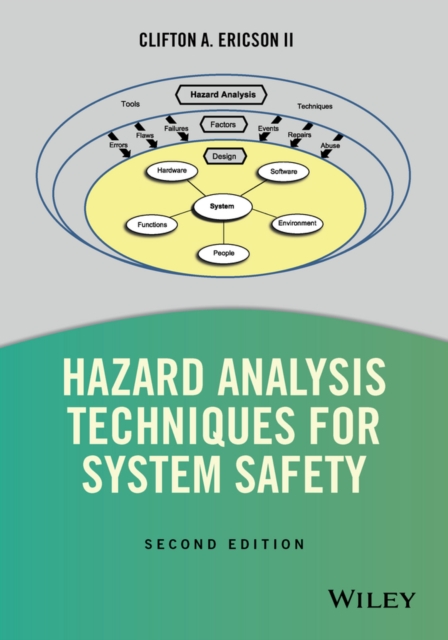
Hazard analysis techniques for system safety
Explains in detail how to perform the most commonly used hazard analysis techniques with numerous examples of practical applications
* Includes new chapters on Concepts of Hazard Recognition, Environmental Hazard Analysis, Process Hazard Analysis, Test Hazard Analysis, and Job Hazard Analysis
* Updated text covers introduction, theory, and detailed description of many different hazard analysis techniques and explains in detail how to perform them as well as when and why to use each technique
* Describes the components of a hazard and how to recognize them during an analysis
* Contains detailed examples that apply the methodology to everyday problems
eBook

Digital rights and privacy
\"At this point, it is almost impossible to avoid having a digital footprint. Social media, streaming websites, navigation applications, online shopping websites, and search engines generate a large amount of data about users' digital habits. Tech companies have used this data to 'optimize' their products and allow them to better predict users' behaviors, but the collection and use of data has raised new questions about the right to digital privacy. The rise of the internet and social media has also caused concerns about the type of content that should be made available and whether tech companies or the government have a responsibility and legal right to control it.\" -- Publisher description.
BOOK

Are safety data sheets for cleaning products used in Norway a factor contributing to the risk of workers exposure to chemicals?
Objectives
Cleaning products are considered less hazardous than those used in other sectors. Suppliers and distributors are less conscientious when it comes to informing users on health risks. The aim of the study was to elaborate on the usefulness and clarity of information in the safety data sheets (SDS) for cleaning products, and considering if the use of these SDSs can be seen as a risk factor towards occupational exposure to hazardous chemicals in the sector.
Material and Methods
Safety data sheets were selected based on the risk level of the product assigned in an industrial sector scheme. 320 SDSs for cleaning products were reviewed. Constituent components found in the products over a given threshold were listed and available information thereof used to assess the perceived non-hazard consideration of the chemicals.
Results
The contents of the SDSs was generic and mostly incomplete. Safety measures and health information lacked sufficient specificity despite varying compositions and concentrations of components. There is generally incompatibility between mentioned sections on the suggested non-hazardous nature of the products and health effects. Not all substances used in these products have harmonized classifications, which makes them open to various classification of the products and the suggested safety measures. This results in different companies classifying similar products differently. Risk management measures and suggested personal protective equipment (PPEs) are given haphazardly. Physical properties relevant to risk assessment are not included.
Conclusions
The safety data sheets are ambiguous, and they lack relevant and important information. Inadequate information and risk assessment concerning the products can lead to workers being exposed to hazardous chemicals. Underestimation of the hazard contribution of the components of the products and the insufficient, non-objective mention of appropriate control and protective measures are the major contributing elements. There is a need to test the products in order to establish health effects and product specific safety measures.
Journal Article

Internet privacy rights : rights to protect autonomy
\"Internet Privacy Rights analyses the current threats to our online autonomy and privacy and proposes a new model for the gathering, retention and use of personal data. Key to the model is the development of specific privacy rights: a right to roam the Internet with privacy, a right to monitor the monitors, a right to delete personal data and a right to create, assert and protect an online identity. These rights could help in the formulation of more effective and appropriate legislation, and shape more privacy-friendly business models. The conclusion examines how the Internet might look with these rights in place and whether such an Internet could be sustainable from both a governmental and a business perspective\"-- Provided by publisher.
Book

What can patients tell us about the quality and safety of hospital care? Findings from a UK multicentre survey study
BackgroundPatient safety measurement remains a global challenge. Patients are an important but neglected source of learning; however, little is known about what patients can add to our understanding of safety. We sought to understand the incidence and nature of patient-reported safety concerns in hospital.MethodsFeedback about the experience of safety within hospital was gathered from 2471 inpatients as part of a multicentre, waitlist cluster randomised controlled trial of an intervention, undertaken within 33 wards across three English NHS Trusts, between May 2013 and September 2014. Patient volunteers, supported by researchers, developed a classification framework of patient-reported safety concerns from a random sample of 231 reports. All reports were then classified using the patient-developed categories. Following this, all patient-reported safety concerns underwent a two-stage clinical review process for identification of patient safety incidents.ResultsOf the 2471 inpatients recruited, 579 provided 1155 patient-reported incident reports. 14 categories were developed for classification of reports, with communication the most frequently occurring (22%), followed by staffing issues (13%) and problems with the care environment (12%). 406 of the total 1155 patient incident reports (35%) were classified by clinicians as a patient safety incident according to the standard definition. 1 in 10 patients (264 patients) identified a patient safety incident, with medication errors the most frequently reported incident.ConclusionsOur findings suggest that patients can provide insight about safety that complements existing patient safety measurement, with a frequency of reported patient safety incidents that is similar to those obtained via case note review. However, patients provide a unique perspective about hospital safety which differs from and adds to current definitions of patient safety incidents.Trial registration numberISRCTN07689702; pre-results.
Journal Article