
Catalogue Search | MBRL


Are you sure you want to remove the book from the shelf?

{{itemTitle}}
1,192
result(s) for
"Data storytelling"
Sort by:

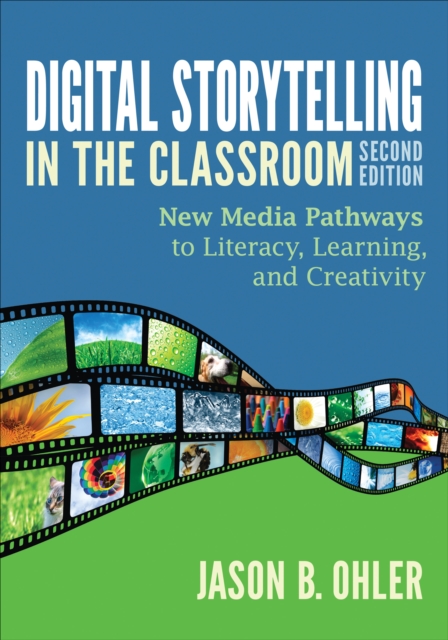
Digital storytelling in the classroom : new media pathways to literacy, learning, and creativity
This text shows how to integrate storytelling into curriculum design and use the principles of storytelling as a measurement of learning and literacies. It also covers important copyright and fair use information, and offers numerous implementation tips, concrete examples, and illustrative video clips. Aimed at primary and secondary teachers, the book is designed to help them: Teach their students to create digital stories that employ effective principles of storytelling, technology application, and media technique.; Use digital storytelling as a tool to promote the development of emerging literacies, such as digital and media literacy, as well as traditional literacies, such as reading, writing, speaking, and art.; Help students use digital storytelling as an academic tool to explore content and to communicate what they understand.; Understand the importance of combining the power of story and critical thinking as an approach to teaching and learning.
eBook


An Empirical Examination of the Relationship Between Data Storytelling Competency and Business Performance: The Mediating Role of Decision-Making Quality
With the proliferation of big data and business analytics practices, data storytelling has gained increasing importance as an effective means for communicating analytical insights to the target audience to support decision-making and improve business performance. However, there is a limited empirical understanding of the relationship between data storytelling competency, decision-making quality, and business performance. Drawing on the resource-based view (RBV), this study develops and validates the concept of data storytelling competency as a multidimensional construct consisting of data quality, story quality, storytelling tool quality, storyteller skills, and storyteller domain knowledge. It also develops a mediation model to examine the relationship between data storytelling competency and business performance, and whether this relationship is mediated by decision-making quality. Based on an empirical analysis of data collected from business analytics practitioners, the results of this study reveal that the data storytelling competency is positively linked to business performance, which is partially mediated by decision-making quality. These results provide a theoretical basis for further investigation of possible antecedents and consequences of data storytelling competency. They also offer guidance for practitioners on how to leverage data storytelling capabilities in business analytics practices to improve decision-making and business performance.
Journal Article

A Visual Data Storytelling Framework
While the consumption of visual information becomes a daily commodity integrated into our lives, data visualisation is dominated by dashboards and charts. The main contribution of this article is an advanced way to visualise data as a data story. We converged paradigms from digital storytelling, serious games, and data visualisation to turn data into useful insights. The creation, management, and analysis of data have been increasingly given more attention in industry and professional practices. However, the potential of packaging data and analytic results into easily digestible and visually explorable content intended for non-professional audiences has not yet been investigated to its full extent. We contributed towards overcoming the gap between data analytics and data presentation. By integrating a story-like environment and entertainment into data visualisation, we explore the possibilities of efficiently communicating data and insights to general audiences in a casual context. We present this modular approach to customising messages for visual data storytelling from an information and communication perspective, including a test prototype developed to illustrate our data storytelling framework.
Journal Article

The College Transfer and Articulation Network: How are These Statewide Policies and Bilateral or Dyadic Partnerships Structured Across the United States?
Every academic year, millions of college students change institutions before degree completion, confronting the challenge of validating credits across colleges. Despite state-level efforts to legislate strategies for smoother transfers, actual credit recognition relies on non-state-regulated bilateral partnerships that are more (i.e., articulation agreements) or less (general transfer partnerships) specific as policies or guides to avoid credit loss. This study comprehensively sheds light on the USA nationwide structure of transfer and articulation agreements by focusing on statewide policies and in-state and out-of-state informal bilateral partnerships as units of analyses. The spatial configuration of both statewide policies and institutionally driven partnerships enabled testing for economic spillovers as well as measuring whether distance is a factor that may impact the formation of these partnerships. Data were retrieved from CollegeTransfer.Net (N = 18,260 partnerships and 1163 colleges), the Education Commission of the States (118 statewide policies), the IPEDs, and the US Census Bureau. Findings at the state-level revealed economic spillovers in two of four statewide policies, highlighting greater structure of program-specific articulation agreements over general transfer partnerships (i.e., agreements that do not require program continuation). Regarding institutionally driven agreements, the analyses indicated that general partnerships were the most prevalent form, which, compared to more structured articulation efforts, may be less effective in the avoidance of credit loss. We also found that shorter distances are a significant but impractical partnership-forming factor, for the average distance reduction among partnering colleges is 30 miles across models. Combining state and institutional datasets, we found that neither individual nor combined statewide policies actively predict institutional partnership formation. All databases and code created (statewide policies: https://cutt.ly/uwHyvkWQ, institutionally driven agreements: https://cutt.ly/7wHtPkEA, replication codes: https://cutt.ly/JwGRmVDu, https://cutt.ly/EwG1VbaW) may be used in future analyses to address questions of transfer effectiveness and transferring financial costs, which although important go beyond the scope of our study.
Journal Article

Commentary: Data storytelling to aid health system decision-makers with population health issues for a specific location
Modern society is awash in data for health science, health system, and public health decision-making. These public data are often presented in various formats: Data tables, reports with data and bar charts, press releases with data, dashboards of key performance indicators, the traditional professional paper with data table and statistical results, etc. Software can display these data in various ways. The tacit assumption is that the reader/consumer of the data has the means to interpret these often complex health data for individual use and professional decision-making. We do not think that it is reasonable to make this assumption in all situations. Instead, maybe those of us who collect and analyze health data should include data storytelling as a way to make it easier for health system decision-makers to know and appreciate the next steps to be taken in the decision-making process given the data we prepared. The interpretation of data for action using a charticle and other techniques of infographics and health data storytelling may be more useful to health system decision-makers than the presentation of detailed facts and data and a scientific interpretation of those facts and data. This commentary illustrates the process of data storytelling using a charticle to help health system decision-makers interpret health data and use it as a foundation for action.
Journal Article

From comic panels to clinical practice: data comics as a learning analytics tool in nursing simulation
In healthcare education, it is important for nursing students to be able to reflect on their performance in high-fidelity clinical simulations in order to develop key skills. Learning Analytics (LA) offers opportunities for data-driven reflection by providing visual representations of educational experiences. While many LA tools rely on data visualisations to communicate insights, these are often difficult for students to interpret, limiting their effectiveness. Despite these challenges, there is limited research exploring alternative and potentially more accessible formats—such as data comics, a narrative visualisation technique that integrates data with the structure of traditional comic strips—to represent and communicate insights from learner data in a more engaging way. This study addresses that gap through a qualitative analysis of nursing students’ perceptions of data comics as reflective tools, focusing on: (i) support for student reflection, (ii) advantages and limitations, and (iii) concerns about their use in healthcare education. Third-year nursing students who participated in a simulation were interviewed and asked to reflect on personalised data comic prototypes generated from their multimodal data using a mix of human input and AI methods. The results indicated that while data comics present an engaging and accessible form of reflective visualisation, considerations need to be made regarding the designs to ensure that they are appropriate for the target audience and do not oversimplify the simulation experience. These findings indicate that data comics should not act as a replacement for conventional visualisations but rather serve as supplementary material to communicate contextual information or aid in interpretation of visualisations.
Journal Article

Teaching data storytelling as data literacy
Purpose
Data storytelling courses position students as agents in creating stories interpreted from data about a social problem or social justice issue. The purpose of this study is to explore two research questions: What themes characterized students’ iterative development of data story topics? Looking back at six years of iterative feedback, what categories of data literacy pedagogy did instructors engage for these themes?.
Design/methodology/approach
This project examines six years of data storytelling final projects using thematic analysis and three years of instructor feedback. Ten themes in final projects align with patterns in feedback. Reflections on pedagogical approaches to students’ topic development suggest extending data literacy pedagogy categories – formal, personal and folk (Pangrazio and Sefton-Green, 2020).
Findings
Data storytelling can develop students’ abilities to move from being consumers to creators of data and interpretations. The specific topic of personal data exposure or risk has presented some challenges for data literacy instruction (Bowler et al., 2017). What “personal” means in terms of data should be defined more broadly. Extending the data literacy pedagogy categories of formal, personal and folk (Pangrazio and Sefton-Green, 2020) could more effectively center social justice in data literacy instruction.
Practical implications
Implications for practice include positioning students as producers of data interpretation, such as role-playing data analysis or decision-making scenarios.
Social implications
Data storytelling has the potential to address current challenges in data literacy pedagogy and in teaching critical data literacy.
Originality/value
Course descriptions provide a template for future data literacy pedagogy involving data storytelling, and findings suggest implications for expanding definitions and applications of personal and folk data literacies.
Journal Article

Moviemaking in the Classroom
Written by an award-winning classroom teacher with years of experience integrating moviemaking into curriculum, this book offers quick-start lesson plans for any content area and grade level, helping students amplify their voices and effect change through moviemaking.
eBook