
Catalogue Search | MBRL


Are you sure you want to remove the book from the shelf?

{{itemTitle}}
7,087
result(s) for
"Deacons"
Sort by:

Die diakonale reis van die Nederduitsch Hervormde Kerk
Diaconal journey of the Dutch Reformed Church. The aim of this article is to look at the development of the deacon’s position in the Dutch Reformed Church of Africa by investigating the founding, development, and management of the deacon’s position in the church. It is not the purpose to investigate the deacon’s position from a Biblical exegetical point of view but rather to look at the historical development of structures such as the Algemene Diakensvergadering, Ondersteuningsraad whose name was later changed to RATA, the children’s homes which were later converted into the DPS homes and the old age homes which were restructured in the Ons Tuis Monument-tehuise. We shall attempt to look at the development of the deacon’s position, and also consider the developments that lead to the founding and phasing out of the deacons’ meetings, and Circuit deacons’ meeting, as well as the effect that had on the service delivery of deacons. A journey, therefore, examining the past along with the future. We shall take the lessons we have learned in the past and apply them to improve our endeavours in the future which have already commenced. Intradisciplinary and/or interdisciplinary implications: The article is intradisciplinary, since it combines different fields within Practical Theology, like, diaconate, ecclesiological studies, and family and youth ministry. It also attends to church history. It is intradisciplinary in its attention to social sciences, more specifically social work.
Journal Article
Die diakonale reis van die Nederduitsch Hervormde Kerk
The aim of this article is to look at the development of the deacon's position in the Dutch Reformed Church of Africa by investigating the founding, development, and management of the deacon's position in the church. It is not the purpose to investigate the deacon's position from a Biblical exegetical point of view but rather to look at the historical development of structures such as the Algemene Diakensvergadering, Ondersteuningsraad whose name was later changed to RATA, the children's homes which were later converted into the DPS homes and the old age homes which were restructured in the Ons Tuis Monument-tehuise. We shall attempt to look at the development of the deacon's position, and also consider the developments that lead to the founding and phasing out of the deacons' meetings, and Circuit deacons' meeting, as well as the effect that had on the service delivery of deacons. A journey, therefore, examining the past along with the future. We shall take the lessons we have learned in the past and apply them to improve our endeavours in the future which have already commenced. Intradisciplinary and/or interdisciplinary implications The article is intradisciplinary, since it combines different fields within Practical Theology, like, diaconate, ecclesiological studies, and family and youth ministry. It also attends to church history. It is intradisciplinary in its attention to social sciences, more specifically social work.
Journal Article
Gemeentediakonaat – Nuut gedink
The diaconate of the congregation - Considered anew. From the earliest times, the content given to the diaconate of the congregation varied greatly from denomination to denomination. Different methods and sources were used to determine the content and essence of the diaconate. This article attempts to look at the diaconate of the congregation from a new angle to determine what the diaconal task of the congregation can be. Use is made of previous exegetical work done by the author (2018) of this article. He exegeted specific texts in the New Testament in depth with the research question of what meaning possibility of the diacon words (diakoneo, diakonos, diakonia) the authors had in mind when using the words in those texts. These results are used in an attempt to establish what the diaconate can mean when it is built on the meaning contents of the deacon-words. The result is that new insights are exploited and practically applied to the diaconate. The conclusion of this article is that the deacons should work towards involving each member in the diaconate by guiding them to discover their gifts and to encourage them to use those gifts. The members undertake to do specific service work and to be held accountable for it. In this way, the congregation distributes the grace of God and the diaconate takes on a missionary character and God can work mightily through the diakonia of each member. Intradisciplinary and/or interdisciplinary implications An exegetical study of the New Testament informs the discussion and opens a dialogue between Practical Theology and Hermeneutics. The results of this research have implications for church polity. The outcome of the practical implementation of the results can be a field of study for pastoral counselling, psychology and sociology.
Journal Article

Women deacons - a perspective from Australia: A response to Phyllis Zagano
On 6 August 2023, the Australian Catholic University Centre for Liturgy hosted Dr Phyllis Zagano for an online lecture entitled 'Women Deacons and the Synod: What Happens Now?' As part of the program, I was honoured to be asked to formally respond to Phyllis, and then to include an expanded form of my response in this journal.
Journal Article
Diakonisierung
Die Verantwortlichen für den Ständigen Diakonat in der Erzdiözese Freiburg haben dem vorliegenden Buch den Titel Diakonisierung gegeben. Es erscheint anlässlich des 50. Jahrestages der Weihe von Ständigen Diakonen in der Erzdiözese Freiburg. Diesen Begriff hat der Freiburger Diakon Hannes Kramer (1929-2001) geprägt. Er wirbt schon früh \"für einen gemeinsamen Weg zur Diakonisierung der Kirche von der Basis der Gemeinde her\". Kramer ist sich sicher, dass es mit der Wiedereinführung des Ständigen Diakonats durch das II. Vatikanische Konzil ein Amt in der Kirche gibt, dessen Hauptaufgabe es ist, der Diakonisierung zu dienen. Eine wesentliche Aufgabe des Diakons besteht darin, diesen sozial-diakonischen Lebensnerv von Kirche immer neu in Erinnerung zu rufen, indem er an der Basis wirkt, junge und alte Menschen, Frauen und Männer fördert, stärkt und unterstützt, die in ihren Familien und Glaubensgemeinschaften diese Diakonisierung oft unscheinbar und selbstverständlich leben. Sie erinnern durch ihren Einsatz für den Nächsten an das Beispiel der Fußwaschung, das Jesus seinen Jüngerinnen und Jüngern im Abendmahlssaal gegeben hat. Diakonisierung ist so verstanden auch ein Schlüsselbegriff der Kirchenentwicklung. Wo immer Frauen und Männer dazu beitragen, dass die Glaubensgemeinschaft der Kirche nicht an vermeintlich Unveränderlichem festhält, sondern sich verändern lässt durch das, was ist, entsteht etwas Neues und Zukunftsweisendes.
eBook
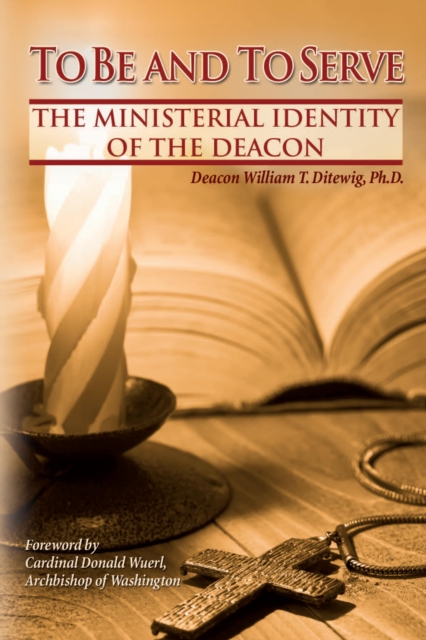
To Be and To Serve
In To Be and To Serve, Deacon William T. Ditewig explores the important topic of identity for permanent deacons by reflecting on the place of deacons within the local community and the universal church. Noting that \"it's all about relationships, \" he takes readers on a journey through church teachings and pastoral realities to highlight the truth that a deacon lives a life totally given over to the Lord and to those whom he is called to serve.
eBook

Pastoral animators’ beliefs and attitudes towards women’s diaconate in the Philippines
The Synthesis Report of the Synod on Synodality (2023) emphasised valuing women’s active roles in the church and continuing theological and pastoral research on women’s access to the diaconate. This research explored Filipino Catholic pastoral animators’ views on women’s ordination to the permanent diaconate. It hopes to provide episcopal leaders in the third-largest Catholic country in the world with an insight into where the pastoral animators stand regarding the issue and, more broadly, on how the respondents view women’s leadership roles. It addresses a geographical and methodological gap, as the first in-depth empirical investigation on the issue in the country. A survey (n = 415) was conducted using snowball sampling. The findings revealed that a vast majority support women’s diaconate, because women and men equally received the ‘variety of gifts of the Spirit’ in baptism (74.6%), and that the reality is women are already performing diaconal tasks (73.9%). There was also huge support (69.0%) for qualified women to be allowed to preach in Mass. A lesser percentage (41.0%) endorsed women’s ordination to the permanent diaconate; the average mean score indicates a ‘neither agree nor disagree’ stance, which does not align with recent surveys showing Filipino’s positive view of women’s leadership in business and politics. The study concludes that the topic of women’s diaconate holds importance in the Philippine context, receiving widespread endorsement despite the mixed support for women’s ordination to the ministry. It equips the church with a valuable perspective on the requisite pastoral education and the misconceptions that must be addressed, in light of the equal dignity and capability of women and men, and the need for women deacons because of the shortage of priests.ContributionThis article addresses a geographical and methodological gap in the study of Catholic attitudes towards women’s ordination to the diaconate in the Philippine context.
Journal Article
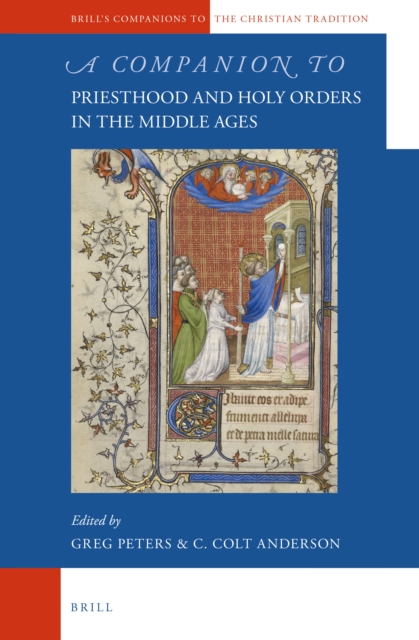
A Companion to Priesthood and Holy Orders in the Middle Ages
A Companion to Priesthood and Holy Orders in the Middle Ages contains essays that examine the ontology and function of ordained bishops, priests and deacons throughout the medieval era as preachers, confessors and providers of pastoral care.
eBook
Using the report on the training of elders and deacons of Maranatha Reformed Church of Christ to illustrate the attributes of informal education
The ineffectiveness of some elders and deacons of Maranatha Reformed Church of Christ to implement their functions and duties contributed to the deterioration of the spiritual and material sustainability of the church. To counteract this corrosion, the church established a training team that instituted an informal programme as a means of revitalising elders and deacons. After running a pilot project to test the training programme, the team presented its report to the General Church Assembly. A selective interpretation of informal education can contribute to a misguided and limited perception of informal knowledge and acquisition as uncivilised and unsustainable. In this article, the researcher seeks to articulate the formal and informal dynamics of informal education. He employed an exploratory concurrent design of mixed methods research within an indigenous paradigm to analyse the report on training of elders and deacons. The researcher used a convenience sampling strategy to select the authors of the report, namely four trainers and four trainees, with whom he conducted a focus group discussion. Although strategically formulated, the learning activities and resources were continuously innovated in the informal programme for elders and deacons. The conclusion reached is that the learning process in informal education is flexible and mutually edifying for educators and trainees.ContributionEducation for the proclamation of the gospel and church governance is not intended exclusively for ministers or theologians. Despite their diversity, elders and deacons need to be educated on the proclamation of the gospel according to the teachings of their church, using their respective contexts. Informal education, which comprises formal and informal dynamics, can contribute towards addressing the problem of untrained elders and deacons.
Journal Article

Rivalry between Presbyters and Deacons in the Roman Church
In this article I offer three brief notes on Ambrosiaster’s Q. 101, De iactantia Romanorum leuitarum. First, I discuss its relation to Letter 146 of Jerome, which also deals with the rivalry between presbyters and deacons and which bears a close resemblance to Q. 101; second, I examine the peculiar features of the church hierarchy at Rome that led the anonymous deacon to claim a superior status to presbyters; and, third, I explore some indications in Q. 101 and in Jerome, Letter 146, which point to the activity of deacons in elite households at Rome.
Journal Article